How to settle up without the awkwardness
Settling up shouldn't feel weird. Here's how to clear shared balances cleanly, in the fewest payments, so money never gets in the way of the friendship.
Splitting expenses is the easy part. The awkward part is the end — the moment when balances need to actually turn into payments, and suddenly nobody wants to be the one bringing it up. So the debts linger, the numbers get fuzzy, and what was a fun weekend slowly becomes a thing nobody mentions.
It doesn’t have to be like that. Settling up smoothly is mostly about removing the friction and the guesswork. Here’s how.
Settle on a rhythm, not on a feeling
The biggest source of settle-up awkwardness is timing. Wait until someone feels owed enough to say something, and by then the balance is large, the memory is hazy, and raising it feels confrontational.
The fix is to make settling a routine, not a decision:
- Roommates: settle monthly, on payday. The money’s there and the balance is small.
- Trips: settle the moment you’re home, while the goodwill is still warm.
- Regular friend groups: pick a cadence — after each big event, or once a month — and stick to it.
A balance you settle every month never becomes a debt anyone has to be brave about mentioning.
Let the math come from the app, not from you
Half the awkwardness is being the person who says “you owe me.” When the number comes from a neutral app instead, nobody feels accused. Everyone’s looking at the same Balances, and they’re not your opinion — they’re just the record.
When every Expense is logged in a shared Group, there’s nothing to dispute. The app shows exactly who owes what and for which expense. You’re not the bookkeeper chasing people; you’re just another person looking at the same honest total. (More on this in asking friends for money without being awkward.)
Use the fewest payments possible
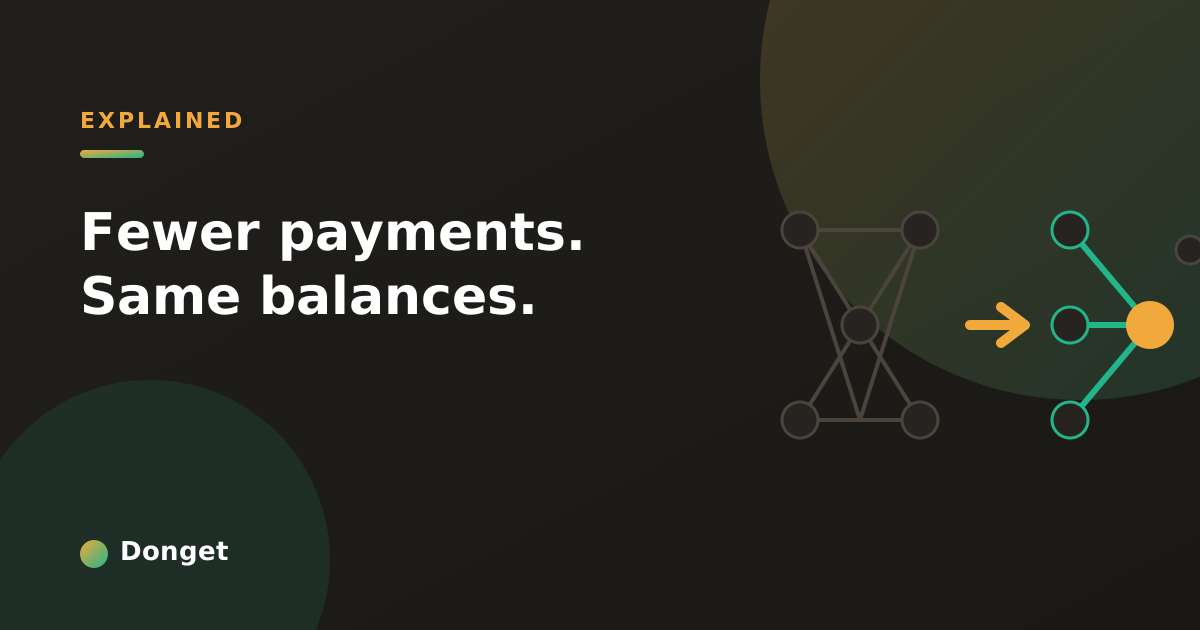
Here’s where most settle-ups get tangled. Six people who all owe each other bits can generate a dozen little transfers — and every one is a chance for confusion, a wrong amount, or a “wait, did you already pay me?”
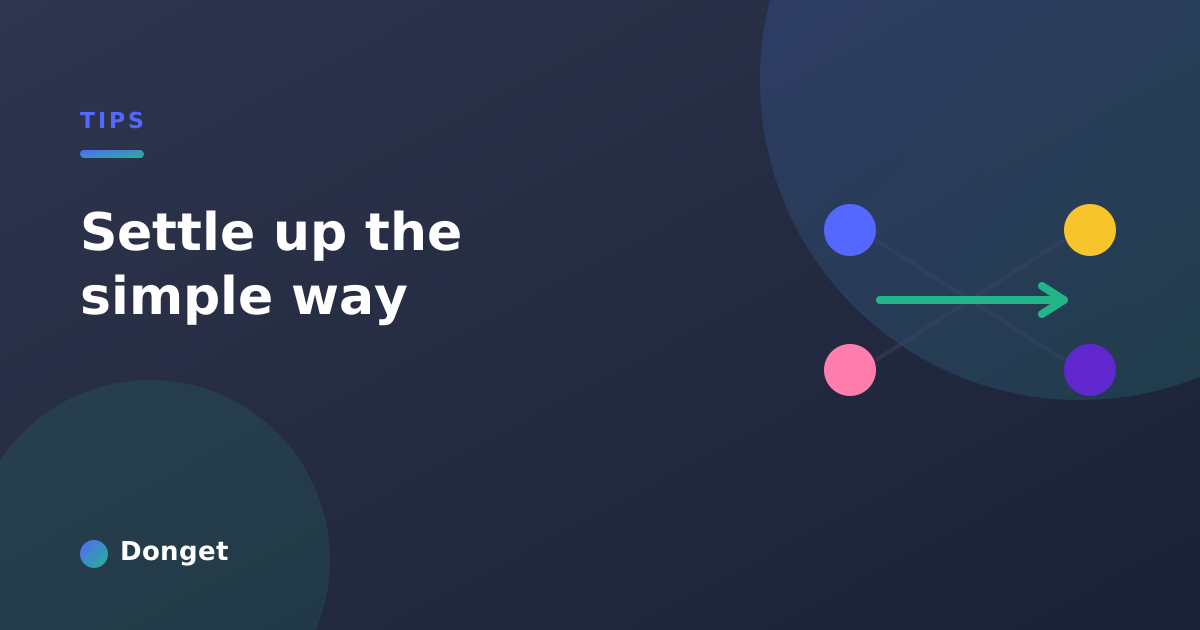
Donget solves this with smart settle-up: it works out the minimum set of payments that makes everyone even. A trip with six people and forty expenses might collapse to just two or three transfers. One person sends one payment, another sends one, done. Clean, fast, and nobody’s juggling five Venmo requests.
The fewer the payments, the fewer the chances for anything to go sideways.
Make paying frictionless
Once the app has told everyone what they owe, get out of the way:
- Let people pay with whatever method they already use.
- Don’t insist on exact rounding theatre — settle the real number the app shows.
- Mark each payment as settled so the history stays clean for next time.
A settle-up that takes thirty seconds is a settle-up that actually happens. One that requires a bank-transfer scavenger hunt gets postponed forever.
A quick settle-up checklist
- Pick a rhythm and settle on schedule, not on vibes.
- Make sure every Expense is logged first.
- Let the app calculate the fewest payments.
- Use existing payment methods and mark it done.
The bottom line
Money only damages friendships when it’s allowed to fester — unspoken, unclear, and growing. Settle on a rhythm, let the app hold the ledger and crunch the payments, and the whole thing becomes a non-event. Which is exactly what settling up should be.
Frequently asked questions
How do you ask someone to settle up without it being awkward?
Make it a routine rather than a request. If the group settles on a fixed rhythm — after every trip, or at the end of each month — nobody has to work up the nerve to ask, because the reminder is the schedule, not a person.
How often should a group settle up?
Pick a rhythm that matches how you spend. Housemates usually do it monthly, couples fortnightly, a trip group once at the end. The point is that everyone knows when it happens, so balances never grow big enough to feel heavy.
What is the fewest number of payments needed to settle a group?
Far fewer than the number of debts. If six people owe each other in fifteen different directions, the balances can usually be netted down to two or three transfers. The app works out that minimum set for you.
Should you settle each expense separately or all at once?
All at once. Paying somebody back for every coffee is more friction than it saves, and it makes the history harder to read. Log everything, let the balance run, and clear it in one payment on the agreed date.
What do you do if someone does not pay you back?
Let the shared record do the talking before you do. A balance both people can see removes the accusation from the conversation — you are pointing at a number, not making a claim, and most people settle as soon as they see it.
Ready to make settling up effortless? Download Donget free and let smart settle-up do the awkward math for you. See how it works on the features page.