How to split gas money on a road trip: fuel, tolls and who rode which leg
A fair way to split gas money and road trip costs: the fuel formula, tolls and parking, what to do when someone joins halfway, and an example settled in three transfers.
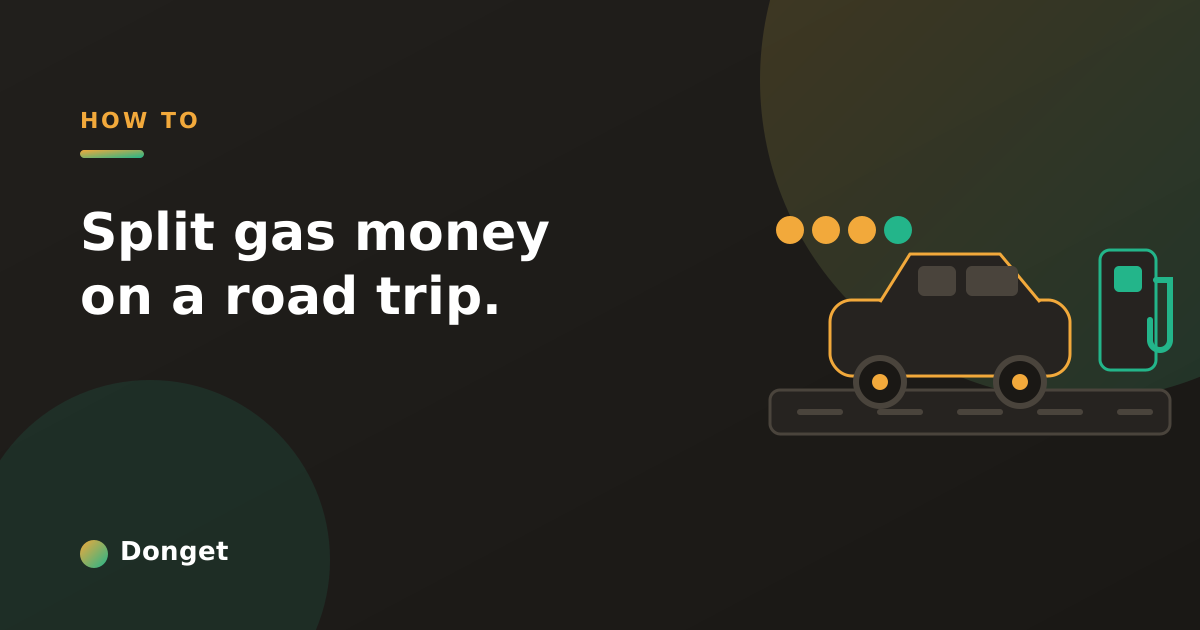
Four of you in one car, someone’s driving, the tank is full, and nobody has said what happens about money. It usually resolves itself at the first petrol station — someone pays, someone says “I’ll get the next one” — and by Sunday night nobody is sure who is ahead. Then a fifth person catches a lift back and it gets a second layer.
Gas money, petrol money, fuel money — whatever you call it, the fair answer is the same and takes less arithmetic than the argument: add up what the car actually cost to move, and split each stretch among the people who were in it.
What a road trip actually costs
Four things, in the order they usually come up:
- Fuel. The big one, and the one people underestimate on a long drive.
- Tolls. Motorway tolls, bridges, tunnels, a vignette if the route needs one. Paid in lumps, easy to forget.
- Parking. At the destination, the overnight stop, the viewpoint.
- The car itself. Some groups add a small per-kilometre allowance for the owner’s wear and tear — a convention the group agrees before leaving, not a rule.
The first three are real money someone hands over, and they all follow the same split: decide how fuel is shared and tolls and parking ride along with it.
The fuel formula
If you want the number before you drive, it’s one line:
distance in km ÷ 100 × consumption (L/100 km) × price per litre = fuel cost.
A car that does 7.5 L/100 km covering 800 km at €1.80 a litre uses 60 litres and costs €108. Consumption is in the manual or on the trip computer; the price is whatever the pump says.
If you’d rather not estimate, fill the tank before you leave and again when you get home. Those receipts, plus any fills in between, are the fuel cost — no formula, no debate.
Either way, the driver is a passenger too: fuel is split among everyone in the car, driver included.
Split per leg, not per trip
What makes road-trip money confusing is that the car’s occupants change: someone gets dropped at a station halfway, someone’s partner joins for the way back. The fix is to treat each leg — each stretch where the same people were in the car — as its own small bill:
- Work out the fuel and tolls for that leg, by distance or from that leg’s receipts.
- Divide them among the people who were in the car for it.
- Do the same for the next leg.
Someone who rode only the return pays a share of the return; someone who rode both ways pays a share of both. Nobody subsidises a seat they weren’t in, and nobody guesses at a “fair-ish” percentage. Most trips have two legs — out and back — so this is rarely more than two divisions.
The driver’s time is not a line item
Unless the group decides otherwise, driving is a contribution in kind, not something you bill for. The driver is often also the car’s owner, which is why the wear-and-tear allowance exists as an option. Two things keep it from going wrong: agree it before the trip, and make it a flat, visible number — “5 cents a kilometre for the car” — rather than a vague “we’ll sort something out for Ana”. It then goes into the same split as fuel. A hired car is simpler: the hire cost is just another expense shared by everyone who used it.
A worked example: 800 km, four people, one joins for the return
Ana, Ben and Cem drive 400 km to the coast and back — 800 km in total. Dara lives there and catches a lift back, so Dara is in the car for the 400 km return only.
Ana drives her own car (7.5 L/100 km). Fuel at €1.80 a litre: 800 ÷ 100 × 7.5 × 1.80 = €108, which Ana pays at the pumps. Tolls are €12 each way, €24 in total, which Ben pays at the booths.
Two legs, so two splits:
| Leg | Who was in the car | Fuel | Tolls | Each person’s share |
|---|---|---|---|---|
| Outbound, 400 km | Ana, Ben, Cem | €54 ÷ 3 = €18 | €12 ÷ 3 = €4 | €22 |
| Return, 400 km | Ana, Ben, Cem, Dara | €54 ÷ 4 = €13.50 | €12 ÷ 4 = €3 | €16.50 |
Per person, adding the legs: Ana, Ben and Cem owe €38.50 each (22 + 16.50); Dara owes €16.50 (return only). Check: 3 × 38.50 + 16.50 = €132, exactly €108 + €24.
Now set what each person paid against what they owe:
- Ana paid €108, owes €38.50 → is owed €69.50
- Ben paid €24, owes €38.50 → owes €14.50
- Cem paid nothing, owes €38.50 → owes €38.50
- Dara paid nothing, owes €16.50 → owes €16.50
It settles in three transfers, all to Ana: Cem sends €38.50, Dara sends €16.50, Ben sends €14.50. 38.50 + 16.50 + 14.50 = €69.50, Ana’s balance exactly. Ben isn’t “paid back” for the tolls separately — they are already netted inside his €14.50. A car allowance, if agreed, is one more expense paid by Ana and split by leg the same way.
Log as you go, settle at the end
The per-leg maths is easy. What goes wrong on real trips is that nobody wrote down the second toll or the parking at the lighthouse, and on Sunday night three people are reconstructing receipts from memory. So whoever pays says it out loud and it gets written down there and then, with who was in the car. Settle once, at the end — and if the asking is the part you dread, settling up without awkwardness covers how to close the group in a couple of messages.
Fuel and tolls usually sit inside a bigger weekend, in the same pot as the place you stayed and the dinners; the fair way to split a group trip covers the rest, and if the destination is a festival, splitting festival and concert trip costs handles the tickets someone bought months ago.
Where Donget comes in
A road trip maps onto a Donget group almost one-to-one. Each leg’s fuel is an expense with Paid by set to the driver, split Equal among the people in the car for that leg — the outbound among Ana, Ben and Cem, the return among all four. Tolls and parking go in the same way, paid by whoever handed over the money. To log the whole trip’s fuel as one expense instead, the Multiplier split does it: two shares for everyone who rode both ways, one for Dara (the five ways to split an expense walks through when each fits).
As costs go in, Balances shows where everyone stands. At the end, Settle up proposes the fewest transfers that clear the group — here, the three payments to Ana — and each one is recorded as a Transfer, so the group closes at zero rather than in a chat thread. Dara can join by Invite link from the back seat.
Frequently asked questions
How much should I ask friends to chip in for gas?
Work out what the fuel actually cost — litres used times price per litre, or simply the receipts — and divide it by the number of people in the car for that stretch, driver included. You are sharing a real cost, not charging a fare.
Does the driver pay for fuel too?
Yes, under the usual convention: the driver is one of the people in the car and takes an equal share of fuel, tolls and parking. Driving is not a payment in itself unless the group agreed otherwise before leaving.
How do we split fuel when someone only rides part of the way?
Split per leg. Work out the fuel and tolls for each stretch separately and divide each one among the people who were in the car for it. Someone who rode only the return pays a share of the return and nothing for the outbound.
Do passengers pay for tolls and parking as well as fuel?
Normally yes — tolls, parking and a ferry or vignette are costs of moving the car, so they follow the same split as fuel. Fines are the one exception most groups make: the driver who earned it keeps it.
Should the driver get something for wear and tear on the car?
That is a convention for the group to agree, not a rule. Some groups add a small per-kilometre allowance on top of fuel; many friends’ trips don’t bother. Whatever you pick, agree it before you set off, not when you’re settling up.
What if we’re taking two cars?
Treat each car as its own leg: its fuel is split among the people who rode in it. If people swapped cars at every stop, it is simpler to pool all fuel and tolls for the whole trip and split them among everyone equally.
The bottom line
Fuel, tolls and parking are the cost of moving the car. Split each leg among the people who were in it, driver included, add a car allowance only if the group agreed one up front, write costs down as they happen and settle once at the end — the four-person, one-joins-late trip above closes in three transfers.
Download Donget free and log the next tank while you’re still at the pump — the split by leg and the final transfers are worked out for you.