Roommate's partner always staying over: should they pay towards bills?
A roommate's partner staying over can mean extra shared costs. Agree what has changed, separate bills from access to the home, and choose a contribution together.

Your roommate’s partner stays for dinner, works at the kitchen table the next morning and is back again that evening. You like them. You also notice the shared shopping disappearing faster, and you are not sure how to raise the bills without making the conversation sound like a complaint about the relationship.
When a roommate’s partner stays over regularly, discuss the household changes before putting a price on them. Separate use of the home from extra shared spending, identify which costs have actually changed, and agree a contribution together. Try it for a stated period, then review it without treating visits as an automatic debt.
What changes when a partner stays over often
There are three separate questions: sharing the space, sharing the work and sharing the costs. Paying towards groceries does not solve a crowded kitchen or someone never clearing up. Equally, enjoying someone’s company does not mean you have agreed to cover their meals indefinitely.
Start with the change you can describe. Shared food runs out sooner. Someone has taken on extra washing up. The bathroom is occupied when another flatmate needs it. Discuss those things directly, rather than trying to express every frustration through the electricity bill.
A money contribution is an agreement about money. It does not buy agreement about access to the home. That needs its own conversation with the adults who share it.
Which bills should a visiting partner contribute to?
Separate costs that grow with use from those that have stayed the same. Food eaten together and household supplies are concrete starting points. Water and electricity can change too, but a larger bill is not proof that one visitor caused the increase: weather, prices and the residents’ own use can also change it.
A fixed internet subscription may cost exactly what it did before. You might still choose to share it differently, but say that you are changing the agreement rather than calling it an extra cost. The same distinction matters when splitting utility bills with roommates.
Keep personal food separate. If a partner brings their own dinner, it does not belong in both their personal spending and a shared food allowance. A clear shared grocery arrangement makes this easier to see.
How to start the conversation
Speak with your flatmate while there is time to talk, rather than when everyone is leaving for work. Include the other residents in the eventual decision, and include the visiting partner when discussing a contribution they would make.
A useful opening is: “Our shared shopping has changed since we started eating together more often. Can we look at what we buy and agree how to share it for the next month?” It names a cost without assigning a motive.
Bring a proposal that people can alter. Write down which purchases it covers, how you chose the amount, who will pay initially and when you will review it. A fresh agreement can start from a date you all choose. Receipts from earlier weeks can inform that conversation without becoming a bill someone never agreed to.
An example: an agreed €60 contribution
This is a hypothetical arrangement, not a standard charge. Maya, Alex and Jo share a flat. Riley, Alex’s partner, now joins them regularly. For a one-month trial, all four agree that Riley will cover €42 of extra shared food and supplies, plus €18 as an estimate for additional water and electricity. They explicitly accept that the utility estimate is a practical compromise, not a measurement.
The residents keep splitting the remaining costs equally. Their rent and unchanged internet bill stay under their existing arrangement and are outside this example.
| Shared cost | Paid by | Maya | Alex | Jo | Riley | Total |
|---|---|---|---|---|---|---|
| Water and electricity | Maya | €70 | €70 | €70 | €18 | €228 |
| Shared food and supplies | Alex | €50 | €50 | €50 | €42 | €192 |
| Share | €120 | €120 | €120 | €60 | €420 |
Maya paid €228 and has a €120 share, so is owed €108. Alex paid €192 and has a €120 share, so is owed €72. Jo paid nothing and contributes €120; Riley paid nothing and contributes €60. The balances are +€108, +€72, −€120 and −€60: together, zero.
They settle with Jo paying Maya €108, Jo paying Alex €12 and Riley paying Alex €60. Maya receives €108 and Alex receives €72. Three transfers are needed here: neither person’s amount due matches either recipient’s balance, so two payments cannot close all four balances.
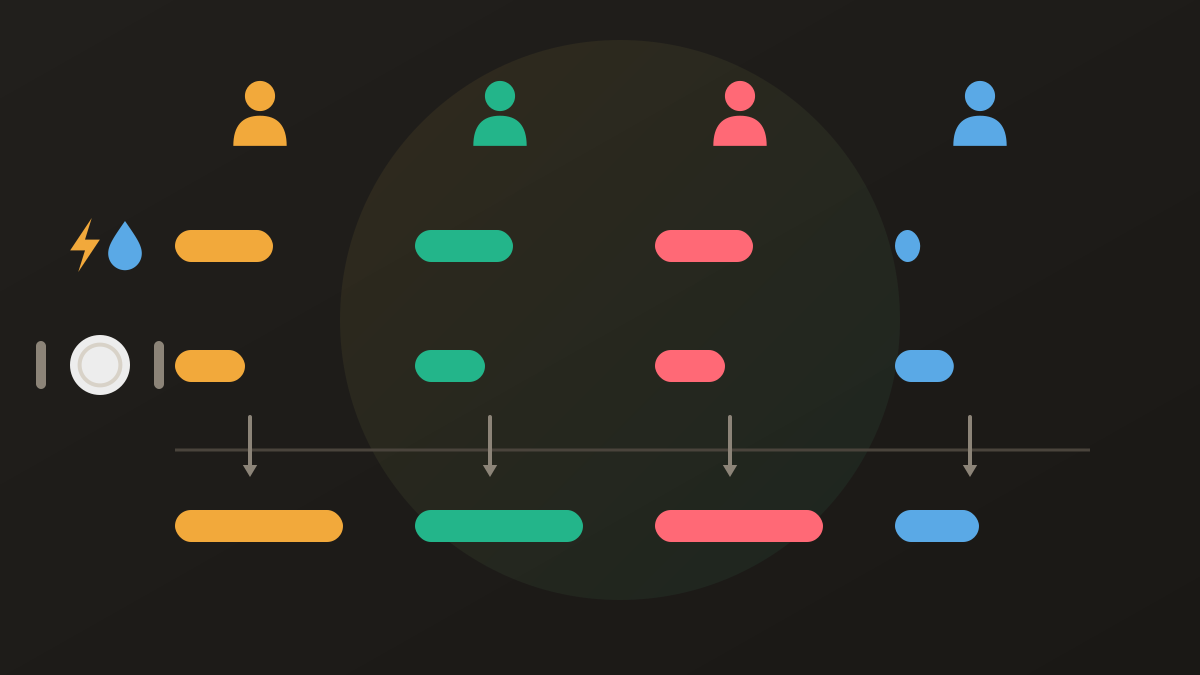
The €60 is not a fee for a particular number of nights. It is the contribution these four adults accepted for these purchases during this trial.
Review the arrangement when the pattern changes
Use the review to ask whether the proposal matched the experience. Did Riley eat fewer shared meals than expected? Did someone buy supplies separately? Was an estimated increase already included in another payment? Adjust the next period by agreement, and correct the current record together if it counted something twice.
Do not silently add a charge for cleaning or time spent organising the household. Share the work directly; dividing chores with roommates covers a separate list for jobs that tend to go unnoticed.
If the conversation has become about a couple sharing the flat on an ongoing basis, a guest-cost trial may no longer answer it. A room-and-person rent split is a different calculation to discuss, not an automatic next charge.
Where Donget comes in
Once everyone agrees, record each purchase with its actual payer in Donget. Use Amounts for the table’s individual allocations, including Riley’s €18 and €42 shares. Add a name lets you include someone who has not joined yet. Settle up then shows the payments needed to clear the recorded balances; after people pay each other through their usual method, Paid records the payment.
Donget does not decide when a visitor should contribute, measure extra household use or set guest arrangements. It also has no recurring expenses: add each new bill when it is paid. The agreement comes from the people; the app keeps its arithmetic visible.
Frequently asked questions
Should a roommate’s partner pay bills if they stay over often?
Discuss a contribution when regular visits change the household’s shared spending. Identify the extra costs and agree an amount together; there is no universal number of nights or automatic percentage that makes the decision for you.
Should a visiting partner pay rent as well as bills?
Treat that as a separate household conversation. A contribution towards extra groceries or utilities does not settle how everyone feels about sharing space, and this expense-sharing method does not determine anyone’s housing arrangements.
How do I bring up a partner staying over without an argument?
Describe a specific change, such as shared food running out sooner, and ask to review it together. Suggest a short trial with a review date rather than presenting a backdated total as an agreed debt.
Can we split utility bills by nights stayed?
You can agree to use nights as a rough proxy for some variable costs, but it will not measure actual use and need not apply to fixed charges. Choose it together and review it if the pattern changes.
What if the partner buys their own food?
Leave their personal groceries out of the shared food bill. Review only the costs the household actually shares, and avoid counting the same food in both a guest contribution and the ordinary grocery split.
Can an app decide what a regular guest should contribute?
No. The people sharing the home decide the arrangement; an expense app can record the amounts they agree and show who has paid more or less than their share.
The bottom line
Talk about the changed costs and the use of the home separately. Agree a specific contribution for a stated period, record the purchases once, and review the arrangement together rather than letting an unspoken expectation grow into a backdated bill.
Download Donget free and keep the household’s agreed contributions and actual purchases in one group.