How to split food and groceries on a group trip
Split trip food by the people sharing each meal, keep private meals separate, and agree who pays for unused groceries. A weekend example balances every share.
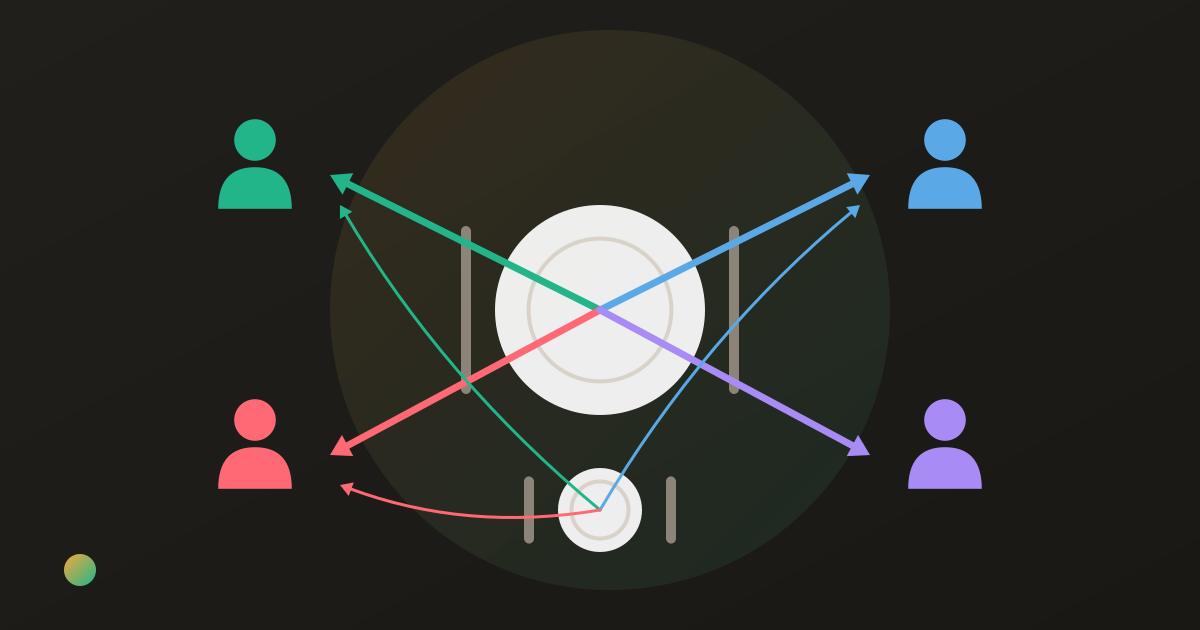
Four friends share a holiday rental, but not every meal. Dan has dinner elsewhere on Saturday. Ben leaves before Sunday brunch. At checkout, Dan takes the unopened groceries home. Dividing every food receipt by four would miss all three decisions.
Split food on a group trip by the people who agreed to share each meal or purchase. Keep private meals and snacks separate, choose participants before buying where possible, and agree what happens to unused groceries. Record who paid as well as each person’s share, then settle the net balances once.
Agree which food is shared
Before the first supermarket run, decide what the shared shop covers: breakfast ingredients, a planned dinner, or food anyone can use. Put private snacks and drinks in a separate basket or note their cost before saving the receipt.
Also agree whether a shared purchase stays shared if someone changes their plans. Buying ingredients together and later deciding not to eat is a different situation from saying in advance that you will eat elsewhere. Make that distinction before the food is bought rather than trying to measure appetite afterwards.
For accommodation and transport alongside meals, the fair way to split a group trip covers the wider record. Here, each food cost gets its own participant list.
Split by meal attendance
Make a short meal list: Friday dinner for four, Saturday dinner for three, Sunday brunch for three. Names are more useful than “most of us” because the missing person may change from one meal to the next.
A shared meal does not have to be divided by how much each person ate. The group can agree equal shares for its participants. If someone needs separate ingredients or wants their own order, agree that allocation too; do not infer it from the size of a plate.
The same distinction appears when splitting groceries with roommates: the shared household or trip is the setting, not proof that every item belongs to everyone.
Keep separate meals separate
If Dan arranges to eat elsewhere on Saturday, his separate restaurant bill stays outside the group record. That does not remove his share of Friday’s dinner or the breakfast groceries he agreed to share.
Private purchases work the same way. Dan’s €16 of personal snacks is paid privately and excluded from the example below. There is no later €4 charge to each friend for those snacks.
For a restaurant meal with different orders, use the actual participants and their agreed shares. How to split a restaurant bill covers individual dishes and shared items within that meal.
A weekend with different meal groups
Ada, Ben, Cleo and Dan agree these costs before each purchase. Ben’s Friday supermarket receipt is €48: €40 of dinner food eaten by all four, plus €8 of unopened groceries that Dan later takes home at the original cost with everyone’s agreement.
| Food cost | Paid by | Total | Ada | Ben | Cleo | Dan |
|---|---|---|---|---|---|---|
| Breakfast groceries, all four | Ada | €24 | €6 | €6 | €6 | €6 |
| Friday dinner food eaten, all four | Ben | €40 | €10 | €10 | €10 | €10 |
| Unopened Friday groceries kept by Dan | Ben | €8 | €0 | €0 | €0 | €8 |
| Saturday restaurant, Ada, Ben and Cleo | Cleo | €60 | €20 | €20 | €20 | €0 |
| Sunday brunch, Ada, Cleo and Dan | Ada | €30 | €10 | €0 | €10 | €10 |
| Total | €162 | €46 | €36 | €46 | €34 |
The Friday rows are two parts of the same €48 receipt, not two extra purchases. Together, they assign €10 to Ada, €10 to Ben, €10 to Cleo and €18 to Dan. His €18 includes dinner and the groceries he keeps.
Now compare what each person paid with their share:
| Person | Paid | Share | Paid minus share |
|---|---|---|---|
| Ada | €54 | €46 | +€8 to receive |
| Ben | €48 | €36 | +€12 to receive |
| Cleo | €60 | €46 | +€14 to receive |
| Dan | €0 | €34 | −€34 to pay |
| Total | €162 | €162 | €0 |
Dan sends Ada €8, Ben €12 and Cleo €14. His three payments total €34 and clear every balance. Three is the minimum here: three people have money to receive, and each needs a payment. Calculating who owes whom explains this paid-minus-share step.
What to do with unused groceries
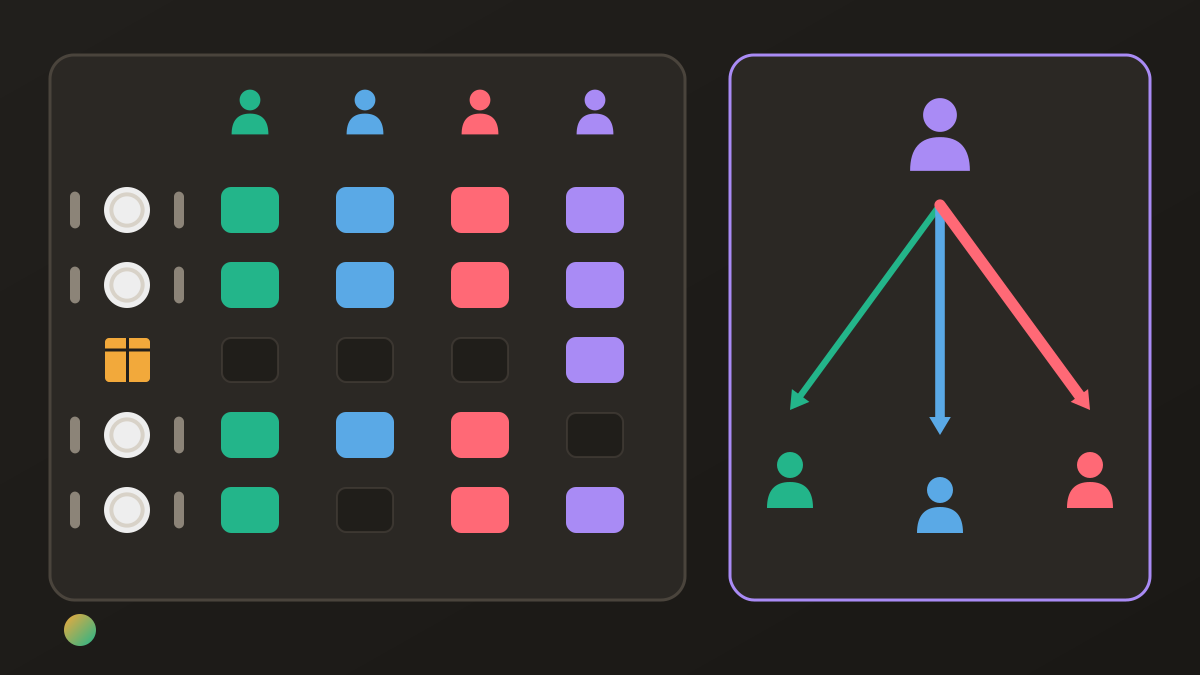
Choose an outcome together. In this example, Dan accepts the €8 original cost of groceries he keeps. That is a buyout of those items, not an extra €8 on top of the €48 receipt.
If the shop accepts a return instead, put the refund back against the original purchase for the same participants. If everyone agrees to keep the food shared, leave its agreed shares in place. Check these choices before someone packs the last bag into their car.
A group camping checklist can help with the separate question of who brings food and equipment. The cost record still needs to say who shares each purchase and who keeps anything left.
Where Donget comes in
In Donget, add each expense with the person who paid, select its participants and use Equally for that meal’s subgroup. For Ben’s €48 Friday receipt, Amounts can hold Ada €10, Ben €10, Cleo €10 and Dan €18 in one entry. Do not also save the €40 and €8 parts as extra expenses.
Check the group’s Settle up balances after all meals and the grocery decision are recorded. Dan makes the three payments elsewhere; record Paid afterwards. Donget does not move money or infer who attended a meal, ate separately or took food home. The allocation comes from your agreement.
Frequently asked questions
How should we split food costs on a group trip?
Agree which food is shared and list the people participating in each meal. Split that meal among its participants, rather than dividing every receipt by everyone who joined the trip.
Should someone who skips a meal pay for it?
Decide before buying or ordering. In the worked example, people who arrange to eat elsewhere or leave before a meal are excluded from that meal’s costs; other agreed shared purchases remain separate.
How do we handle private snacks or drinks?
Keep them outside the shared record, or assign their full cost to the person buying them. Being on the same trip does not automatically make every food purchase shared.
Who pays for unused groceries?
Agree whether they remain shared, are returned if the shop accepts them, or are taken home by someone at an agreed cost. In the example, Dan takes €8 of unopened groceries and accepts their full original cost.
Can one grocery receipt cover different groups?
Yes. Separate the items by participants or enter exact agreed amounts for the whole receipt. Check that the parts add to the original receipt so shared food and leftovers are not counted twice.
Does Donget know who attended each meal?
No. You choose the participants and allocation for each expense. Donget keeps the record and calculates balances from what you enter; attendance and who keeps groceries are decisions for the group.
Before the next food shop
Write the meal names and participants first. Keep the receipt total intact when dividing shared food, private items and groceries someone takes home.
Download Donget free and record each meal with the people who agreed to share it.