Group camping checklist: shared gear, who brings what, who pays
A group camping checklist splits into shared gear, personal gear, food and cooking, and safety. Each shared item gets one owner, bought gear and food are split among the people they were for, and borrowed gear costs nothing unless agreed.
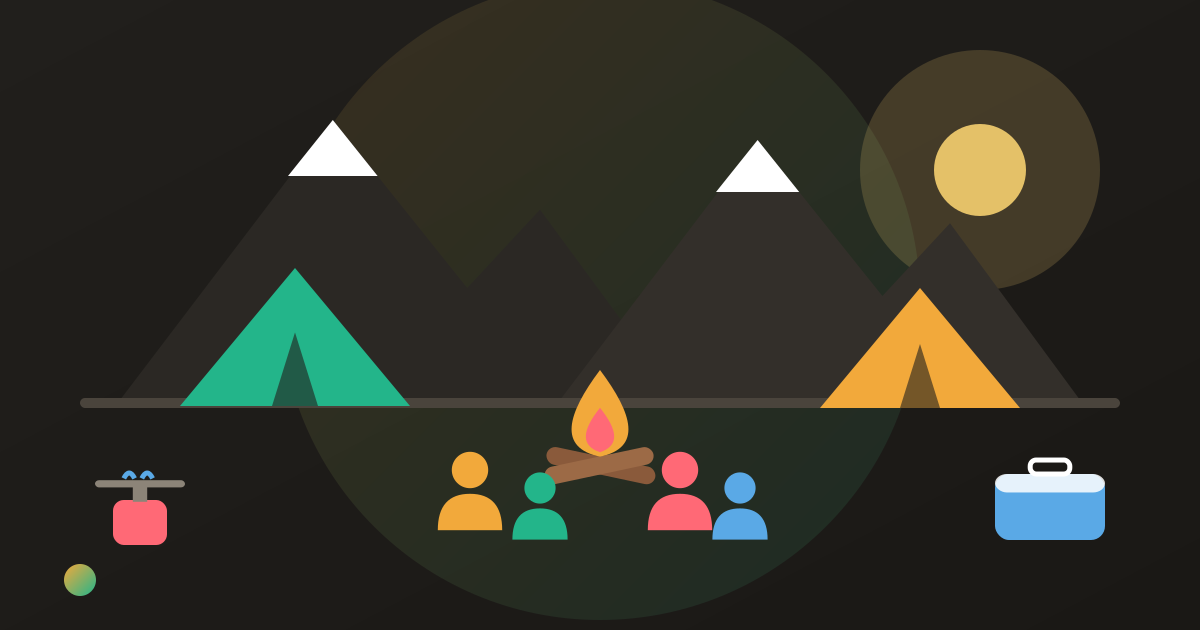
Four friends, one weekend, a campsite an hour and a half away. Everyone assumes someone else is bringing the stove, two people pack a tent, nobody packs the tent pegs, and on Sunday evening the person who did the shopping is quietly adding up receipts. Camping has more moving parts than a dinner out, and most of them only show up when they are missing.
A group camping checklist solves that, provided it separates what the group shares from what each person packs.
A group camping checklist has four parts: shared gear, personal gear, food and cooking, and safety. Every shared item gets one named person. Gear someone already owns is lent for free unless agreed otherwise; gear and food bought for the trip are split among the people they were for, and the group settles once at the end.
How to plan a group camping trip in four lists
Planning a group camping trip comes down to four questions: what does the group need, who already has it, who buys the rest, and who pays for what. The lists below answer the first. The rest of the article answers the other three.
Fix the date, the site and the number of cars first. The car count decides how much gear can come, and the site decides whether you need your own water, toilet paper or firewood.
Shared gear: the group camping checklist
These are the things one person brings for everyone, so each needs exactly one name:
- Tents, with poles, pegs and a mallet (count sleeping spaces, not tents)
- Groundsheets or footprints
- A tarp or gazebo for rain and shade
- Camping stove, with enough gas canisters, and a lighter or matches
- Cooler and ice packs
- Water containers, if the site has no tap near the pitch
- Camp table and chairs
- Lanterns for the shared area
- Pots, a pan, a kettle, a sharp knife and a chopping board
- Washing-up bowl, sponge, biodegradable soap and a tea towel
- Bin bags, enough to take everything home
- Rope and a few spare pegs
- Firewood, if fires are allowed where you are going
Personal gear: the group camping packing list for each person
These stay personal. Nobody should be checking whether someone else packed their sleeping bag:
- Sleeping bag rated for the night-time temperature, sleeping mat and pillow
- Head torch with spare batteries
- Warm layers, a rain jacket, hat, boots and camp shoes
- Toiletries, a towel, sunscreen and insect repellent
- Any medicine you take
- Refillable water bottle
- Charger and power bank
- Your own plate, cup and cutlery, if the group is not sharing a set
Food and cooking
Plan food by meal, not by ingredient, and give each meal to one person: Friday dinner, Saturday breakfast, Saturday lunch, Saturday dinner, Sunday breakfast. That person buys and cooks it, or buys it and hands over the cooking. Add the things nobody thinks of as a meal: coffee, milk, oil, salt, snacks, drinking water and drinks.
Write the quantity into the line: “Saturday breakfast for 4”, “Water, 12 litres”. It saves a second trip to a shop that may be twenty minutes away.
Safety
Safety items are shared, but they are not optional, so give them a name too:
- A first-aid kit that someone has actually opened and restocked
- Enough drinking water for everyone
- A plan for bad weather, and the forecast checked the day before
- Phones charged, the site’s address saved, and someone at home who knows where you are
Who brings what: owners, borrowers and buyers
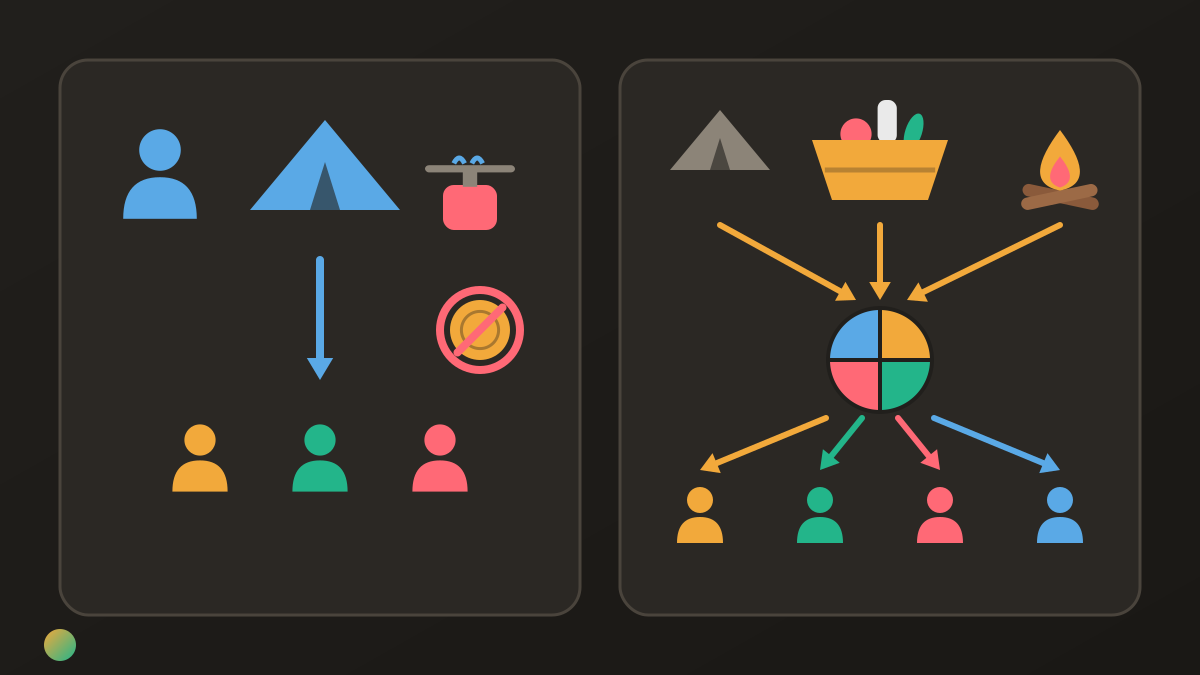
Every shared item ends up in one of three states.
Owned and lent. Tom has a four-person tent and a stove. He brings them, and the group pays nothing for them. Among friends, lending gear for a weekend is the norm; charging rent is not. If something is expensive or likely to wear, agree a contribution before the trip. Agreeing it afterwards feels like a bill.
Borrowed from outside the group. If Ana borrows her sister’s cooler, the group owes the sister its care and perhaps a thank-you, not a fee, unless one was asked for.
Bought for the trip. Gas canisters, firewood, food and the pitch fee are spent once and used up. These are shared expenses, split among the people they were for. Gear bought for the trip and kept afterwards, such as a tarp, needs a decision when you buy it: either the person keeping it pays alone, or the group splits it and the keeper pays the others back their share.
Personal items never enter the split. Your sleeping bag is yours, whoever carried it to the car.
Who pays: a worked example
Ana, Ben, Cleo and Tom go camping for two nights. Tom brings his tent and stove, free. Four people pay for shared things:
| Expense | Paid by | For | Each |
|---|---|---|---|
| Pitch, two nights, €84 | Ana | all four | €21 |
| Groceries, €132 | Ben | all four | €33 |
| Gas canisters and firewood, €28 | Tom | all four | €7 |
| Beer, €24 | Cleo | Ana, Cleo, Tom | €8 |
Ben does not drink, so the beer is split three ways. Each person’s balance is what they paid minus their shares:
- Ana: €84 − €69 = +€15
- Ben: €132 − €61 = +€71
- Cleo: €24 − €69 = −€45
- Tom: €28 − €69 = −€41
The balances add up to zero. It settles in three transfers: Cleo pays Ben €45, Tom pays Ben €26 and Tom pays Ana €15. No pair of balances cancels out on its own, so three is the minimum. Tom’s tent and stove appear nowhere in the figures, which is exactly the point.
If the trip involves a long drive, fuel is a separate split, covered in how to split gas money on a road trip. If the group prefers a shared pot for small costs on site, a travel kitty or split as you go compares the two, and the fair way to split a group trip sets out the ground rules.
Where Donget comes in
A Donget group has a Money | Tasks switch, and the shared lists above fit under Tasks. Add task takes one item at a time; Who takes it? can be left Open, putting the item Up for grabs, or handed to one or more people straight away, so “Tent for 4” goes to Tom from the start and “Saturday dinner for 4” stays open until someone taps Take it. An empty list offers one-tap suggestions under Quick add that depend on the group’s icon; with a camping icon they are Driving, Bring a car, Buy groceries and Set up the tents. Two people can take an item together, and anyone holding an item can Step away, Give it back or Hand to someone else.
Personal gear goes under My tasks as Personal tasks: only you see them, and they do not count toward the group’s progress. When Ben ticks “Buy groceries” with Mark as done, Donget asks Spent money on Buy groceries? and Add expense opens the expense form with the title filled in; he adds €132 and who it was for. When every group task is ticked, All tasks done offers Go to settle up, which suggests transfers like the three above. Tasks and expenses both work offline and sync later, which helps at a campsite with no signal.
Where it loses: tasks have no quantities, sign-up slots or dates, so quantities go in the title and the date lives in your calendar. Donget also does not book pitches or hold the group’s money. If you are organising a party rather than a trip, the who brings what list covers the same approach for food and drinks.
Frequently asked questions
What should be on a group camping checklist?
Four lists: shared gear, personal gear, food and cooking, and safety. Every shared item gets one named person.
How do you plan a group camping trip?
Fix the date and the site, count people and cars, write the shared gear list and see what the group already owns. Hand out the gaps and agree before you leave how bought items will be split.
Should friends pay to use someone’s tent or stove?
Not by default. Lending gear for a weekend is usually free among friends; if it is expensive or gets damaged, agree a contribution before the trip.
How do you split food costs on a camping trip?
Whoever shops records what they spent, and the group splits it among the people who eat it. One person per meal keeps the list short.
Who keeps gear the group bought together?
Decide when you buy it. Either the group splits it and the keeper pays the others back their share, or the keeper pays for it alone.
What goes on a group camping packing list for each person?
Sleeping bag, mat, pillow, head torch, warm layers, rain jacket, boots, toiletries, medicine, a water bottle, a charger and power bank, and your own plate, cup and cutlery if the group is not sharing them.
The bottom line
A group camping trip works when the shared gear has owners, the personal gear stays personal, and the money follows what was actually bought. Lend what you own for free, split what you buy among the people it was for, and settle once on the way home.
Download Donget free and keep the group camping checklist and the shared costs in one place.