How to work out who owes whom after a group trip (step by step)
To work out who owes whom, give each person one net balance (what they paid minus their share), then match the biggest debtor with the biggest creditor until everyone is at zero.
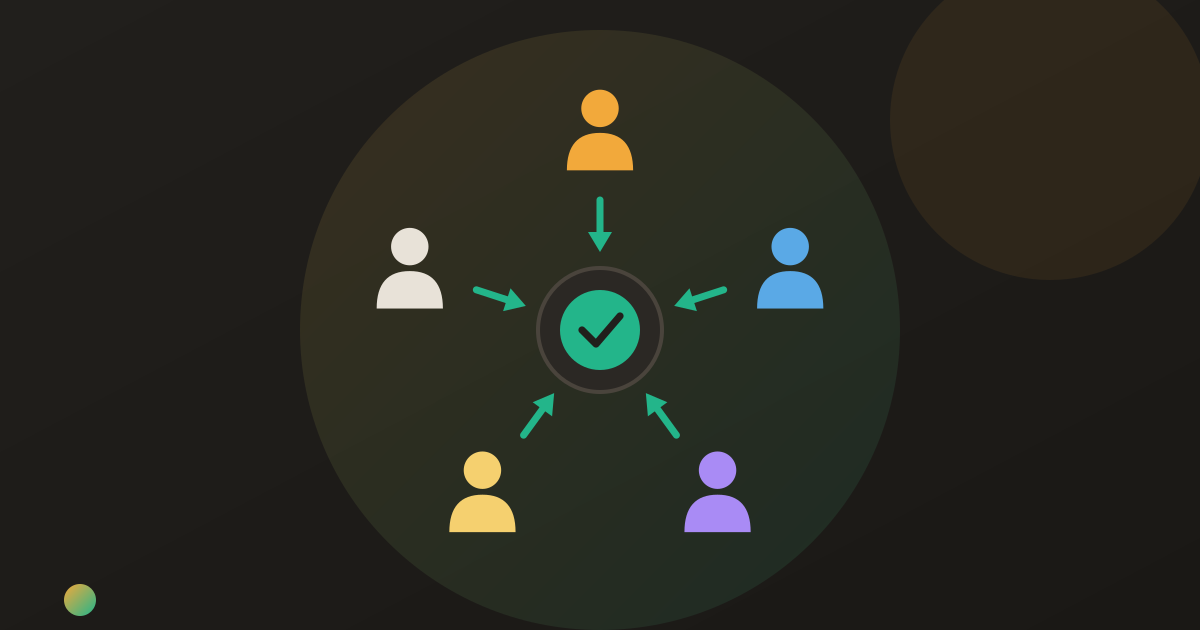
The trip is over. Everyone is home, the photos are in the group chat, and so is the question nobody wants to answer by hand: so who owes who? Maya paid for the apartment, Tom for the car, Lena for one dinner, and Raj skipped that dinner but bought the groceries. Adding it up in your head goes wrong within a minute.
There is a method that always works, needs only subtraction, and gives the same answer whoever does it. To work out who owes whom, add up what each person paid and what each person’s share came to, and subtract to get one net balance per person. The balances always sum to zero. Then the person who owes the most pays the person owed the most, and you repeat until everyone is at zero.
How to calculate shared expenses: start with one list
You need four facts for every shared cost: what it was, who paid, how much, and who shared it. That last column is the one people forget. A dinner one friend skipped is not shared by five, and a boat trip only three people took is not shared by the whole group.
Write it down in one place: a note, a spreadsheet or an app. If the expenses were in different currencies, convert each one to a single currency first, at the rate that applied when it was paid; splitting bills across currencies explains why.
Step 1 — Work out each person’s share
For every expense, divide the amount among the people who shared it. Most trip costs are split equally among those people, but the same method works for any split: exact amounts, percentages or shares, as the five ways to split an expense describes. What matters is that each expense’s shares add up to its amount.
Then, for each person, add up their shares across the whole trip. That is what the trip cost them.
Step 2 — Net balance = paid − share
For each person, add up everything they paid for the group, and subtract their total share:
net balance = total paid − total share
A positive number means the group owes them money. A negative number means they owe the group. Zero means they are already even.
Now check your work: the balances must add up to exactly zero. Every euro someone paid is someone’s share, so the total paid and the total of all shares are the same number. If the sum is not zero, an expense or a share is wrong, and no settling should happen until it is fixed.
Step 3 — Match the largest debtor with the largest creditor
This is the who owes whom calculation itself, and the part that actually settles group expenses:
- Take the person with the most negative balance and the person with the most positive balance.
- The debtor pays the creditor the smaller of the two amounts. At least one of them is now at zero.
- Repeat with whoever is left until every balance is zero.
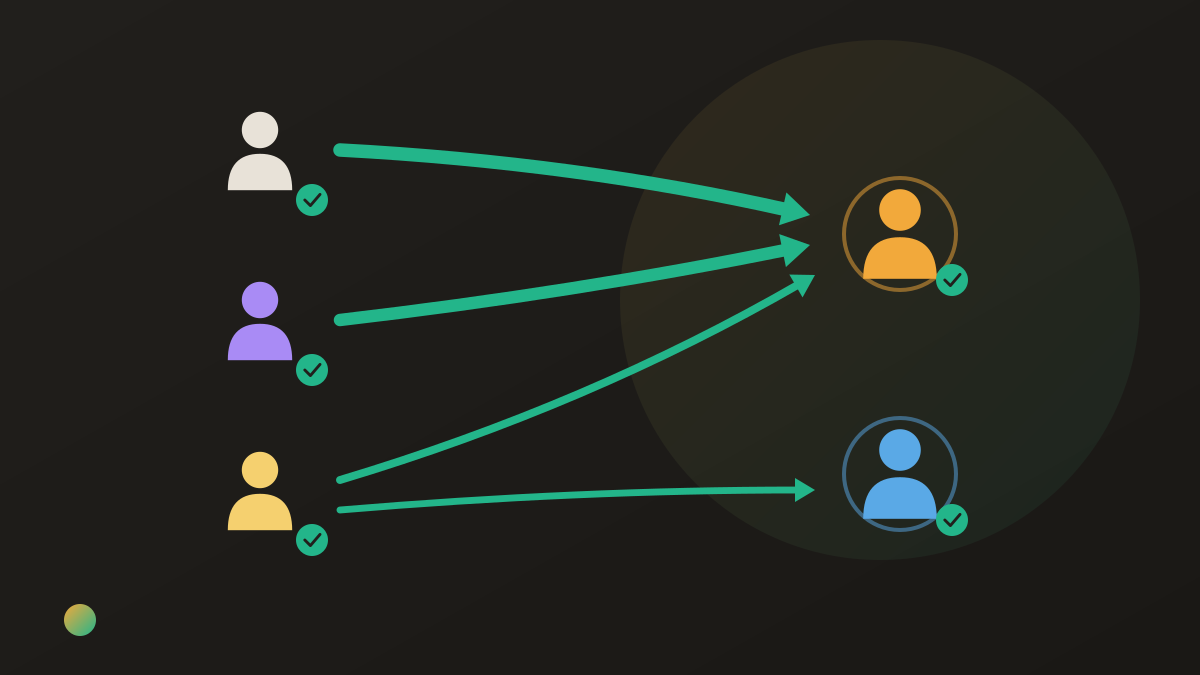
Each transfer brings at least one person to zero, so a group of n people needs at most n − 1 transfers. The reason this works, and why it may send you money from someone who never paid for you, is explained in how debt simplification works. Here is the practical part.
A worked example: who owes who after a trip to Lisbon
Maya, Tom, Lena, Raj and Sofia spend a long weekend in Lisbon. Sofia arrives a day late and misses the drive to Sintra, Raj skips the seafood dinner, and only Maya, Lena and Sofia go on the boat tour.
| Expense | Paid by | Amount | Shared by | Each share |
|---|---|---|---|---|
| Apartment, 3 nights | Maya | €750 | All five | €150 |
| Car hire and fuel | Tom | €320 | Maya, Tom, Lena, Raj | €80 |
| Seafood dinner | Lena | €260 | Maya, Tom, Lena, Sofia | €65 |
| Groceries | Raj | €150 | All five | €30 |
| Boat tour | Sofia | €165 | Maya, Lena, Sofia | €55 |
| Museum tickets | Tom | €75 | All five | €15 |
| Total | €1,720 |
Step 1 and Step 2 together. Maya’s share is €150 + €80 + €65 + €30 + €55 + €15 = €395. Raj’s is €150 + €80 + €30 + €15 = €275, because he skipped the dinner and the boat. The same sums for everyone give:
| Person | Paid | Share | Net balance |
|---|---|---|---|
| Maya | €750 | €395 | +€355 |
| Tom | €395 | €340 | +€55 |
| Lena | €260 | €395 | −€135 |
| Raj | €150 | €275 | −€125 |
| Sofia | €165 | €315 | −€150 |
| Total | €1,720 | €1,720 | €0 |
Check: 355 + 55 − 135 − 125 − 150 = 0. Maya and Tom are owed €410 between them, and Lena, Raj and Sofia owe exactly €410.
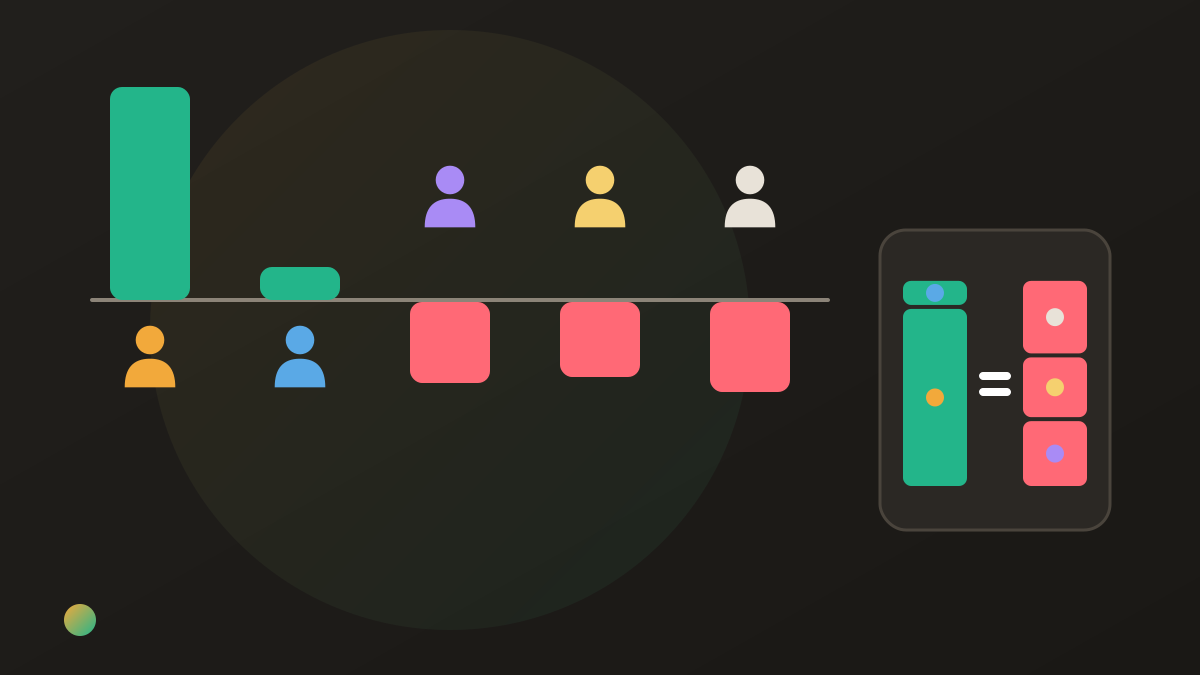
Step 3. Sofia owes the most (−€150) and Maya is owed the most (+€355): Sofia pays Maya €150, and Maya is still owed €205. Next, Lena (−€135) pays Maya €135; Maya is still owed €70. Raj (−€125) is next, and Maya is still the largest creditor: Raj pays Maya €70, leaving Raj at −€55. Tom is now the only one still owed: Raj pays Tom €55.
Four transfers, and everyone is at zero. Written as separate debts, from each person who shared an expense to whoever paid it, the same trip is twenty IOUs, or ten even after netting each pair of friends against each other.
When the plain method gives more transfers than needed
Matching largest with largest is quick and never needs more than n − 1 transfers, but it can miss a shorter route. Take five friends whose balances are Jo +€40, Kim +€30, Leo −€20, Mia −€20 and Noor −€30.
Largest-with-largest gives four transfers: Noor pays Jo €30, Leo pays Kim €20, then Mia has to pay Kim €10 and Jo €10. But Noor owes exactly what Kim is owed. Pair them first, and the rest is simple: Noor pays Kim €30, Leo pays Jo €20, Mia pays Jo €20. Three transfers.
So before Step 3, look for exact matches, a debtor who owes precisely what a creditor is owed, and settle those pairs first. In a group of friends that one check usually gets you to the fewest transfers.
Mistakes that break the calculation
- Leaving the payer out of their own expense. Maya paid for the apartment, but she slept there too; her €150 share counts.
- Splitting everything among everyone. The person who skipped the dinner should have a zero share of it, not a fifth.
- Recording a repayment as a new expense. A transfer between two friends changes those two balances only; it is not a cost the group shared.
- Settling on a total that does not sum to zero. Fix the list first.
Once you have the transfers, sending them is the easy part; settling up without awkwardness covers the asking.
Where Donget comes in
Donget does these three steps every time someone adds an expense. Whoever pays sets Paid by and chooses who shares it, with Equal, Amount, Percentage or Multiplier, so whoever skipped the dinner is simply left out of it. The Balances tab shows each member’s net, already summed to zero. Expenses can be in any currency and are converted to the group’s currency at a rate saved on each expense.
At the end, Settle up suggests the fewest transfers, combining debts so you may pay someone other than the person who paid for you, and Paid records each one as it happens. The app does not move money; it keeps one list everyone can check, which is what keeping track of who owes you money comes down to. If you are still choosing an app, the travel expense apps compared sets out the options.
Frequently asked questions
How do you calculate who owes who after a trip?
List every expense with who paid and who shared it. For each person, subtract their total share from what they paid to get a net balance. Then the person who owes most pays the person owed most, and you repeat until everyone is at zero.
How do you split expenses between friends who didn’t all take part?
Divide each expense only among the people who shared it. A friend who skipped a dinner has a zero share of it; their net is still what they paid minus the shares they actually had.
Why do the balances always add up to zero?
Every euro somebody paid is somebody’s share, so total paid equals total shares. If your balances do not sum to zero, an expense has been entered wrongly or a share is missing.
How many transfers does a group need to settle up?
At most one fewer than the number of people with a non-zero balance. Five friends never need more than four transfers, and often fewer.
Do I have to pay back the person who actually paid for me?
No. Only your net balance matters, so you may pay someone who never paid for you. You end up exactly as far ahead or behind either way.
What if we paid in different currencies?
Convert every expense into one currency first, at the rate that applied when it was paid, then run the same three steps.
The bottom line
Working out who owes whom is three steps: shares, net balances, then largest debtor to largest creditor. Check that the balances sum to zero before anyone pays, look for exact matches first, and a group of five settles in four transfers or fewer.
Download Donget free and let the balances add themselves up while the trip is still going.