Who pays on a first date? Agree before ordering
Agree who pays on a first date before ordering: your own items, equal shares, or an explicit treat. One card payment does not decide who bears the cost.

The meal is booked, but the payment conversation has not happened. At the table, one person reaches for the card terminal while the other wonders whether that means “my treat” or “send me your share later”. One card can pay the same bill under either arrangement.
Agree who pays on a first date before ordering: each person’s own items, equal shares, or a clear offer to treat. Choose something both people accept rather than assigning payment by gender or who invited whom. If one person covers the card bill temporarily, confirm the repayment; an accepted gift has no repayment attached.
Agree a plan before choosing the order
A specific question is easier to answer than “What do people normally do?” Try: “Shall we each cover our own order and split anything we share?” Or: “Would you prefer equal shares, or our own items?”
If you want to cover your own meal, you can say that without giving a personal explanation. If you are offering to pay for both, ask rather than assuming the other person wants the offer. A proposed arrangement becomes useful when both people know what it means and accept it.
Going Dutch describes sharing the cost, but the phrase alone does not tell you whether to divide everything equally or pay for individual orders. State which one you mean.
Make an offer to treat explicit
“I’d like to treat you; no need to pay me back” separates a gift from a temporary card payment. The other person can accept or say, “Thank you, but I’d prefer to pay for mine.” Decide before ordering rather than leaving an unspoken expectation attached to the meal.
If you mean only one part, name it: “I’ll get the starter, and we can pay for our own mains.” Buying a shared starter does not automatically settle the arrangement for the rest of the evening.
An invitation can be just an invitation. “Would you like to have dinner?” leaves more room for interpretation than “I’d like to take you to dinner, my treat.” Clear wording avoids relying on a supposed universal rule about who should pay.
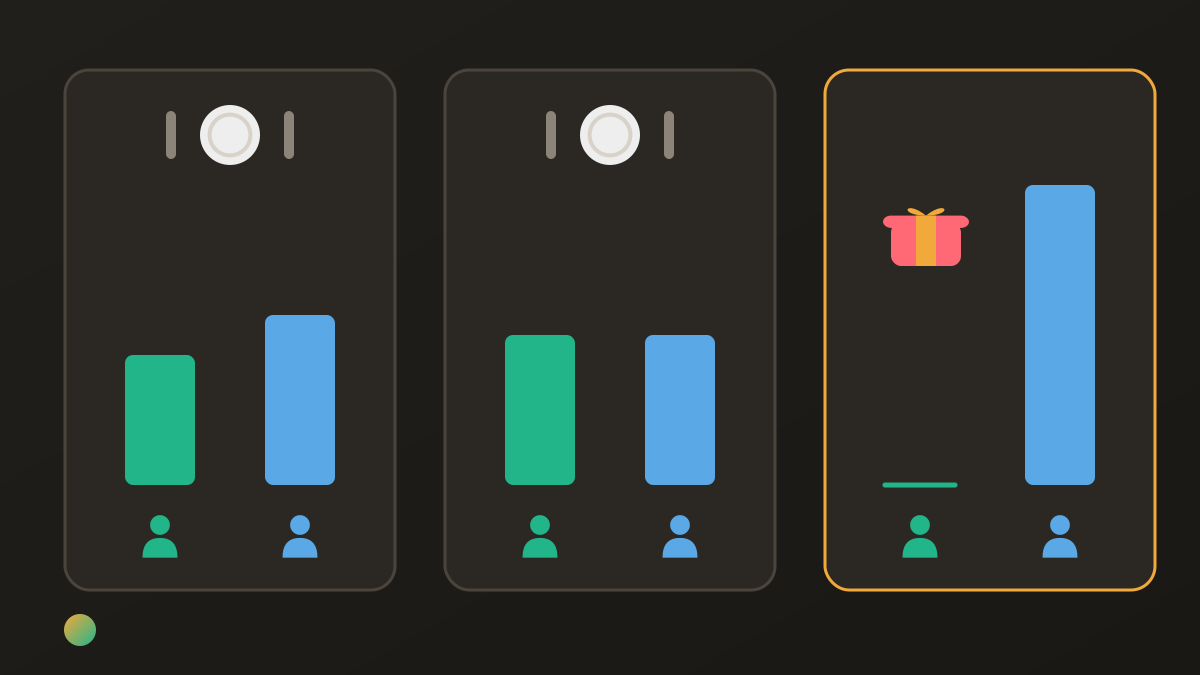
One bill, three different agreements
Mia orders an €18 main and €4 tea. Jules orders a €24 main and a €6 drink. They share an €8 starter. This example receipt has a 10% service charge, and they agree that it follows their food and drink shares if they itemise.
Mia’s own items are €22, plus €4 for half the starter: €26 before the charge. Jules’s items are €30, plus €4: €34. The €60 subtotal has a €6 charge, so the full bill is €66. The example’s charge is hypothetical; use the actual receipt when calculating your meal.
| Agreement made before ordering | Mia’s share | Jules’s share | If Jules pays the €66 bill |
|---|---|---|---|
| Own orders, half the starter, proportional charge | €28.60 | €37.40 | Mia sends Jules €28.60 |
| Equal shares of the whole receipt | €33 | €33 | Mia sends Jules €33 |
| Jules offers the whole meal as a gift and Mia accepts | €0 | €66 | No repayment |
The itemised amounts are €26 × 1.10 = €28.60 and €34 × 1.10 = €37.40. The equal arrangement is €66 ÷ 2 = €33. Each row accounts for the same €66 bill; the agreement changes who bears the cost, not what the restaurant receives.
If one person pays at the counter
Before tapping a card, Jules can say, “I’ll put the €66 through, then you can send me the €28.60 we worked out.” That confirms a temporary payment under the first arrangement. It does not change the meal into a treat.
Mia can check the amount before sending it. Once she sends Jules €28.60, Jules’s remaining cost is €37.40, matching the agreed share. Under the equal arrangement, Mia would instead send €33. Under the gift arrangement, there is nothing to send.
For the mechanics, how to split a restaurant bill separates individual items, shared dishes and extra charges. If you want to pay for a smaller order, these words for declining an even split give a concrete proposal.
If you disagree at the end
Return to what was actually said. “I understood we were paying for our own orders; is that what you meant?” is a question about the arrangement. It leaves room to correct a misunderstanding without deciding what the other person intended.
If you clearly offered and agreed a treat, do not turn it into a repayment record afterwards. A payment entry should describe a shared agreement, not create one retrospectively. For a future meal, state a different arrangement before another cost is incurred.
This also keeps a later outing separate from the first. Paying today does not need to imply who will pay next time. If you eventually share more routine costs, expense splitting for couples covers ways to record those arrangements; the first meal does not choose one for you.
Where Donget comes in
For one dinner, agreeing and paying directly may be all you need. If both people want a shared record, add the meal with the actual payer. Choose Amounts for €28.60 and €37.40, or Equally if you agreed €33 each.
Check Settle up against that arrangement. Mia sends the agreed repayment through a payment method they use, and then records Paid. Donget does not send or hold money, decide who should pay, or turn an offer to treat into an amount owed.
A gift does not need a repayment reminder. Keep it out of the shared repayment balance rather than entering equal shares merely because two people ate.
Frequently asked questions
Who should pay on a first date?
Choose an arrangement both people accept before ordering: your own items, equal shares or a clear offer to treat. The example does not assign payment by gender or by who suggested meeting.
Does inviting someone mean you are paying?
An invitation alone may leave the payment arrangement unclear. If you mean to treat, say so; if you mean to share, suggest that before choosing the order.
How can I offer to split without making it awkward?
Try: “Shall we each cover our own order and split anything we share?” That gives the other person a specific proposal rather than asking them to guess what “split” means.
What is the difference between treating and paying on one card?
Treating is an agreed gift with no reimbursement expected. Paying on one card can simply be the practical way to pay the restaurant, followed by the agreed repayment.
Can I ask for half back after saying it was my treat?
If the meal was clearly offered and accepted as a gift, do not later record it as an agreed debt. Make a different payment arrangement explicitly before another shared cost.
Do we need an app for one date?
No. You can agree the amounts and pay directly. If both people want a shared record, Donget can record the payer and agreed shares; it does not send money or decide the agreement.
Before you sit down
Name the arrangement while it is still a choice. Then a card payment, a repayment and a gift can each mean exactly what you both agreed.
Download Donget free and record the shares you both choose when you want a shared payment record.