The friend who never pays: how to handle it without losing the friendship
When a friend never pays, treat it as a pattern: split costs at the time, keep them where everyone can see, stop fronting money, then talk once, kindly. Scripts and a worked example included.

The bill arrives and there is a familiar pause. One friend pats their pockets, laughs, and says they will get the next one. The next one never quite happens. It is not a big amount, it is never a big amount, but you have started noticing who reaches for their card first, and that is its own small cost.
This is not about one unpaid sum. When a friend never pays, treat it as a pattern, not a debt: split costs at the time they happen, keep shared costs in one record everyone can see, agree the rules before trips, and stop fronting money. If it continues, talk once, about the arrangement rather than the person, and then decide what you are happy to cover.
When a friend never pays, it is a pattern, not a debt
A debt is one amount with a name on it: the concert tickets, the deposit. It has a fix, and what to do when a friend won’t pay you back walks through it step by step.
A pattern is different. No single moment is worth raising. The friend lets someone else cover the round, the taxi, the cinema tickets, and never quite offers. Each instance is too small to mention, so nobody does, and the cost lands on whoever pays most readily. After a while it can feel as if this friend never pays for anything, even though no single evening says so. Asking about one taxi fare fixes nothing, because the taxi is not the problem. The habit is.
The friend who always forgets their wallet: four likely reasons
It is tempting to file this person as a mooching friend. The label is usually unfair, and it never helps, because it turns a solvable arrangement into a judgement of character. There are four common reasons, and only one of them is about taking advantage:
- Their budget is tighter than the group’s plans. They come because they want to, and quietly hope nobody notices they cannot keep up.
- They are disorganised. They genuinely mean to pay you back and genuinely forget, every time.
- They avoid money conversations. Saying “what do I owe?” feels awkward to them, so they wait to be told, and nobody tells them.
- They are used to someone else covering it. Sometimes it is that, and they may not have noticed.
From the outside you usually cannot tell which one it is. You do not need to. The moves below work for all four, and they do not require accusing anyone.
How the small amounts add up
Maya, Jonas, Priya and Tom go out together most weekends. Every outing is split equally four ways. Over one month:
| Outing | Paid by | Total | Each person’s share |
|---|---|---|---|
| Friday drinks | Maya | €48 | €12 |
| Taxi home | Jonas | €24 | €6 |
| Cinema tickets | Priya | €52 | €13 |
| Pizza night | Maya | €64 | €16 |
| Sunday brunch | Jonas | €72 | €18 |
The month cost €260, or €65 each. Maya paid €112, Jonas €96, Priya €52 and Tom nothing. Against their €65 shares, Maya is owed €47, Jonas is owed €31, Priya owes €13 and Tom owes €65; the four balances sum to zero.
Priya owing €13 is just timing: she paid for the cinema, and the others happened to pay for more. Tom’s position is different, because the column of things he paid for is empty. His largest single share was €18, an amount nobody would chase. Across the month it is €65; across a year of similar months, €780.
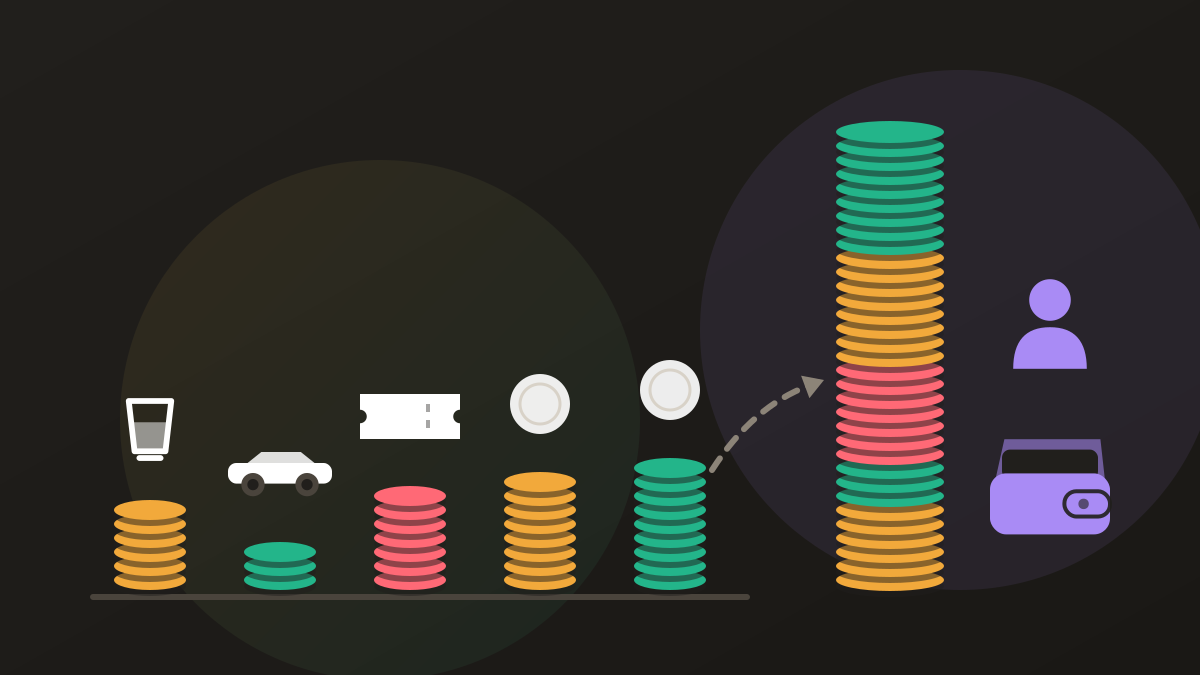
Settled, it takes three transfers: Tom pays Maya €47, Tom pays Jonas €18, and Priya pays Jonas €13. Nothing about that is dramatic. It only becomes awkward if it is left until it is €780.
Five moves that change the pattern quietly
Split at the time. Ask the waiter for separate bills, or have each person pay their share at the till. When everyone pays in the moment, nobody has a wallet to forget. Going Dutch is a perfectly normal default between friends.
Keep one shared record everyone can see. Whoever pays logs it, and the balance sits where the whole group can open it. Nobody has to remember or raise anything, because the number is simply there. How to keep track of who owes you money sets this up.
Agree the rules before a trip. Before the weekend away, agree how costs are split and when you will settle. A rule agreed in advance is about everyone; one raised afterwards is about someone.
Suggest cheaper plans if budget might be the issue. Alternate the expensive restaurant with a picnic, a home dinner or a free event. Make it easy to join without spending, so that “I can’t afford it” does not have to be said out loud.
Stop fronting. You do not need to announce it. Just stop being the person who puts down a card for four and collects later. If you never front the money, there is nothing to forget to pay back.
The conversation, if you still need one
If the pattern continues, talk once, privately, about the arrangement rather than the person. Some wording that keeps it neutral:
- “Can we start splitting at the till when we go out? I’ve lost track of who’s covered what, and I’d rather not keep a tally in my head.”
- “I’m trying to be more careful with money, so I’m going to stop covering the group and sorting it out later. Shall we each pay our own?”
- “Before the trip, shall we put everything in one shared list and settle at the end? It’s easier than remembering.”
- “Just checking whether our plans have been too pricey lately. Happy to do cheaper things, just say.”
Notice what none of these say: “you never pay”. They change how the group works and give the friend an easy way to fit into it. For the wording of a direct ask, how to ask friends for money without it being awkward has more.
When to accept it
Sometimes the right answer is to let it be. If the friend is going through a hard time, if the amounts are small next to what the friendship gives you, or if you simply earn more and do not mind, covering them is generous rather than foolish.
The difference is whether you choose it. Decide what you are happy to pay, perhaps the occasional round or a birthday dinner (see who pays on a birthday dinner), and stop fronting anything beyond it. Resentment comes from covering by default, not from covering on purpose.
Where Donget comes in
Donget keeps the shared record for the group. Whoever pays adds the outing under Add expense and sets Paid by, and everyone in the group sees the same expenses and balances, so the number is never one person’s word against another’s memory. A friend who has not installed the app yet can still be added by name. At the end of the month, Settle up suggests the fewest transfers, and Paid records each one. Reminder lets you share that payment through WhatsApp or any app you choose; it never sends anything on its own. The app does not move money or chase anyone; it keeps the figure visible.
Frequently asked questions
What do you do when a friend never pays?
Treat it as a pattern. Split costs at the time, keep shared costs in one record the group can see, agree rules before trips and stop fronting money. If it continues, talk once about the arrangement, not the person.
Why does a friend always forget their wallet?
Usually a tighter budget, disorganisation, discomfort with money talk, or being used to others covering it. The same preventive moves work for all four.
How do you bring it up without sounding petty?
Talk about how the group splits, not about the person. Propose a specific change, such as paying at the till or one shared list, and leave out the history.
Is it petty to keep track of small amounts with friends?
No. A €6 taxi share and a €12 round become €65 in a month and €780 over a year. A shared record makes the figure neutral.
What if a friend never pays back a specific amount they owe?
That is a single debt. Make the amount clear, ask once in writing with a date, offer an easier way to pay, then decide.
When should you just accept it?
When the amounts are small next to what the friendship gives you and you are choosing it. Decide what you will cover and stop fronting the rest.
The bottom line
A friend who never pays is rarely a villain; more often the group’s habits make not paying easy. Change the habits first: split at the time, keep one visible record, agree rules early and stop fronting. Talk once if you need to, kindly and about the arrangement, and then decide on purpose what you will cover.
Download Donget free and keep your group’s shared costs in one list everyone can see, so nobody has to keep score.