A shared packing list for a group trip: shared gear vs your own
Keep personal bags private and give shared gear an owner, carrier and return plan. Check what you already have before assigning any shopping.
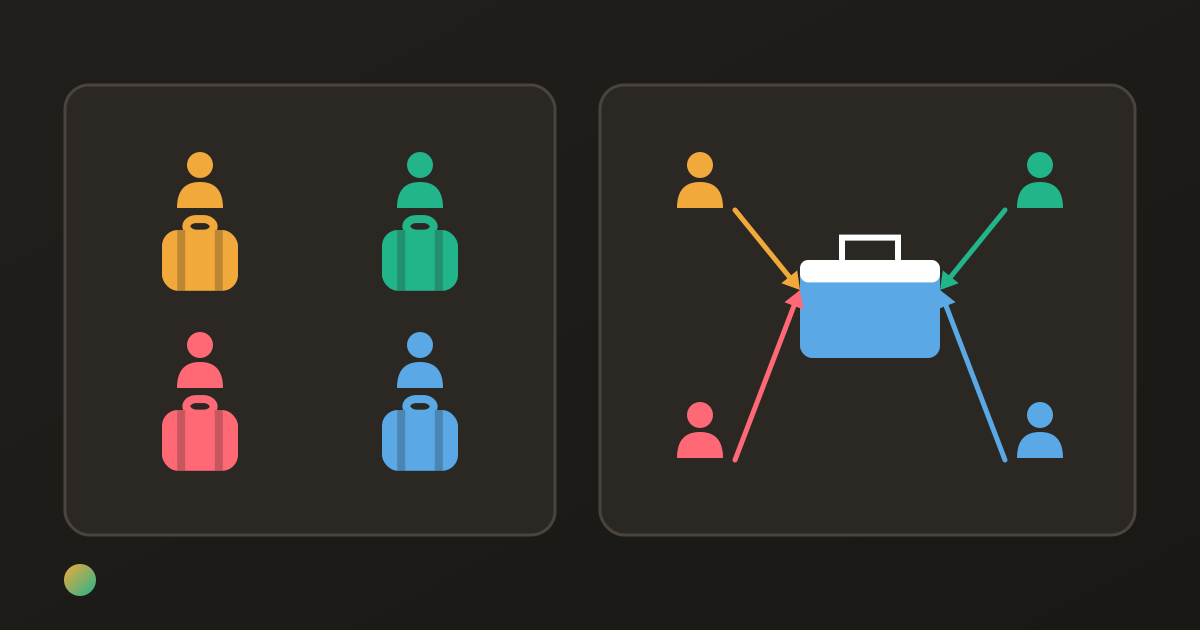
Three friends have packed a speaker. Nobody has packed the kitchen supplies because “the packing list” was actually four private lists and an old message. Then two people buy the same thing on the way, each assuming the other has forgotten.
Keep a personal list for your own bag and a shared list for anything the group relies on. For shared gear, record who owns it, who carries it and where it goes afterwards. Assign a purchase only after checking what you already have.
That structure works for a weekend rental, a road trip or a longer holiday. The objects change; the ownership problem is the same.
Draw the boundary around shared gear
Your clothes and toiletries usually need no group coordination. A cooler everyone expects to use does. Put an item on the shared list when another person’s plan depends on it reaching the destination.
A personal item can still need a shared handoff. If Tom puts Mia’s suitcase in his car, record the carrying arrangement without copying the contents of her suitcase into the group list. Separate coordination from inspecting one another’s bags.
For a whole trip rather than the packing alone, planning a group trip with friends covers dates, bookings and responsibilities.
Check what is already there before buying
Ask what your accommodation supplies, then ask what friends can lend. Check those answers against the list before handing out shopping jobs. “Available” should mean someone has agreed to bring the item, not merely that somebody owns one somewhere.
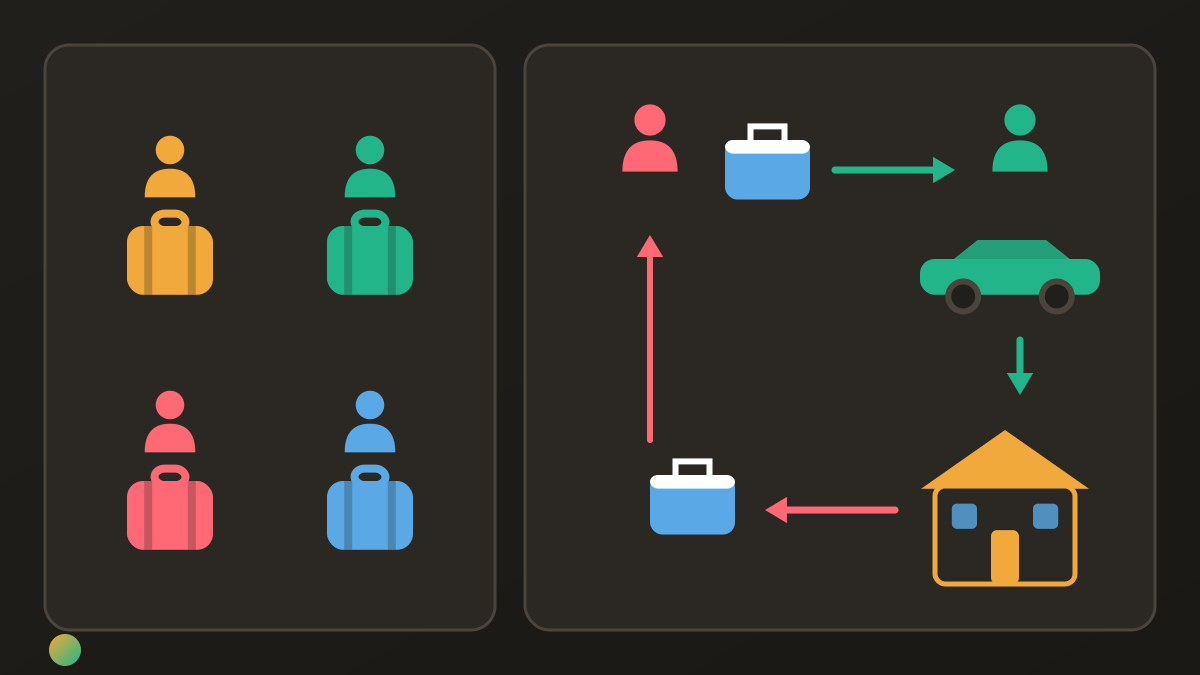
A borrowed item can have a short note: “Mia’s cooler; Ravi collects it Thursday and returns it to Mia afterwards”. The owner can confirm whether any accessories need to travel with it.
Keep the shopping line separate from the object you hope to borrow. Once a loan is confirmed, remove or close the proposed purchase so it does not remain an invitation to buy a duplicate.
Give shared items an owner, carrier and return plan
The person who owns something may be travelling by train while someone else has the car space. Giving the item a single vague name on a list hides that dependency.
| Shared line | Owner or source | Person responsible for getting it there | After the trip |
|---|---|---|---|
| One cooler | Mia, lent free | Ravi | Ravi returns it to Mia |
| One shared speaker | Tom, lent free | Tom | Tom takes it home |
| Kitchen washing-up supplies | Shared purchase | Elena buys and carries | Agree who keeps the remainder |
| Breakfast groceries and shared snacks | Shared purchase | Ravi buys and carries | Check what remains together |
Responsibility means arranging the whole handoff, not necessarily doing every part alone. If Ravi cannot collect the cooler, change the carrying line and confirm it with the replacement. Otherwise the tick next to “cooler” can conceal a cooler still in Mia’s hallway.
The who brings what list uses the same idea for food and party equipment.
Put quantities where the next person will see them
Write “One cooler” and “Breakfast for four for two mornings”. A task called “food” forces the shopper to reconstruct a conversation at the shop.
Keep one current shared list. When someone takes a job, put their name on it. When they give it back, reopen it before assigning somebody else. Checking an old screenshot defeats the point of having a shared version.
You can also split one job into clear handoffs: “Collect the cooler from Mia” and “Load the cooler into Ravi’s car”. This is useful where different people finish different parts. Keep small personal packing decisions off the group board so those handoffs remain easy to find.
Agree who pays for new equipment
Borrowing an owned item does not automatically create a hire fee. A friend can lend something freely, and carrying it does not automatically reduce their accommodation share. Discuss any payment before the trip.
New equipment needs an ownership decision as well as a payer. If Elena wants a new flask to keep, she can buy it herself and lend it during the holiday. If everyone is buying a lasting item together, agree who will hold it afterwards and whether someone will buy out the others. Avoid collecting four shares and discovering later that four people expected to keep it.
Consumables are simpler: agree their users, record the actual purchase once and decide what to do with what remains. A travel kitty can fund those small purchases, provided its contributions and spending are kept distinct.
A worked example: packing for a four-person rental
Elena, Ravi, Mia and Tom agree to share kitchen washing-up supplies and breakfast groceries with snacks. Mia lends her cooler free. Elena also buys a €40 flask that she will keep; the friends agree it is her personal purchase, outside their shared costs.
| Shared purchase | Paid by | Participants | Each share |
|---|---|---|---|
| Washing-up supplies, €24 | Elena | All four | €6 |
| Breakfast groceries and snacks, €48 | Ravi | All four | €12 |
The shared total is €72 and each person’s share is €18. Paid minus share gives Elena +€6, Ravi +€30, Mia −€18 and Tom −€18. Those balances sum to zero.
One settlement is Mia pays Ravi €18; Tom pays Ravi €12 and Elena €6. Ravi receives €30 and Elena receives €6, exactly their advances above their own shares. Mia and Tom each pay €18. The cooler loan and personal flask never enter that calculation.
Check the list on the way home
Add returning borrowed gear before departure, while everyone knows whose item it is. Give leftover groceries a destination too. Items belonging to a rental stay there; personal and borrowed items go back to their owners.
A final check can also catch unfinished shopping entries. Something planned but never bought creates no expense. For an equipment-heavy outdoor trip, the camping checklist gives a fuller inventory to apply this method to.
Where Donget comes in
Use the group’s Tasks for shared packing jobs. For your own items, choose Personal when adding a task; those items appear under My tasks and are visible only to their owner. Add task → Who takes it? lets you assign a shared job or leave it Open for someone to take. More than one person can share an assignment when the handoff needs both.
After Mark as done, a purchase task can offer Add expense with its title filled in. Enter the actual amount and review the participants before saving; borrowing the cooler needs no expense. Donget has no quantity field or dates on tasks, so put quantities in titles and arrange collection times separately.
Frequently asked questions
What belongs on a shared packing list for a group trip?
Put equipment everyone relies on, shared purchases and transport handoffs on the group list. Keep each person’s clothes, toiletries and other individual belongings on a personal list unless someone else needs to coordinate carrying them.
How do you stop friends buying the same shared item?
Check what is already available, give one person the purchasing job and write a quantity into its title. Before buying, that person checks the current list rather than an older message or screenshot.
Who owns equipment bought for a group trip?
Agree ownership before the purchase. One person can buy and keep it while lending it for the trip, or the group can agree a shared purchase and decide what happens afterwards; reimbursement does not decide ownership by itself.
Should the person carrying shared equipment pay less?
Carrying equipment does not automatically create a discount. If the group wants to recognise a particular contribution in the cost split, agree it before the trip and write down what changes.
Can everyone see my personal packing list in Donget?
A Personal task is visible only to its owner. Shared jobs belong in the group’s Tasks; keep a carrier’s responsibility there if other people need to rely on it.
Does completing a packing task create an expense?
Completion does not automatically create a charge. Donget can offer Add expense with the task title filled in; you enter the amount, check the participants and save the expense yourself.
The bottom line
A shared packing list should show what the group depends on, who will get it there and who takes it home. Keep your own bag on your personal list, check existing gear before buying and agree ownership before sharing a new purchase.
Download Donget free and give shared packing jobs and personal lists their own place.