How to plan a group trip with friends: who books, who drives, who pays
To plan a group trip, fix the dates and a budget range first, give every job one named owner, let whoever pays log it with the people it was for, and settle once at the end. A step-by-step plan with an example.
Someone floats the idea of a trip, five people say yes within a minute, and then nothing happens for three weeks. Or one friend quietly does everything: finds the house, pays the deposit, plans the route, and spends the trip wondering whether anyone will pay them back. Knowing how to plan a group trip is mostly knowing how to split the work before it splits the group.
To plan a group trip, fix the dates and a budget range first, then turn every job into a named task: who books the stay and pays the deposit, who drives, who shops. Whoever pays for something logs it with the people it was for, and the group settles once at the end, in as few transfers as possible.
Why group trips stall
A trip with friends has no boss. Everyone is enthusiastic and nobody is responsible, so decisions wait for a consensus that never arrives. When one person finally takes over, they inherit all of it: the research, the booking, the money they front and the awkward job of collecting it.
The fix is not a better organiser. It is a short list of decisions made in order, and a list of jobs where each one has a name next to it.
How to plan a group trip in six decisions
1. Dates first. Pick two or three possible weekends and ask everyone which ones work. The dates decide who is coming, and who is coming decides everything else.
2. A budget range per person. Before anyone opens a booking site, agree a range: say €300 to €400 each for a long weekend, covering the stay, travel and food. A range lets the person with the least room say so early, without having to veto a house everyone has already fallen for.
3. The place. Now choose the destination and the kind of stay. Two or three options, one vote, done.
4. Who books and who pays the deposit. One person books, because the booking is in one name. That person pays the deposit and logs it straight away, split between everyone going. Splitting an Airbnb with friends covers what to do when rooms or nights are not equal.
5. Who drives. Decide which cars, who drives which leg and how fuel is shared. The driver’s time is a contribution, but the fuel is a cost for everyone in the car; splitting gas money on a road trip has the formula.
6. The rules for money. Agree three things in one message: shared costs are split equally unless someone opts out before the spend, whoever pays logs it on the spot, and you settle once, within a few days of getting home. The fair way to split a group trip goes deeper on what counts as shared.
Turn the work into jobs with names
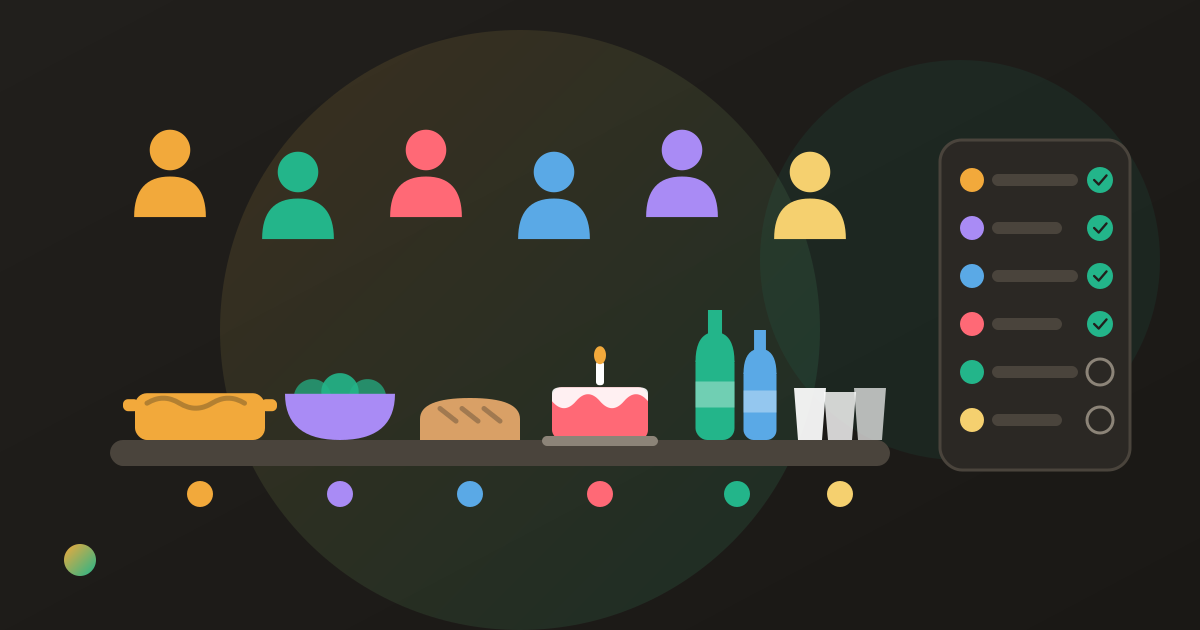
Most of the friction on a group trip is not about money. It is about the jobs nobody wrote down: who is bringing the speaker, who is buying breakfast for the first morning, who is meant to have the key code.
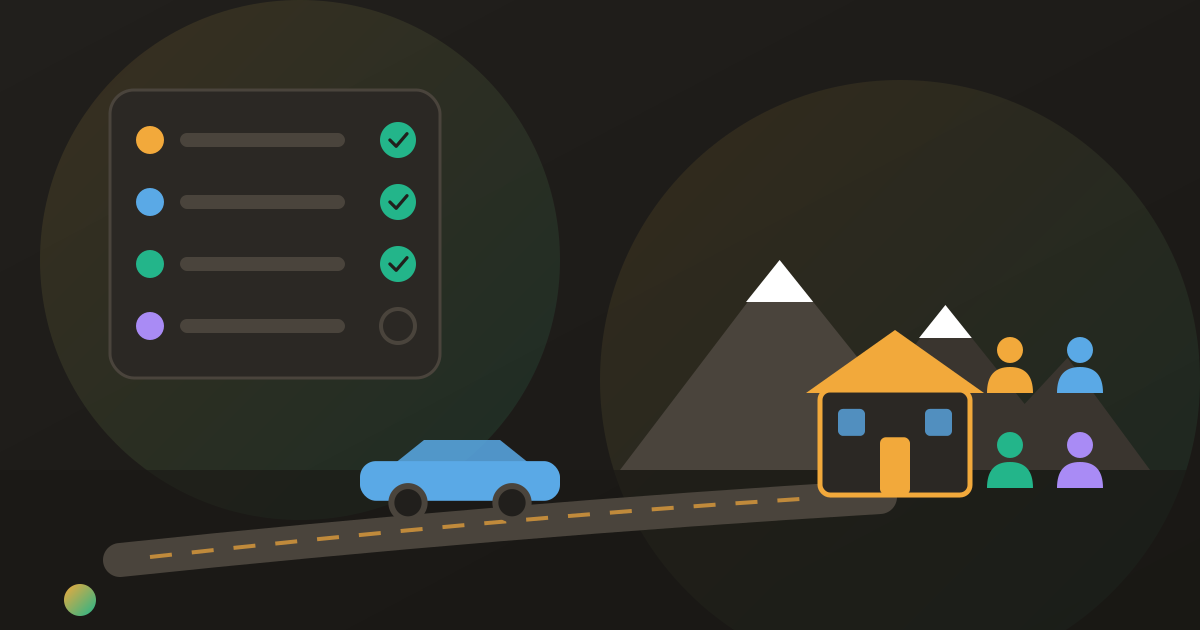
So the most useful part of how to organize a group trip is a list of jobs with a name on each one. Some get a name immediately (the person who found the house books it). The rest stay open until someone takes them. A job with a name gets done; a job assigned to “we” gets done by whoever cares most, and that person keeps a quiet score.
Driving belongs on the list too. It is hours of work that never shows up in a receipt, and writing it down is how it gets noticed.
Who books and who fronts the money
The person who books the stay usually fronts the most money, often months ahead. That is the moment a trip goes wrong later: the deposit is paid, nobody writes it down, and by the time the trip happens it has turned into “I think I owe you something”.
Two habits prevent that. The booker logs the deposit the day it is paid, and logs the balance the day that is paid, each split between everyone going. And nobody waits for the end of the trip to see the total: the running balance shows the booker is owed money from day one, so nobody has to bring it up.
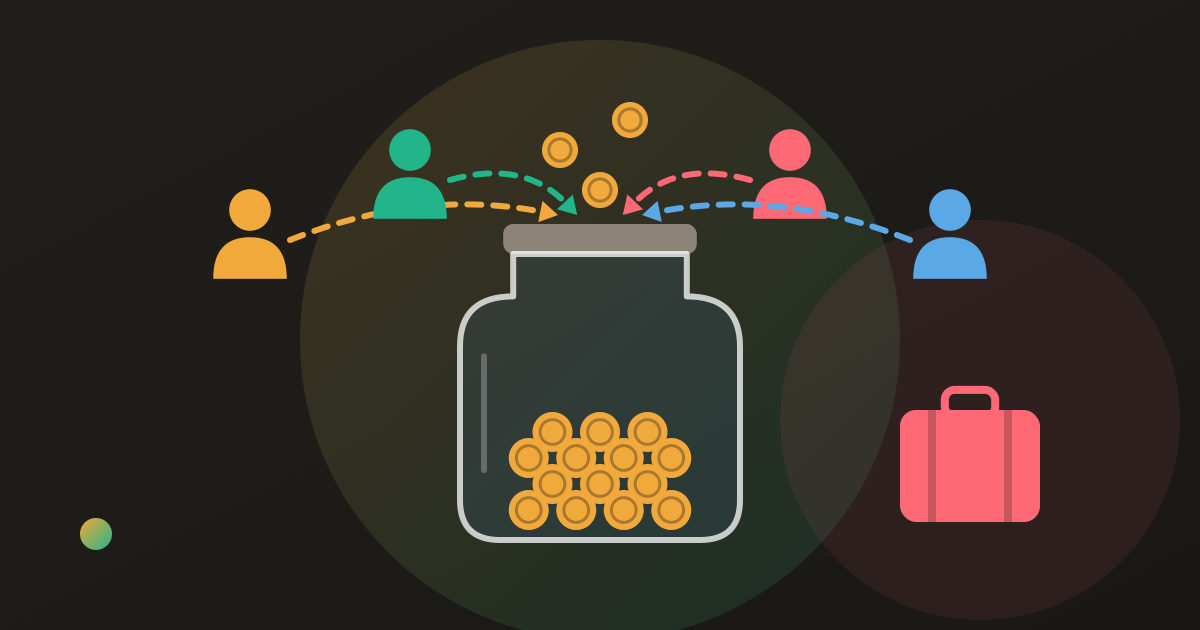
If the group would rather put money in up front for the small daily costs, a shared pot works alongside this; travel kitty or split as you go compares the two.
Planning a group trip checklist
Use this as the shared list. Each line becomes a job with a name.
Before booking
- Dates agreed and who is coming confirmed
- Budget range per person agreed
- Destination and type of stay chosen
Bookings and money
- Book the stay (one name) and log the deposit
- Log the balance when it is paid
- Buy the tickets for anything that sells out
- Money rules agreed: equal unless you opt out, log on the spot, settle once
Getting there
- Bring a car: which cars, and who drives which leg
- Map out the route, including fuel and toll stops
Supplies
- Buy groceries for the first two days
- Pack a first-aid kit
- Shared gear: speaker, board games, chargers
Your own things (not the group’s job)
- ID, medicine, chargers, sunscreen
A worked example: four friends, three nights by a lake
Maya, Tom, Priya and Leo book a cabin for three nights. Maya books it and pays the €300 deposit in the summer, then the €600 balance at check-in. Tom brings his car and pays €120 for fuel and €24 for tolls. Priya buys groceries for €180. Leo pays for the last-night dinner, €216. Every cost is for all four.
| Maya | Tom | Priya | Leo | |
|---|---|---|---|---|
| Job | Book the stay | Bring a car | Buy groceries | Last dinner |
| Paid | €900 | €144 | €180 | €216 |
| Share (€1,440 ÷ 4) | €360 | €360 | €360 | €360 |
| Balance | +€540 | −€216 | −€180 | −€144 |
The balances add to zero: 540 − 216 − 180 − 144 = 0. Maya fronted the most, so she is the only one owed. It settles in three transfers: Tom pays Maya €216, Priya pays Maya €180 and Leo pays Maya €144. With one person owed and three owing, three is the minimum. How to work out who owes whom shows the same method for messier trips.
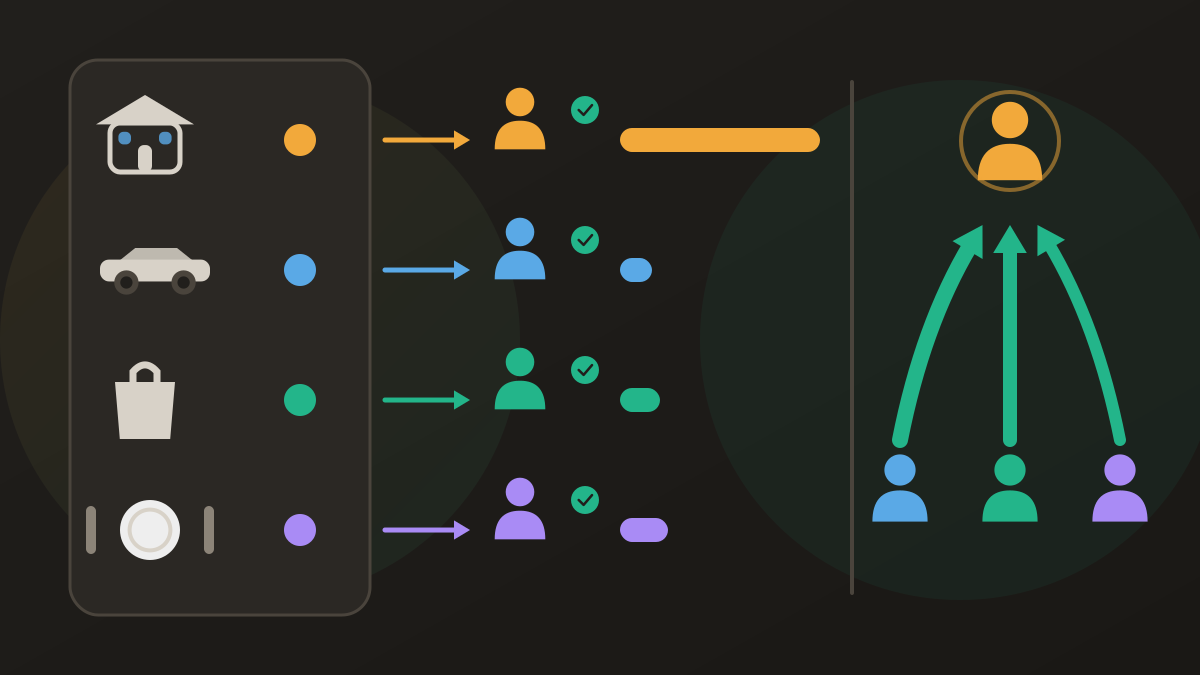
Notice what the table does not show: Tom drove both ways and Leo planned the route. Those jobs were real work and cost nothing, which is why they belong on the job list rather than in the money.
Where Donget comes in
Donget keeps the jobs and the money for a trip in the same group. Each group has a Money | Tasks switch. Under Tasks, Add task creates a job, and an empty list offers a few one-tap suggestions under Quick add that depend on the group’s icon (with a travel icon: Book the stay, Buy the tickets, Map out the route and Pack a first-aid kit). Who takes it? can be Open, so the job sits Up for grabs until someone taps Take it, or it can go straight to one or more people, including friends added by name who are not on Donget yet. When a job is finished, Mark as done; if it cost money, the app asks Spent money on Book the stay? and Add expense opens the expense form with the task’s title filled in, ready for the amount.
On the Money side, each expense is split Equally, by Amounts, Shares or Percent, and the balances update for everyone. Expenses and tasks can be added offline and sync later. When every job is ticked, All tasks done leads to Go to settle up, which suggests the fewest transfers; Paid records each one. Donget does not book anything or move money. It keeps the record of who did what and who paid what. If you are still choosing a tool, see apps for planning a group trip.
Frequently asked questions
How do you plan a group trip with friends?
Agree the dates and a rough budget per person, then choose the place and book the stay. Turn every remaining job into a named task, and agree that whoever pays logs it so the group settles once at the end.
Who should pay the deposit for a group trip?
Whoever books the stay, since the booking is in their name. They log it as soon as it is paid, split between everyone going, so the debt is visible long before the trip.
How do you organize a group trip when nobody wants to be in charge?
Split the organiser’s job into pieces and let people pick them: the stay, the driving, the groceries, the route. A list that shows who has each job stops the work from landing on one person.
How much should we budget for a group trip?
Agree a range per person before choosing the place, covering the stay, travel and daily food and activities. A range lets the person on the tightest budget speak up before anything is booked.
Should the driver pay less for fuel on a road trip?
Usually not. Fuel, tolls and parking are shared by everyone in the car, driver included; many groups thank the driver another way rather than changing the split.
What should be on a planning a group trip checklist?
Dates, budget range, destination, the stay and its deposit, transport and drivers, groceries and shared supplies, tickets booked ahead, a first-aid kit, and the money rules.
The bottom line
A group trip works when decisions come in order and every job has a name: dates, budget, place, then who books, who drives and who shops. Whoever pays logs it with the people it was for, and the trip ends with one settle-up instead of a month of half-remembered debts.
Download Donget free and put the trip’s jobs and expenses in one group before the first deposit is paid.