Potluck or shared shopping? How to split house party costs
Choose potluck, pooled shopping or an agreed mixture before anyone buys. Keep gifts separate and record shared purchases once, with their actual users.

You and a friend offer to host a house party. You buy the food, they buy drinks, and a guest arrives with an expensive bottle. At the end, someone suggests adding every receipt together and dividing by the headcount. Nobody remembers agreeing to that.
Choose the contribution model before shopping: each person brings something, everyone shares an agreed shopping budget, or you name the purchases that will be shared. Ask before adding an extra, and divide each shared purchase only among its agreed participants. Then a gift stays a gift and a shared purchase gets reimbursed once.
The same invitation can sound like “we’re treating you” to one person and “we’re organising the shop” to another. A sentence about the arrangement resolves more than a detailed spreadsheet afterwards.
Choose potluck, shared shopping or a mixture
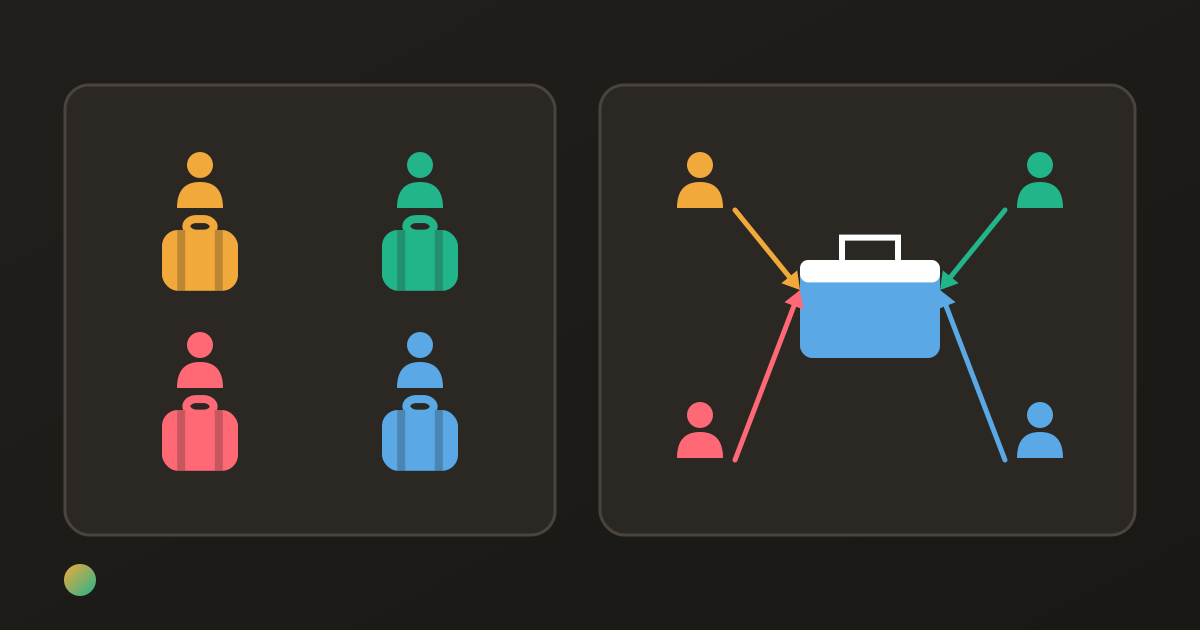
At a potluck, people bring agreed food or drinks as their contribution. They pay for those items themselves. You coordinate what the party needs so the table does not end up with six bags of crisps and nothing else.
With shared shopping, one or more buyers cover an agreed list and budget, then the participants share the actual cost. The buyers’ receipts count as advances, not extra contributions on top of their shares.
A mixture works too: “Bring a dish; we’ll share soft drinks and ice, and anyone wanting wine can organise that separately.” Name the shared items. “Bring something and chip in” leaves guests wondering what their dish counted towards.
Make the co-host agreement first
Co-hosts should settle three things before inviting other people: what they are personally offering, what will be reimbursed, and who approves changes to the shopping budget.
One person might offer the space while the other offers decorations. Those can be gifts to the evening, or the group can agree another arrangement. Providing the room does not silently exempt someone from food costs, and buying the first receipt does not silently make someone responsible for the whole event.
Give setup, collecting borrowed equipment and clearing away named owners too. Jobs matter even when they have no price attached. Use a who brings what list to make the food and the work visible together.
Write an invitation that people can answer
A clear message gives guests the arrangement and a limit before asking them to commit. For example: “We’re doing one shared food-and-soft-drinks shop for six, up to €180 altogether. That is at most €30 each if all six join. No need to bring anything.”
If the group instead chooses potluck, ask for a specific category and quantity. “A side for six” leaves room for personal choice while giving the next guest a gap to fill. At a holiday dinner with friends, kitchen and serving handoffs need attention too.
Let people suggest a smaller budget or a different contribution privately. Change the plan while the shopping is still optional. A cost announced after the party is a different request from one agreed before it.
Keep gifts out of the reimbursement pile
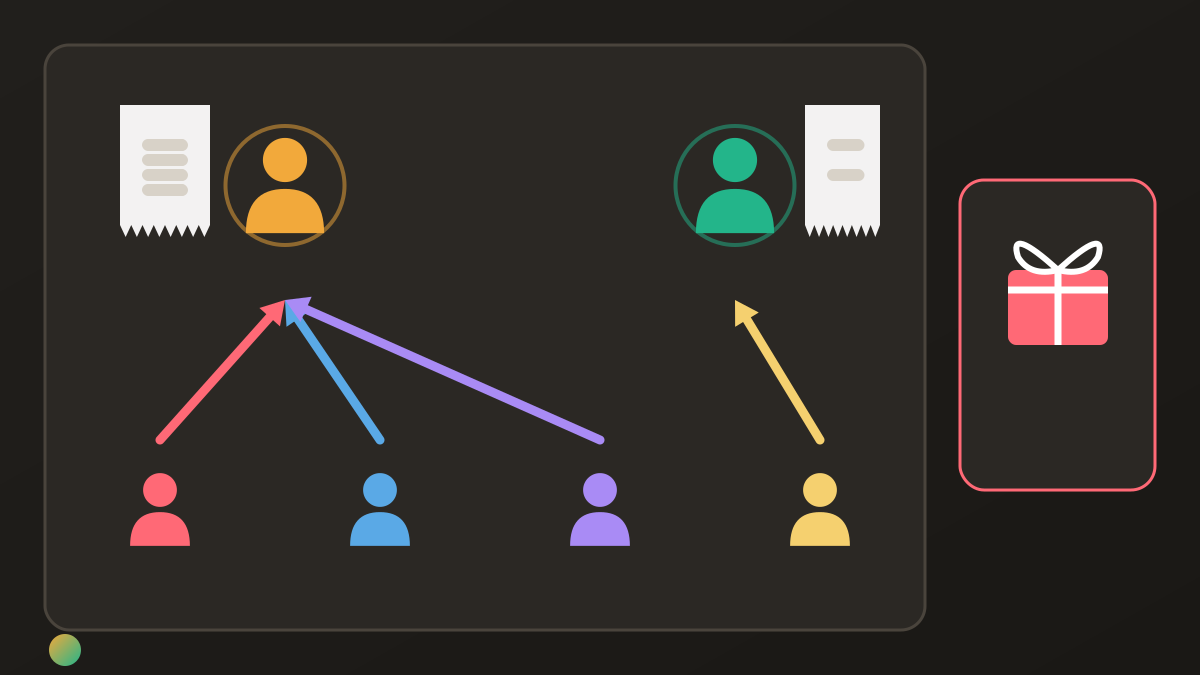
An unsolicited bottle or homemade dessert is not automatically a shared purchase. Thank the giver; do not add its price to everyone else’s bill or subtract it from the giver’s share without discussing it.
If you want guests’ purchases to count towards a common budget, say that before they buy. Ask them to claim a particular line, agree the spending limit and keep the receipt. It then becomes one of the shared purchases, regardless of who carries it through the door.
A separate present for the hosts is its own agreement. The group gift method keeps that collection distinct from food and drinks. It also avoids recording a gift once as a present and again as a party expense.
A worked example: two buyers, six participants
Grace and Hugo co-host Aisha, Ben, Cleo and Dan. All six agree to share a food-and-soft-drinks budget of €180, equally. Grace buys €120 of food; Hugo buys €60 of soft drinks and ice. Nothing on either receipt is personal.
Ben also brings a bottle costing €18 as an unsolicited gift. The friends keep it outside the common budget, just as the invitation said they could arrive without bringing anything.
| Agreed shared purchase | Paid by | Participants | Share each |
|---|---|---|---|
| Food, €120 | Grace | All six | €20 |
| Soft drinks and ice, €60 | Hugo | All six | €10 |
| Total, €180 | Six | €30 |
Grace paid €120 but owes €30 herself, so she should receive €90. Hugo paid €60 and owes €30, so he should receive €30. Aisha, Ben, Cleo and Dan each paid nothing towards the agreed shopping and each owes €30.
| Person | Paid towards shopping | Share | Paid minus share |
|---|---|---|---|
| Grace | €120 | €30 | +€90 |
| Hugo | €60 | €30 | +€30 |
| Aisha | €0 | €30 | −€30 |
| Ben | €0 | €30 | −€30 |
| Cleo | €0 | €30 | −€30 |
| Dan | €0 | €30 | −€30 |
| Total | €180 | €180 | €0 |
Aisha, Ben and Cleo each pay Grace €30; Dan pays Hugo €30. Four payments settle the shopping. Grace receives €90, Hugo €30, and the four other participants each pay their €30 share. Ben’s gift creates neither a second charge for the group nor an automatic discount for him.
Handle changes before they become surprises
If someone wants a separate drink or a more expensive extra, agree who it is for and who pays before adding it. Different participants mean a separate cost. A shared budget is not permission to buy anything and ask everyone else to cover it afterwards.
If the actual shop costs less, split the lower amount. If guests paid into a common pot first, those payments are contributions to the pot, not additional party costs. Compare the money collected with the actual purchases and agree how to return any remainder.
After the party, share the short purchase list and the resulting repayments. Record money already received before asking again. The paid-minus-share calculation explains why the original buyers do not need to reimburse each other for every receipt.
Where Donget comes in
Keep agreed shopping and jobs in the group’s Tasks. Assign a buyer with Add task → Who takes it?, or leave a line Open. When Grace uses Mark as done for “Shared food shop”, Spent money on Shared food shop? → Add expense can open a form with that title. She enters €120, checks the six participants and chooses Equally; completing the task alone does not create an expense.
Enter Hugo’s purchase once, leave Ben’s gift outside the ledger, and use Settle up to see repayments. Paid records money received through your usual payment method; Donget does not move it. There are no quantity fields, task dates or automatic task reminders, so put quantities in titles and coordinate timing separately.
Frequently asked questions
How should co-hosts split party costs?
Agree the shared shopping budget, what each host is offering and which guests will contribute before buying. Paying a receipt upfront and taking a share of its cost are separate things, so the final split should reflect the agreement rather than whose card was used.
Is a potluck cheaper for the host than shared shopping?
A potluck lets people provide agreed dishes instead of reimbursing one common food shop, but it does not automatically cover drinks, ice or other extras. Decide those remaining purchases separately rather than assuming the host will provide them.
Should you charge guests for a house party?
You can invite friends to share an agreed shopping cost if you tell them the arrangement and budget before they commit. An invitation to a hosted party does not itself communicate a later charge.
Does bringing a bottle reduce my share of the shopping?
Only when that was agreed in advance. An unsolicited gift does not automatically become a reimbursable purchase or a credit against the shared shopping bill.
How do you handle alcohol when not everyone drinks?
Make it a separate purchase shared by the people who agreed to use it. Keep common food and soft drinks as separate entries when they have different participants.
What if a co-host spends more than the agreed budget?
Discuss the change before buying where possible. An unagreed extra does not automatically become everyone else’s cost; agree whether the buyer is offering it, returning it or asking for a revised shared budget.
The bottom line
A potluck and a shared shop are both workable arrangements when guests know which one they joined. Agree the budget, name the buyers and separate gifts from reimbursable purchases. Then calculate each person’s share against what they actually paid.
Download Donget free and keep the party’s agreed shopping, jobs and repayments together.