How to split bills without a joint account
Split bills without a joint account by recording shared purchases, agreeing each share and settling the difference. Personal spending stays outside the record.
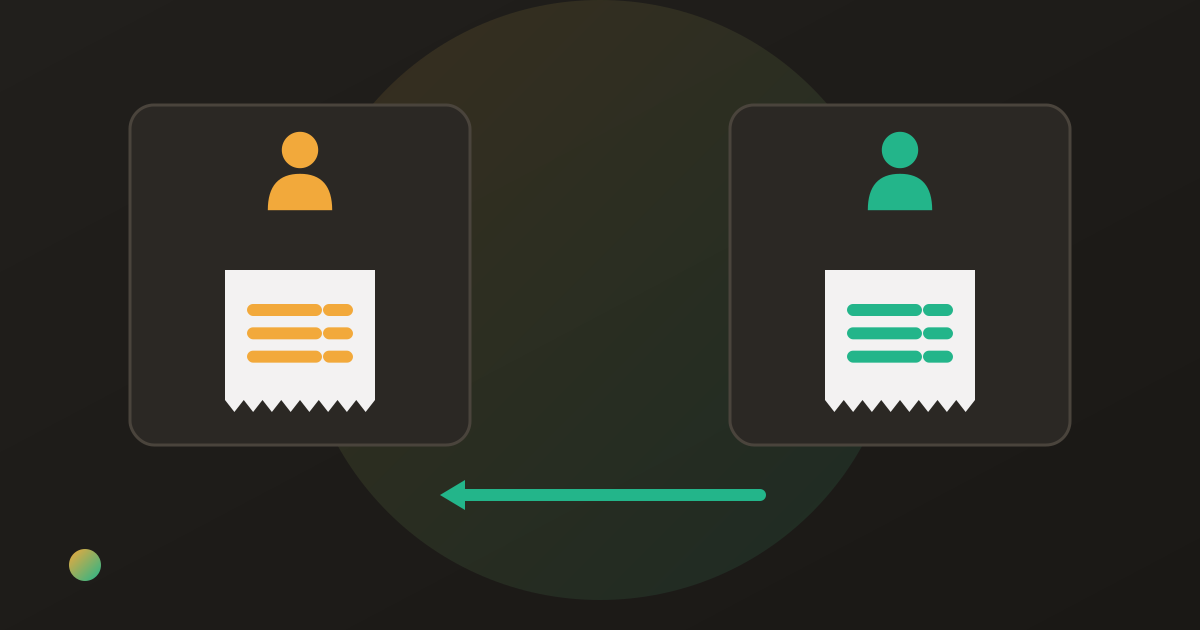
You pay the housing bill. Your partner buys the groceries and handles the utilities. Both payments leave your own accounts, which is how you want to keep things. At the end of the month, though, “I buy the food” and “I pay for the home” do not tell you whether you have each covered your agreed share.
To split bills without a joint account, agree which purchases are shared, record the person who actually paid each one, and assign the shares you both accepted. At an agreed review point, compare paid totals with share totals and pay only the difference. Keep personal purchases outside that shared record.
Separate accounts and shared bills are different decisions
Where a payment comes from does not decide who shares the cost. One person can pay a whole bill from their own account while both agree to contribute towards it. A record connects those two facts: the actual payer and the agreed participants.
You do not need to turn every personal purchase into a household event. This approach is for adults who want to organise shared spending using their existing payment arrangements. It does not choose an account, compare banking products or require a decision to combine finances.
If you are still deciding which costs belong together, splitting expenses as a couple covers that wider conversation.
Agree what belongs in the shared record
Start with a short list: the housing payment, utilities, shared groceries and meals you both agreed to share. Then say what stays personal. That might include individual hobbies, gifts and lunches bought separately. The line is yours to draw; it should be clear before the purchase appears in the record.
For a mixed shop, separate the shared portion from personal items. If a receipt includes shared food and one person’s toiletries, recording its whole total as groceries quietly changes the agreement. Record only the shared amount in the common record, and keep the receipt so you can check it.
A purchase becoming expensive does not make it shared. Discuss an unusual item before one person commits to buying it for both.
Choose shares before comparing who paid
Equal shares are one option, not a consequence of keeping separate accounts. Both people might accept a percentage split, or divide different kinds of purchase differently. Sharing bills when incomes differ explores that separate choice.
Write the choice in terms you can apply: “We split these four household categories equally this month” is clearer than “We both contribute enough.” If you use percentages, make sure they total 100%. If a purchase is for one person only, do not include it in the calculation just to make the payer totals look balanced.
Paying an expensive bill is not the same thing as having an expensive share. Keeping those columns separate is what makes the method useful.
A worked example: Casey and Morgan’s month
Casey and Morgan agree to share the following purchases equally. Casey pays €1,200 for housing and €120 for a meal together. Morgan pays €300 for shared groceries and €180 for utilities. All four expenses have been paid in full to their original recipients; neither person has yet reimbursed the other.
| Shared purchase | Paid by | Amount | Casey’s share | Morgan’s share |
|---|---|---|---|---|
| Housing | Casey | €1,200 | €600 | €600 |
| Groceries | Morgan | €300 | €150 | €150 |
| Utilities | Morgan | €180 | €90 | €90 |
| Meal together | Casey | €120 | €60 | €60 |
| Total | €1,800 | €900 | €900 |
Casey paid €1,320 and has a €900 share, so is owed €420. Morgan paid €480 and has a €900 share, so owes €420. Morgan pays Casey €420. One payment closes both balances: +€420 and −€420 become zero.
Casey also spent €40 on personal coffees and Morgan bought a €60 personal gift. Those purchases stay outside the €1,800 shared total. The settlement does not reimburse either personal purchase.
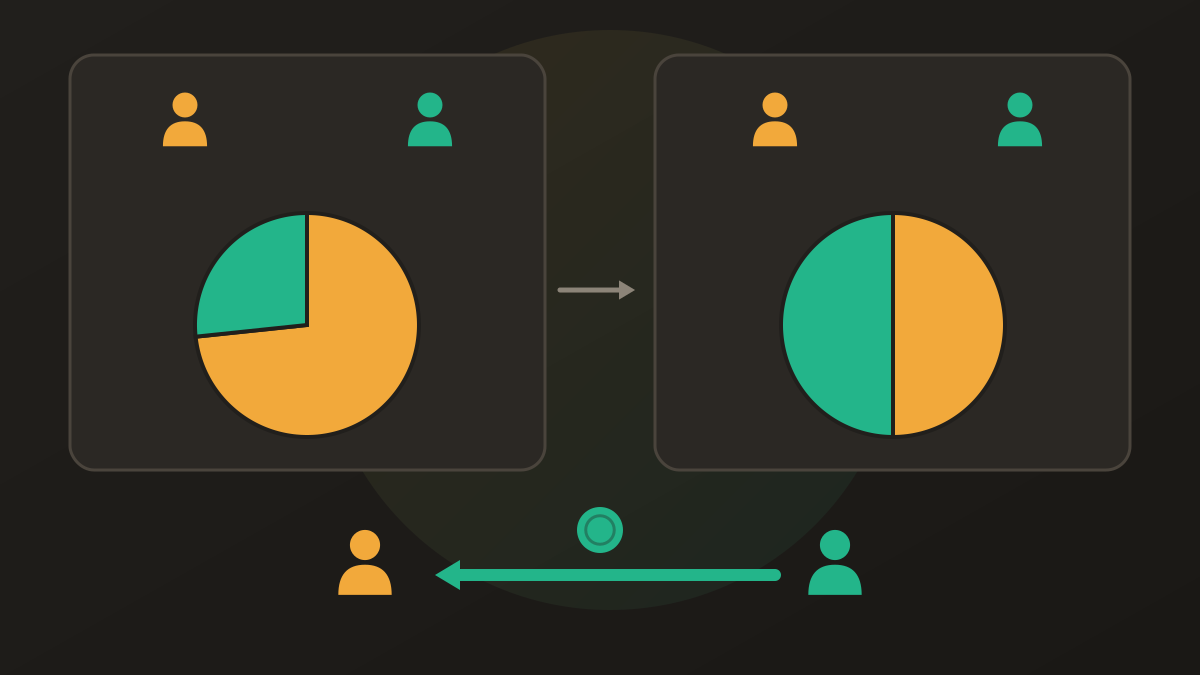
Paying different categories was convenient. The categories alone were not an equal split: Morgan’s groceries and utilities totalled much less than Casey’s housing and meal. The final €420 is what completes their agreement.
Review the record before moving money
Choose a time you will both remember, and review the same period. Check that every entry belongs to both of you, the payer is correct and a transfer already made has not been entered as another shared expense.
If Casey and Morgan had already made part of the €420 payment, that real payment would reduce the remaining amount. They would record it as a payment between them rather than adding a fifth household purchase. Conversely, a promise to pay is not a completed payment.
Monthly review is a useful option for household bills, but neither person needs to carry an amount they cannot comfortably front just to wait for that date. Agree a shorter interval or a payment before a large shared purchase when that suits you both. The purpose is a manageable arrangement, not a perfectly tidy calendar.
When a bill or agreement changes
Record each actual bill once. If the amount changes, use the new amount rather than copying last month’s total. If your agreed shares change, choose when the change begins so older entries do not quietly acquire different meanings.
Keep organising work visible too: remembering meter dates or arranging a repair can be real effort even when no money changes hands. Discuss who handles it, rather than adding an unagreed fee to the ledger.
When the remaining number feels awkward to mention, a short message naming the period and amount is enough. Settling up without awkwardness has ways to make that a routine conversation.
Where Donget comes in
Add the shared purchases to one Donget group, with Paid by set to the person who paid. Choose Equally for Casey and Morgan’s example; Amounts, Shares and Percent support other agreements. The expense split methods explain how to enter those choices. Personal purchases can simply stay out of the group.
Settle up shows the remaining payment. Pay through your usual method and then use Paid to record it. Donget does not hold or move the money, and there are no recurring expenses or budgets: you add each bill yourself and decide what you can spend together. It records the choices; it does not choose a financial arrangement for you.
Frequently asked questions
How do you split bills without a joint account?
Agree which purchases are shared, record who paid each one and assign the agreed shares. At a regular review, offset what each person paid against their total share, then pay the difference through your usual method.
Do separate accounts mean every bill must be split in half?
No. Separate payment accounts and the choice of expense shares are different decisions. You can agree equal amounts, percentages or different allocations for different purchases, provided both people understand and accept them.
Can one person pay the housing bill while the other pays groceries?
Yes, but compare the totals rather than assuming the categories balance. If one person paid more than their agreed share overall, a payment between you can close the difference.
Should personal purchases go into the shared bill record?
Keep them out unless you both agree that a particular purchase is shared. On a mixed receipt, include only the shared portion, so personal items are not accidentally charged to the other person.
How often should a couple settle shared expenses?
Choose a review interval that both people can manage and revisit it if one person is fronting too much. Monthly can suit household bills; a shorter interval may be easier for day-to-day purchases.
Does Donget collect or send the settlement money?
No. Donget records shared expenses and payments; it does not hold or move money. Pay each other through your usual method, then record the completed payment with Paid.
The bottom line
Keep the shared record narrow: agreed purchases, actual payers and clear shares. Compare the totals together, pay the remaining difference and record what was paid. Separate personal accounts can stay separate while the shared arithmetic stays visible.
Download Donget free and keep the bills you share in one clear record.