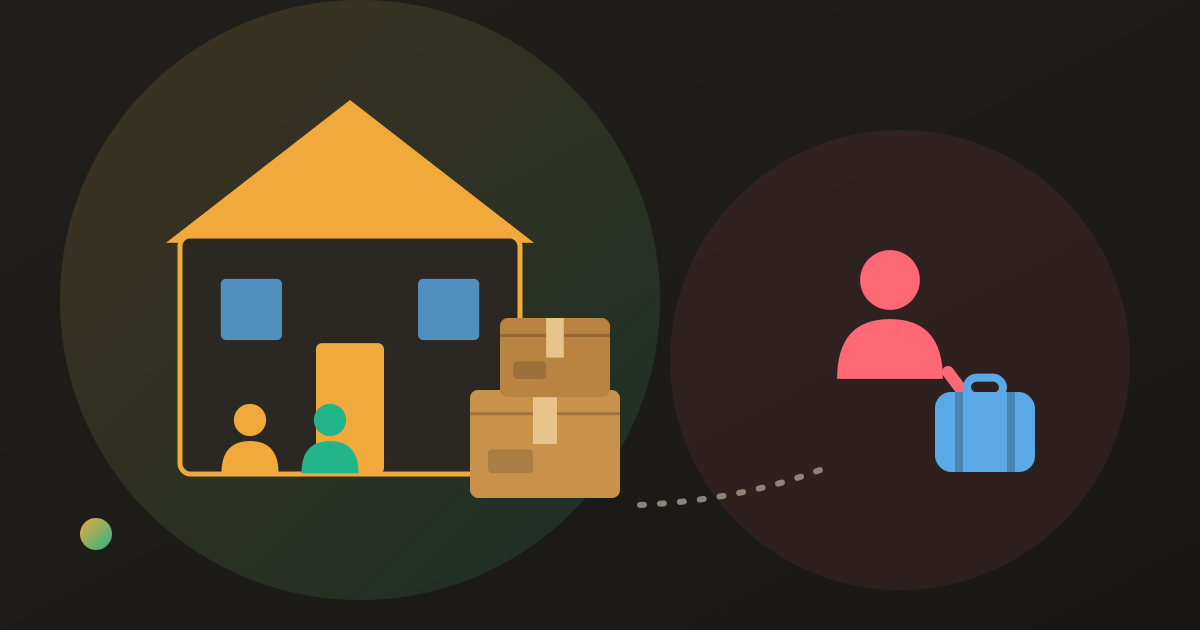
Does everyone need to download the app? How to split expenses when not everyone will install one
One person can keep the ledger for a whole group. Here is how to split fairly when two people are happy to install something and the other four are not, and what each option costs you.
There is always one. Five people are happy to install something for the trip and the sixth has a full phone, a policy about apps, or simply cannot be bothered — and now the whole plan looks dead. It is not. The reluctant person is a smaller problem than it looks, because splitting fairly does not require everybody to be inside the same software.
What a group actually needs is one honest record and one moment where everyone can see it. Where that record lives is negotiable.
What each person actually needs
Separating the roles makes the problem much smaller. In any group there are only three:
The keeper holds the record. Exactly one person has to do this, and they need whatever tool keeps a running balance.
The contributors add expenses as they happen. It is convenient when they can, because the keeper stops being a courier for receipts. It is not required.
The payers need one number at the end: what they owe, to whom. That is the only thing everyone in the group genuinely needs, and it fits in a message.
Most “I’m not installing anything” objections are from people who only ever needed to be in the third role.
Option 1 — one keeper, everyone else just pays
The keeper creates a group and adds the others by name. Nobody else installs anything. Every expense goes in as it happens, with the right payer and the right participants, and at the end the keeper sends the settle-up summary to the group chat.
What you get: correct arithmetic, a fair split, and one message with the final answer.
What you give up: verification. The others are trusting the keeper’s typing. That is fine among people who trust each other, and it is exactly how a paper kitty has always worked — but if the group is large or the amounts are big, the questions come and there is no shared record to point at.
This is the right answer more often than people expect. Six people on a weekend away, one of whom is organised: let them keep it.
Option 2 — the ones who will, do
The middle path, and usually the best one. Two or three people install something and share the group; the rest stay out. Now the record has more than one author, the receipts get logged by whoever was standing at the counter, and any of the participants can catch a mistake.
The people outside still get the summary at the end. Nothing about their experience changes, and the record has stopped resting on one person’s memory.
Option 3 — the group chat, honestly assessed
A chat thread works for two or three expenses and then quietly stops working. It has no running total, so somebody has to scroll back and add up, and that person becomes the keeper anyway — with the worst possible tool. The classic failure is not a wrong number; it is an expense that was mentioned once, on day two, between photos, and never counted.
If you are going to use a chat, use it as a chat and keep the arithmetic somewhere that adds up. A spreadsheet is a real answer if the group is small and someone likes spreadsheets.
A worked example
Six friends at dinner. Two are in the app, four are not.
| Expense | Amount | Paid by | Split |
|---|---|---|---|
| Dinner | €240 | Ana (in the app) | equally, 6 ways |
| Wine | €60 | Ben (in the app) | equally, 6 ways |
| Taxi home | €60 | Carla (not in the app) | equally, 6 ways |
Ana logs all three, including Carla’s taxi — an expense is recorded against whoever paid it, and Carla being outside the app changes nothing about that. The group spent €360, so each share is €60.
Ana is €180 ahead. Ben and Carla paid exactly their own share and are already level — Carla, who never opened anything, is square rather than €60 down, because her taxi was logged. Dan, Ela and Fabio owe €60 each.
The summary Ana sends says: Dan → Ana €60, Ela → Ana €60, Fabio → Ana €60. Three transfers among six people, four of whom never installed a thing.
Where Donget comes in
Donget is built for exactly this asymmetry. A group member does not have to be an account: the keeper adds people by name and splits between them from the first expense, so the arithmetic is complete whether or not anyone else ever joins.
For the people who might join, the friction is a link. Share invite link produces one to send in any messenger, or a QR code to show across the table; opening it shows the group before anyone commits to anything, and joining takes a name. There is no daily cap on expenses to hit while the keeper logs a whole day at once, and Scan receipt with AI means the keeper can photograph the pile of receipts instead of typing them.
For the people who will not join, there is Settle up summary — the plain who-pays-whom list, shareable to any chat. It reads as text. Nobody needs an account to read it, and nobody needs to take anyone’s word for the total.
Frequently asked questions
Can one person track expenses for the whole group?
Yes. One person adds every expense and names the others as participants; the arithmetic is identical. What the others lose is the ability to check the record themselves.
Can someone join a group without installing anything?
They can open the invite link and see the group before deciding. Taking part properly — adding expenses, checking their own balance — means being in the app.
How do I share the result with people who are not in the app?
Send the settle-up summary. It is a plain list of who pays whom and how much, readable by anyone in any messenger, with no account needed to read it.
Is a group chat good enough for splitting costs?
For two or three expenses, yes. It fails at the point where somebody has to scroll back and add up, because nothing in a chat keeps a running total.
What if someone refuses to be tracked at all?
Keep them out of the app and in the arithmetic: log their expenses under the person who fronted the money and settle with them in cash or one transfer at the end.
Does everyone need an account to see what they owe?
To see it for themselves, yes. To be paid the right amount, no — that only needs the person holding the record to be honest and the summary to be shared.
The bottom line
Do not let the least enthusiastic person set the tooling for the whole group. One keeper, a shared summary at the end, and an open door for anyone who changes their mind covers almost every real trip and flatshare. Getting a whole group onto something is easier when nobody has to go first.
Download Donget free and keep the record for everyone — including the ones who never install it.