Roommate moving out: how to settle shared costs before they go
Roommate moving out? Settle five things before they go: rent and bills to their last night, the bill that comes later, their deposit share, shared furniture, and one final transfer.
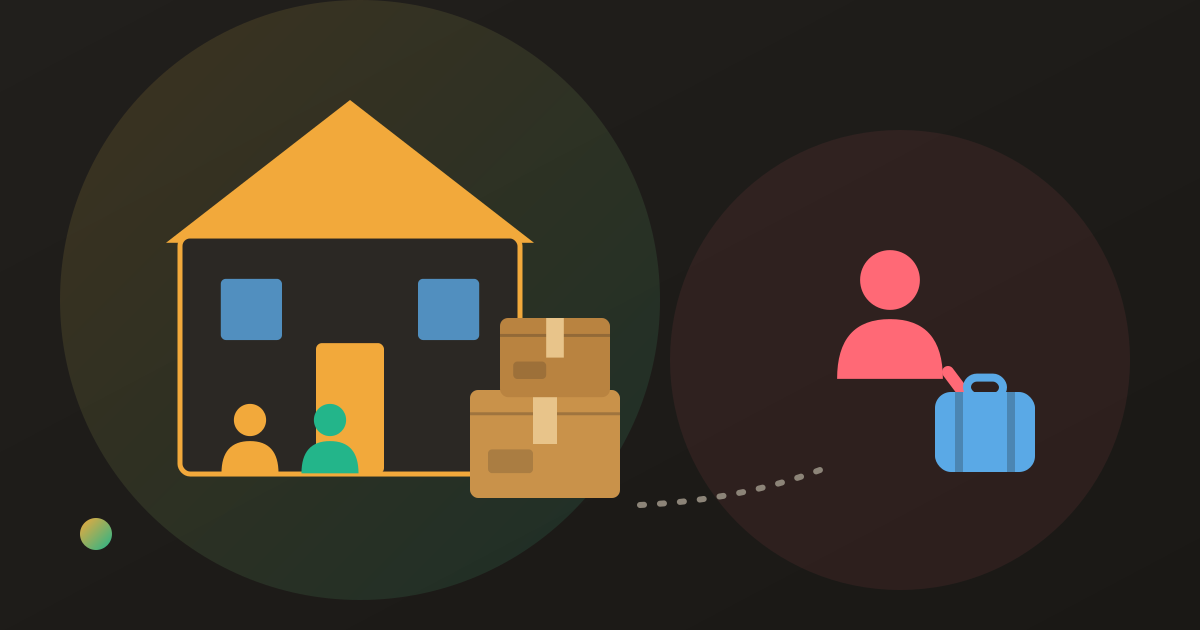
The moving van is booked for Saturday. With a roommate moving out, three people have a few days to agree on part of a month’s rent, a utility bill nobody has seen yet, a deposit the landlord is still holding and a sofa you bought together two winters ago. Leave any of those for later and “later” usually means a message thread that runs for months.
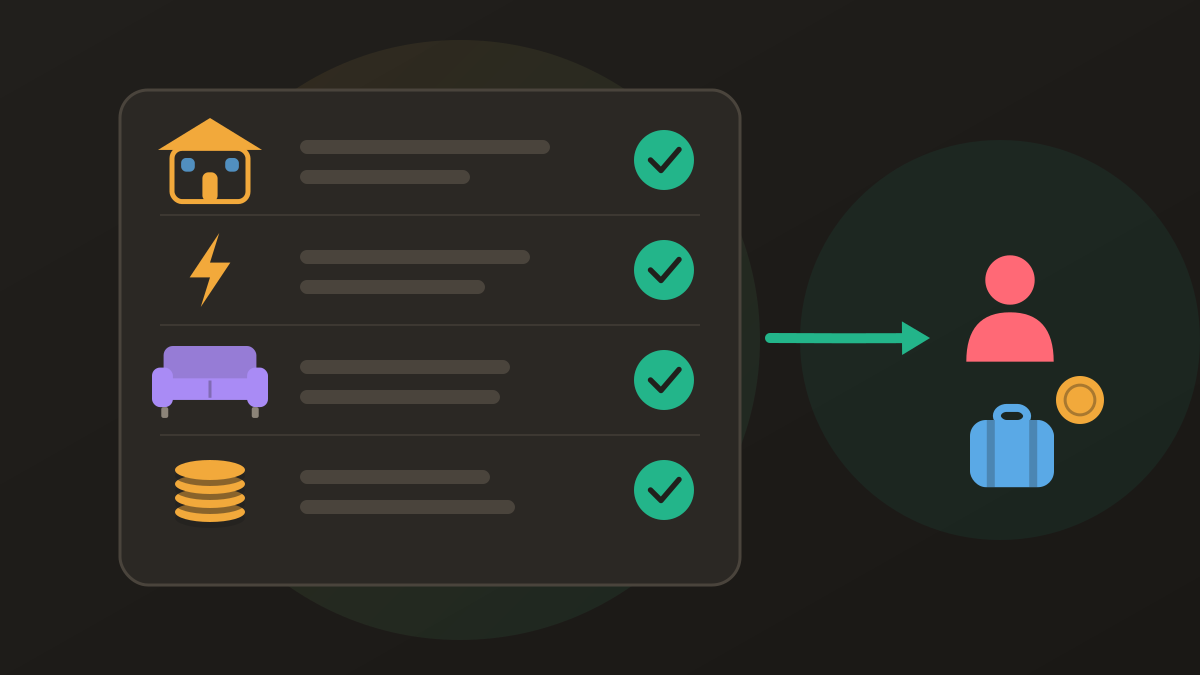
Settle five things before they go: rent and bills up to their last night, the bill that arrives after they leave, their share of the deposit, shared furniture, and whatever the household balance already says. Net all five into one balance per person and clear it in the fewest transfers, before the boxes leave.
What a roommate moving out actually leaves behind
Most of the money in a shared flat is routine: rent each month, bills as they arrive, groceries. When a roommate moves out, the routine is interrupted in five places at once, and each one has a different shape. The trick is to price each one separately, then add them into a single number per person. Settling them one by one is how a move-out turns into a string of separate transfers and at least one misunderstanding.
Rent and bills up to the last night
Charge the leaver for the nights they have the room, at the month’s real daily rate: the room’s monthly rent divided by the days in that month, not by 30. Bills are not attached to a room, so split them by person-days — each person’s days in the flat, as a share of everyone’s days added together. How to prorate rent when someone moves mid-month works both methods through in detail, and splitting utility bills with roommates covers which bills to share at all.
The bill that arrives after they leave
Electricity, gas and water often bill in arrears, so the last bill covering the leaver’s weeks lands after they are gone. You have two honest options:
- Estimate and close it now. Use the last comparable bill or a meter reading on moving day, agree a figure, and treat it as final whichever way the real bill lands.
- Keep it open. The leaver stays part of the household’s records until the real bill arrives, and everyone settles then.
Estimate when the amounts are small; keep it open when the bill is large or seasonal.
Splitting the security deposit between roommates
Start from who paid what into the deposit, which is not always equal. Then deal with deductions: damage that is clearly in one person’s room comes off that person’s share, and wear in the kitchen or hallway is shared by everyone who lived there.
The awkward part is timing. Landlords often hold the whole deposit until the lease ends, so the leaver’s share is stuck inside it. The usual fix is that the people staying pay the leaver their share now and recover it later, either from the incoming roommate or when the deposit comes back. Whether a landlord must return any part mid-tenancy, and what they may deduct, depends on your lease and the law where you live; the steps here only cover how the people who paid in divide it.
Shared furniture: buy out or divide
For things you bought together, agree what each item is worth today, not what it cost. Then either the people staying buy out the leaver’s share at that value, the leaver takes the item and pays the others theirs, or you sell it and split the money in the proportions you paid. Small things — the colander, the shower curtain — are not worth valuing; let them stay with the flat.
A worked example: Sofia moves out on the 20th
Maya, Leo and Sofia share a flat at €1,860 a month, three equal rooms at €620 each. Sofia moves out on 20 October, so her last night is the 19th: 19 nights. October has 31 days, so a room costs €620 ÷ 31 = €20 a night, and Sofia’s rent is €380. The other 12 nights of her room (€240) are covered by Maya and Leo, €120 each, because they chose to wait for the right flatmate rather than take the first one. Leo pays the landlord.
Bills use person-days: 31 + 31 + 19 = 81. The water and internet bill, €81, is paid by Maya, which is €1 a person-day. The October electricity bill will arrive in November in Leo’s name, so they agree an estimate of €162 (€2 a person-day) and treat it as final.
The deposit was €1,860, €620 each. At the walk-through they agree €60 to clean a stain on Sofia’s carpet, so her share is €560, which Maya and Leo pay her half each. The sofa cost €900 two years ago, split three ways. They value it at €450 now; Maya and Leo keep it, so Sofia’s third, €150, is theirs to buy out.
| Maya | Leo | Sofia | |
|---|---|---|---|
| Rent (€1,860, Leo paid) | €740 | €740 | €380 |
| Water and internet (€81, Maya paid) | €31 | €31 | €19 |
| Electricity estimate (€162, Leo pays) | €62 | €62 | €38 |
| Sofia’s deposit share (€560) | €280 | €280 | — |
| Sofia’s third of the sofa (€150) | €75 | €75 | — |
| Total owed | €1,188 | €1,188 | €437 |
| Paid or put in | €81 | €2,022 | €710 |
| Balance | −€1,107 | +€834 | +€273 |
Sofia’s €710 is the €560 deposit share plus the €150 sofa share — money the other two now owe her. The balances add to zero: −1,107 + 834 + 273 = 0.
Netted pair by pair, that is three transfers: Maya pays Leo €771, Maya pays Sofia €336 and Sofia pays Leo €63. Combined across the household it is two: Maya pays Leo €834 and Maya pays Sofia €273. Leo owes Sofia for the deposit and the sofa, but no money passes between them: Sofia’s rent and electricity to Leo, and Leo’s deposit and sofa share to her, are folded into Maya’s payments. How debt simplification works explains why the combined version always matches what each person is really owed.
When a roommate is moving out early
If someone leaves before the lease or the agreed notice runs out, the room still costs money, and what the landlord can ask for depends on your lease and the law where you live. Between yourselves, the question is who covers the empty nights: the leaver until a replacement arrives, the people staying (as Maya and Leo chose), or a split. There is no right answer, only an agreed one, so agree it before the move. How to settle up without the awkwardness has wording for raising it.
When the new roommate moves in
The newcomer starts with a clean slate: rent and bills from their first night, and their share of the deposit, paid to whoever fronted Sofia’s. Nothing from before their arrival belongs to them. It is also the moment to agree the rent and bills rules again with everyone in the room, rather than inheriting them by accident.
Where Donget comes in
All of this fits in the group the flat already uses. Put the month’s rent in with Add expense, Paid by Leo, split by Amount — 740, 740 and 380 — and the app checks the shares add up to the total. Bills go in split by Multiplier, with 31, 31 and 19 as the weights. The deposit and the sofa each go in as an expense paid by Sofia and shared Equal between Maya and Leo, because that is what they are: value she put in that now belongs to them.
Settle up then suggests the fewest transfers, and Paid records each one. Donget does not move money; you pay each other however you usually do. It will also not let Sofia Leave group while her balance is not zero — it asks her to settle up first — and if she owns the group, she transfers ownership before leaving. After she leaves, the group stays visible to her, read-only, so the record of how her last month was worked out does not disappear. If you kept the last bill open, Sofia stays in the group until it arrives.
When the new roommate arrives, add them with Add member or send the invite link; they can pick the name you added for them, and new expenses include them from their first night.
Frequently asked questions
How do you settle up when a roommate moves out?
Price their nights, the late bill, the deposit, shared furniture and the existing balance, net them into one figure per person, and settle in the fewest transfers before moving day.
How do you split a security deposit between roommates?
Start from what each person paid in, take off deductions that are clearly one person’s, and share common-area ones equally. The people staying usually pay the leaver now and recover it later.
What if a roommate is moving out early?
What the landlord can ask for depends on your lease and the law where you live. Between yourselves, agree who covers the empty room until someone replaces them, and write it down before the move.
Who pays the last utility bill after a roommate leaves?
Everyone who lived there during the billing period, by the days each was there. Agree an estimate and settle it on moving day, or settle the real bill when it arrives.
What happens to furniture we bought together?
Agree what it is worth today. Whoever keeps it pays the others their share of that value; if nobody wants it, sell it and split the money.
Can someone leave a Donget group while they still owe money?
No. Donget asks a member to settle up before they can leave a group with a balance that is not zero. Afterwards the group stays visible to them, read-only.
The bottom line
A roommate moving out is five small calculations, not one big argument: their nights, their last bill, their deposit, their furniture and the balance you already had. Price each one, net them into one figure per person, and settle before the van arrives — while everyone is still in the same kitchen.
Download Donget free and close out a roommate’s last month in a couple of transfers, with the working left where everyone can see it.