How to split family vacation costs between households
To split family vacation costs between households, weight each household by who is in it (adults 2, children 1), split activities by who went, and settle household to household. Worked example.

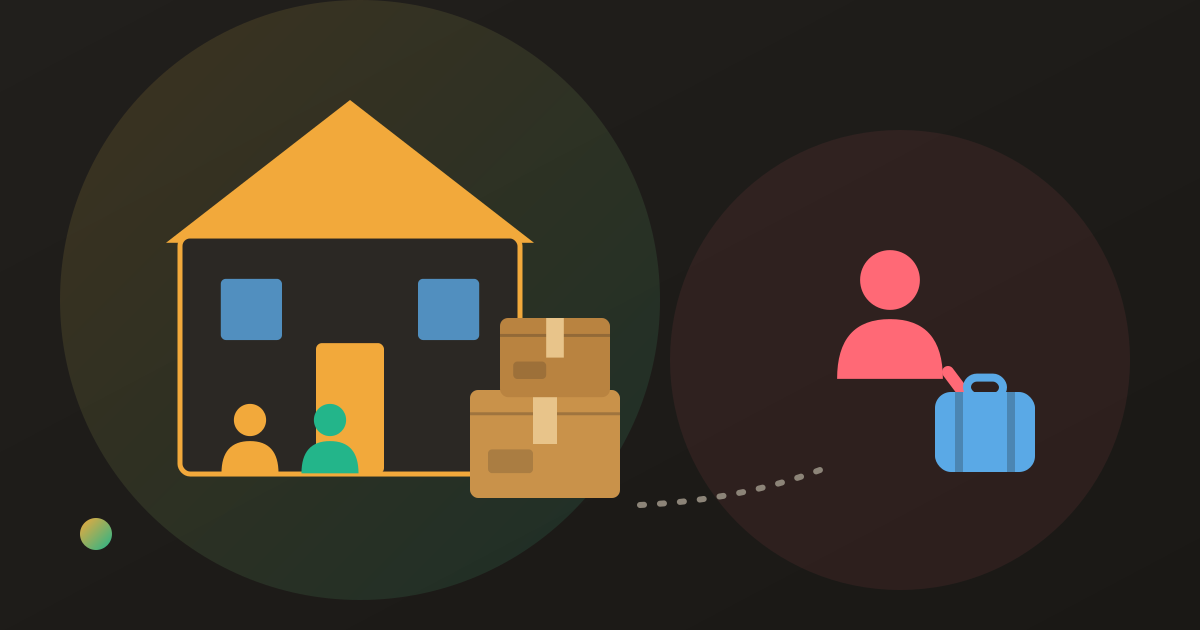
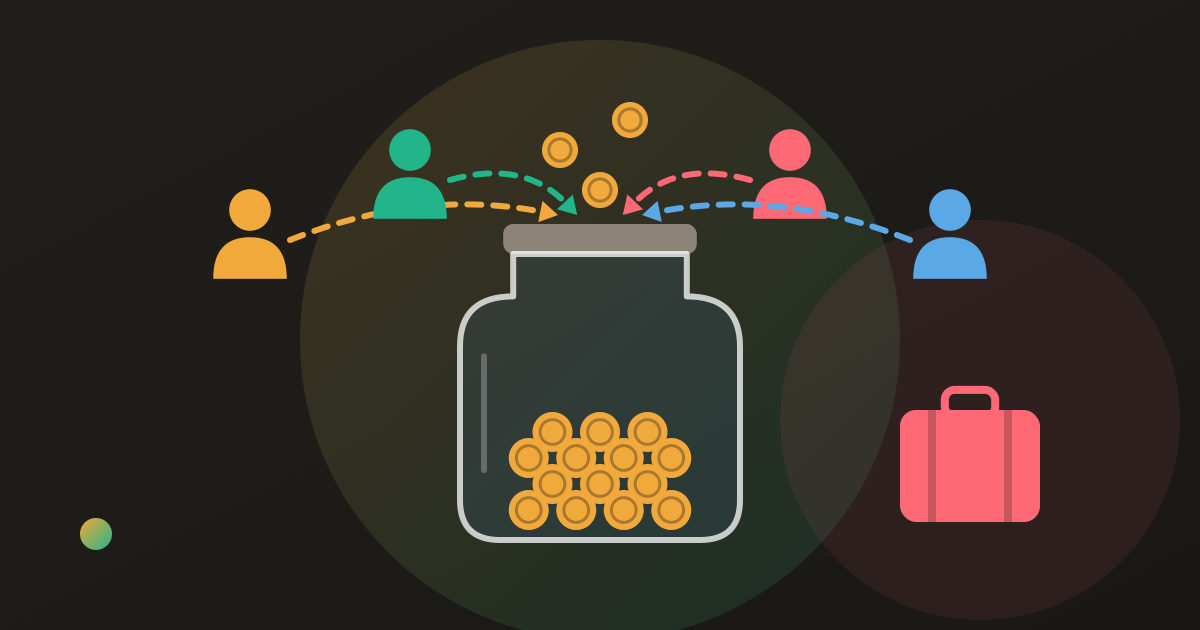
Three households, one holiday house, a week of shared groceries and a boat trip that half of you skipped. The house was booked by one family, the big shop was done by another, and grandma quietly paid for the boat. Now someone has to work out how to split family vacation costs without it becoming the last conversation of the holiday.
The trouble is that “split it three ways” and “split it per person” are both wrong in ways everybody can feel. The fair way is to weight each household by who is in it — adults 2, children 1 — for the house and the food, split activities only among the people who went, treat anything a grandparent offers as a gift, and settle household to household in one or two transfers.
Why per household and per person both go wrong
Splitting by household treats a grandmother on her own the same as a family of four. She pays a third of the house for one bedroom and a third of the groceries for one appetite. It is simple, and it quietly overcharges the smallest household.
Splitting per person is closer, but it charges a four-year-old the same as an adult for food and space. A weighted split sits between the two, and for most mixed groups it is the one nobody objects to.
How to split family vacation costs by kind of cost
No single rule fits every expense, so pick one rule per kind of cost and stick to it for the whole week:
- The rental: by person weights, or by bedroom if the rooms are similar. More on this below.
- Groceries and shared meals: by person weights. Food is where the difference between adults and children is clearest.
- Activities: only the people who went, at what each place costs per seat or ticket. Nobody pays for a boat trip they skipped.
- Fuel and car hire: by the car each household travelled in, which is often just that household’s own cost and does not need splitting at all.
The fair way to split a group trip covers the same principle for a group of friends; families mostly add the children and the grandparents.
Weighting adults and kids
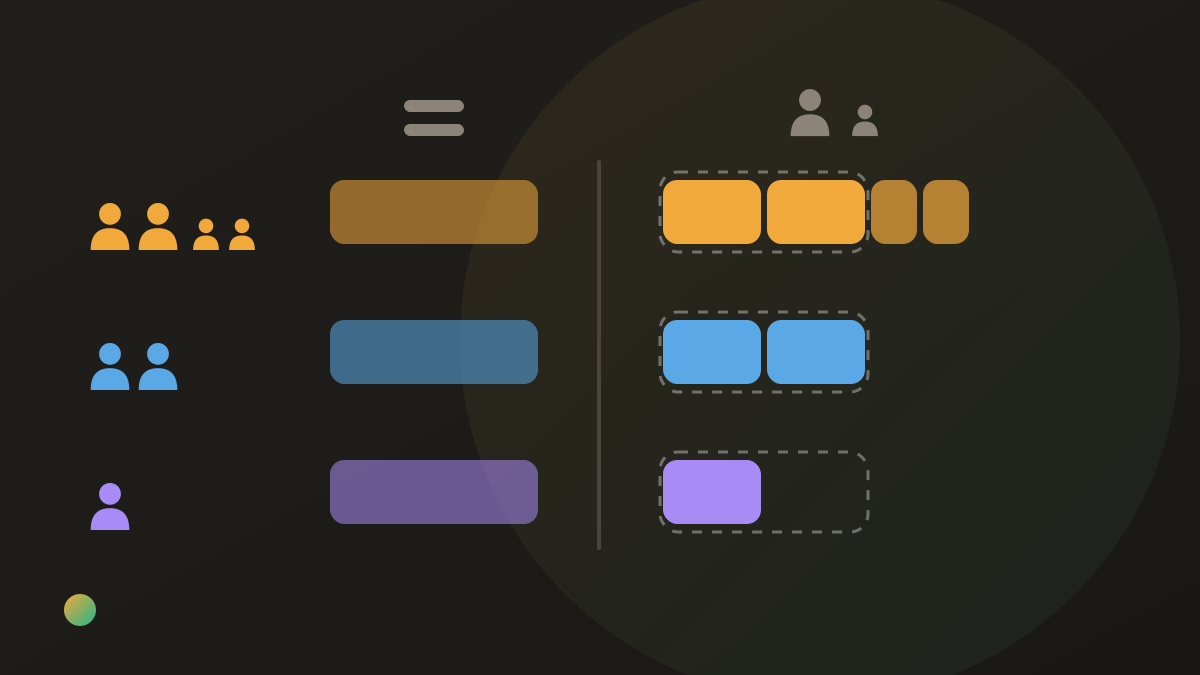
The simplest weighting rule: each adult counts 2 and each child counts 1, which is the same as saying a child pays half. Add up the weights for each household, and that household pays its weight divided by the total.
In the example below the Garcías are two adults and two children, so 2 + 2 + 1 + 1 = 6. The Müllers are two adults, so 4. Grandma Rosa is 2. The total is 12, so the Garcías pay 6/12 of a shared cost, the Müllers 4/12 and Rosa 2/12.
Teenagers who eat like adults can count as adults. The point is a rule everyone agreed before the trip, not precision. The five ways to split an expense explains why splitting by shares is the right tool here.
Splitting the vacation rental with family: bedrooms or weights
By bedroom suits a house where the rooms are similar and each household takes whole rooms. By person weight suits a house where the space each family uses tracks how many people it brought. The two give different answers, and neither is wrong — but choose before anyone pays the deposit. Splitting an Airbnb with friends goes further on room premiums and uneven nights.
When grandparents pay: a gift, not a debt
Grandparents often want to treat everyone, and that generosity can quietly break a careful split. If Rosa pays for the last-night dinner and it goes into the shared list as an ordinary expense, everyone suddenly “owes” her for a meal she meant as a present.
Keep gifts out of the split altogether. Thank her and leave it off the shared list, so the balance only holds what people agreed to share. The same goes for any household that covers something on purpose.
A worked example: three households, one holiday house
The Garcías (two adults, two children), the Müllers (two adults) and grandma Rosa share a holiday house for a week:
- House: €1,500 for the week, booked and paid by the Müllers.
- Groceries: €480, paid by the Garcías.
- Boat trip: €150, €30 a seat, paid by Rosa. The four Garcías and Rosa went; the Müllers stayed on the beach.
- Farewell dinner: Rosa’s treat, kept out of the split.
| Garcías | Müllers | Rosa | |
|---|---|---|---|
| Weight (adults 2, children 1) | 6 | 4 | 2 |
| House, per household | €500 | €500 | €500 |
| House, by bedroom (2 / 1 / 1) | €750 | €375 | €375 |
| House, weighted | €750 | €500 | €250 |
| Groceries, per household | €160 | €160 | €160 |
| Groceries, weighted | €240 | €160 | €80 |
| Boat, per participant | €120 | €0 | €30 |
| Total share, per household | €780 | €660 | €690 |
| Total share, weighted | €1,110 | €660 | €360 |
| Paid | €480 | €1,500 | €150 |
Under the weighted split, the Garcías’ share is €1,110 against €480 paid, so they owe €630. The Müllers’ share is €660 against €1,500 paid, so they are owed €840. Rosa’s share is €360 against €150 paid, so she owes €210. The balances sum to zero, and two transfers settle everything: the Garcías pay the Müllers €630 and Rosa pays the Müllers €210.
Under a flat per-household split, Rosa would owe €540 and the Garcías €300. Notice that the Müllers’ share is €660 either way: they are exactly a third of the weights. The whole argument is between the Garcías and Rosa, and the weighted split is what stops one person paying for a family of four’s share of the house.
Settle between households, not between people
Money in a family trip moves between households, not between individual people. The Garcías settle as one unit; nobody needs the children’s share sent separately. Work out each household’s total share, compare it with what that household paid, and clear the differences in as few transfers as possible. How debt simplification works explains why three households never need more than two.
The same thinking applies when households have very different budgets: weights can follow income instead of headcount. Splitting bills when you earn different amounts shows how, and it is a conversation to have before the booking, not after.
Where Donget comes in
In Donget, the simplest set-up for a family trip is one member per household. Create the group with euros as its base currency and use Add member to add “the Garcías”, “the Müllers” and “Rosa” by name; one person from each household joins by invite link and picks their household’s name.
For the house and the groceries, choose Multiplier as the split and step each household up to its weight: ×6, ×4 and ×2. For the boat, use Multiplier with the seats: ×4 for the Garcías, ×1 for Rosa, and the Müllers left out. Set Paid by to whichever household paid. Settle up then suggests the fewest transfers — here the same two the table found — and Paid records each one when it is sent. Holiday houses often have poor signal; expenses can be added offline and sync when you are back online.
What Donget does not do: it does not move money, and there are no saved weight presets, so you set the multipliers on each shared expense.
Frequently asked questions
How do you split family vacation costs fairly?
Weight each household by who is in it — 2 for each adult, 1 for each child — and split the rental and food by those weights. Split activities only among the people who took part, and settle household to household.
Should a multi family vacation cost split be per household or per person?
Per household makes a single grandparent pay as much as a family of four; per person charges a small child like an adult. Weighting each person, with children counting less, sits between the two.
How do you split a vacation rental with family?
By bedroom if the rooms are similar, or by the same person weights you use for food. Agree it before booking, so the person who paid the deposit is not left holding the difference.
How should costs be split between adults and kids?
A common rule is that a child counts as half an adult for the house and groceries. For activities priced per seat or ticket, use what each person actually costs.
What if grandparents want to pay for something?
Treat it as their gift, not a shared cost. Leave it out of the split so nobody ends up owing them for it.
Who should pay whom at the end of a family vacation?
Settle between households, not individuals. Compare each household’s share with what it paid and clear the differences in as few transfers as possible — usually one or two for three households.
The bottom line
A family holiday is not a group of equal individuals, and splitting it as if it were is what makes the end of the trip tense. Weight people by household, split activities by who went, keep gifts as gifts, and settle between households. Agree the rule before anyone pays the deposit and the arithmetic takes care of itself.
Download Donget free and set up the family trip with one member per household and the weights agreed before you leave.