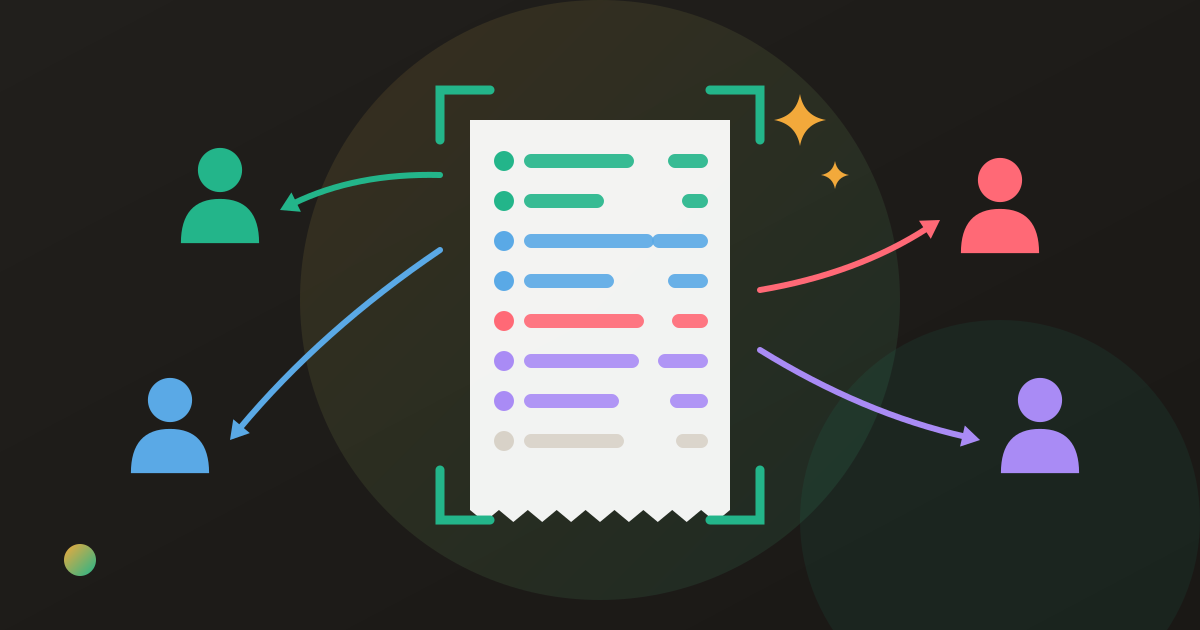
Split evenly or itemize? When each one is fair
Split the bill evenly when orders are close and the group eats together often; itemize when one order is far bigger, someone skipped the drinks, or it is a one-off. A five-person example shows the difference in dollars.
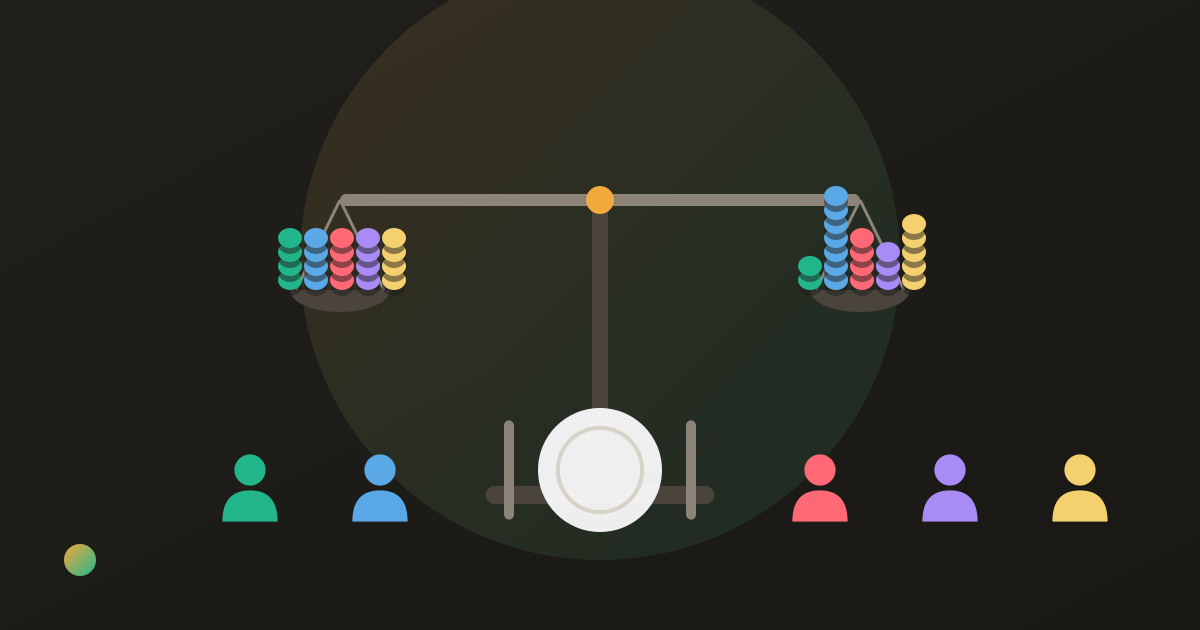
The bill lands, someone says “let’s just split it evenly”, and half the table nods while the other half does quiet maths. The person who had a salad and sparkling water is about to pay for someone else’s two cocktails. They will probably say nothing tonight.
The argument over whether to split the bill evenly comes up at almost every group dinner, and both sides have a point. Splitting evenly is quick and generous; itemizing is accurate and protects the light eater. Neither is always right. Split the bill evenly when the orders were close and the same people eat together often, so the small gaps even out. Itemize when one order is clearly bigger, someone skipped the drinks, or it is a one-off. When in doubt, split shared plates evenly and itemize the rest.
Why the even-split argument never ends
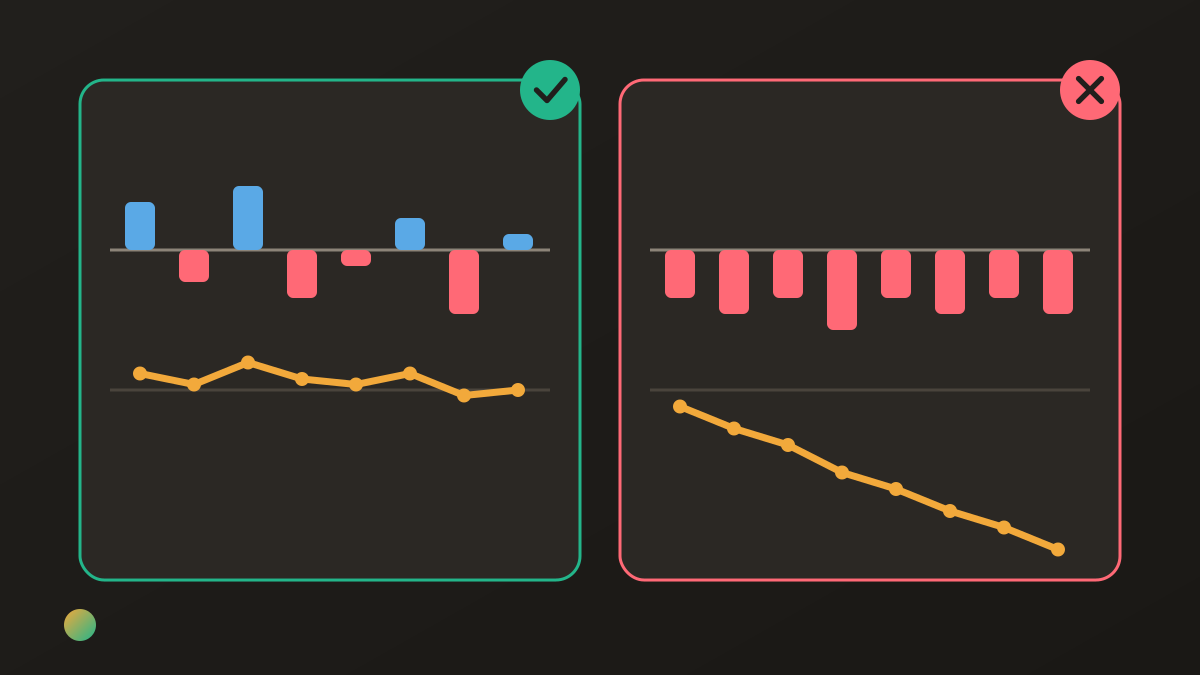
People who defend splitting evenly are not being careless. They are betting that differences cancel out: tonight you had the steak, next week I will. For a group that eats together every week, that bet usually pays, and nobody spends the end of the meal reading prices aloud.
People who want to itemize are not being petty either. They have noticed that some gaps do not cancel. A friend who never drinks pays for other people’s wine at every single dinner. A student at a table of earners orders the least expensive main every time. Those gaps go one way, every time, and they add up.
So the real question is not “even or itemize?” but “will this gap even out?”
The rule of thumb: three questions
Ask these as the orders go in, not when the bill comes.
- Is the gap bigger than a drink? Compare the smallest and the largest order. If they are within the price of one drink, splitting evenly costs anyone a few dollars at most. If one person’s order is twice another’s, it does not.
- Did someone skip the drinks? Drinks are where most of the gap comes from, and a non-drinker’s gap never evens out, because they skip them every time.
- Will you do this again soon? A group that eats together every week can absorb small differences. A one-off dinner, a work outing or a table of people who barely know each other cannot: there is no next time to balance it.
If every answer is “no, no, yes”, split evenly. If any answer goes the other way, itemize, or use the hybrid below.
Split the bill evenly when the orders were close
Splitting evenly is the right default for a regular group with similar habits: everyone had a main and a drink, prices were within a few dollars, and you will be back next week. It is fast, it needs no receipt, and the error is smaller than the time it saves. It is also the honest choice for sharing-style meals, where everything came out on platters and nobody could say who ate what.
Itemize the bill when they weren’t
Itemizing means each person pays for what they ordered, plus their share of anything that was shared. It is the right call when orders differ a lot, when drinkers and non-drinkers share a table, for a one-off group, and for anyone on a tight budget who ordered with that in mind. The old objection, that it takes forever, mostly disappears once someone photographs the receipt and assigns each line in an app.
The hybrid: shared plates evenly, the rest itemized
Most dinners are a mix. The nachos and the fries were for the table; the steak and the cocktails were not. The hybrid treats each line for what it is: shared plates split evenly among the people who shared them, everything else paid by whoever ordered it. It is the fairest way to split a bill for most groups, and it is what the example below uses. For the full menu of methods, from equal and exact amounts to percentages and shares, see the 5 ways to split an expense.
A worked example: five people, very different orders
Ava, Ben, Carla, Dev and Elena have dinner and Ben pays the whole bill. What each person ordered:
- Ava: salad $14, sparkling water $4 — $18
- Ben: steak $38, two cocktails $28 — $66
- Carla: pasta $22, glass of wine $12 — $34
- Dev: burger $18, soda $4 — $22
- Elena: pasta $22, two glasses of wine $24 — $46
- Shared: nachos $15 and fries $10 for the table — $25, or $5 each
Food and drink come to $211. Tax at 7% is $14.77 and a 20% tip on the food is $42.20, so the bill is $267.97. Tax plus tip is 27% of the food, so under the hybrid each person’s items are multiplied by 1.27; how to split tax and tip proportionally shows why the extras follow the food.
| Own items | Shared plates | Subtotal | Hybrid (× 1.27) | Split evenly | Difference | |
|---|---|---|---|---|---|---|
| Ava | $18.00 | $5.00 | $23.00 | $29.21 | $53.59 | pays $24.38 more |
| Ben | $66.00 | $5.00 | $71.00 | $90.17 | $53.61 | pays $36.56 less |
| Carla | $34.00 | $5.00 | $39.00 | $49.53 | $53.59 | pays $4.06 more |
| Dev | $22.00 | $5.00 | $27.00 | $34.29 | $53.59 | pays $19.30 more |
| Elena | $46.00 | $5.00 | $51.00 | $64.77 | $53.59 | pays $11.18 less |
| Total | $186.00 | $25.00 | $211.00 | $267.97 | $267.97 |
The even share is $53.594, so four people pay $53.59 and Ben, who paid, absorbs the two leftover cents at $53.61. Split evenly, Ava, Carla and Dev together pay $47.74 more than they ordered, and Ben and Elena pay $47.74 less. Ava alone pays nearly twice what she ordered. Carla’s $4.06 is the kind of gap that evens out; Ava’s $24.38 is not.
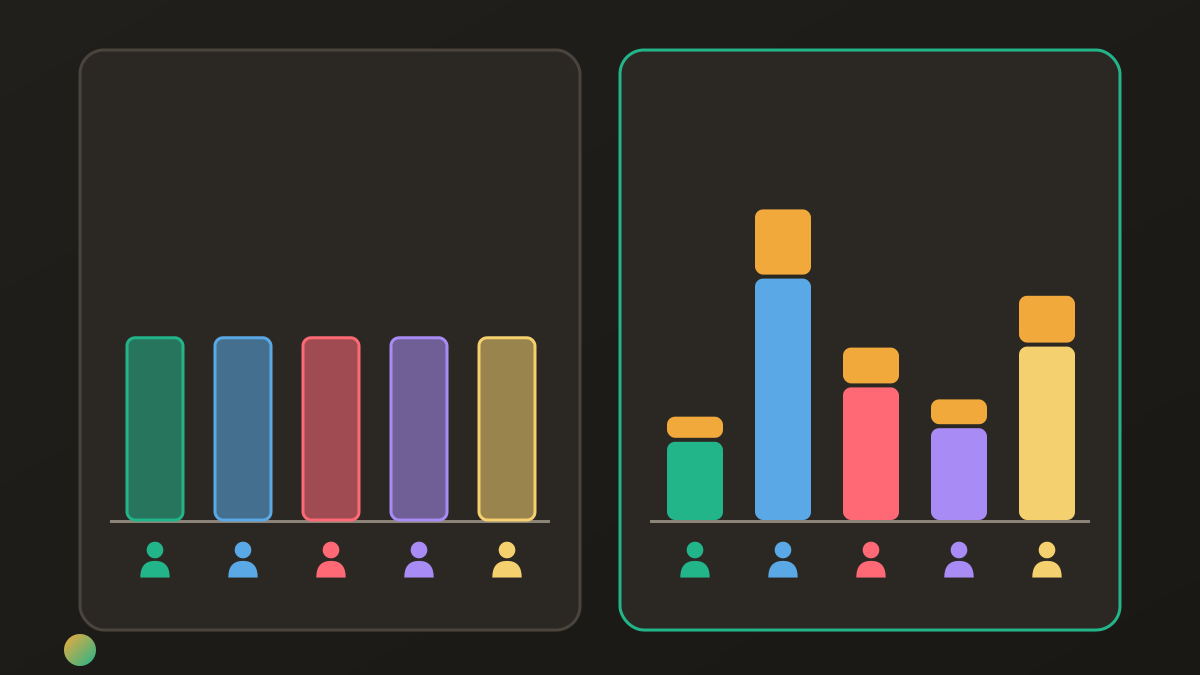
Under the hybrid, Ben paid, so four transfers settle it: Ava $29.21, Carla $49.53, Dev $34.29 and Elena $64.77, all to Ben.
The quick version: everyone pays for their own drinks
If nobody wants to itemize mains, a common shortcut is to split all the food evenly and have each person pay for their own drinks. On this bill, that puts Ava at $40.39 and Ben at $70.85 (after he absorbs two cents of rounding): much closer to the hybrid than an even split, because drinks were the biggest part of the gap, but Ava still covers part of Ben’s steak. It is a reasonable compromise for a regular group; for a one-off, itemize properly. How to split a restaurant bill shows how to do the full version in two minutes at the table.
Say it before anyone orders
Most arguments about splitting the bill are about timing, not maths. “Shall we each pay for our own and split the starters?” before ordering is a neutral suggestion. The same sentence when the bill arrives sounds like a complaint about someone’s order. If the table agreed to split evenly and you ordered the cheap dish anyway, pay the even share tonight and raise it before the next dinner. And if splitting evenly is your group’s habit and everyone ordered alike, there is nothing to fix: that is going Dutch in its simplest form.
Where Donget comes in
Donget lets the same expense be split either way, so the method can follow the table rather than the app. For an even split, tap Add expense, enter the total and leave the split on Equally. To itemize, choose Scan a receipt and Scan with AI: the items come back from the photo, each person taps Claim a share on what they ordered, the nachos and fries can be shared among everyone who ate them, and Tax & VAT is spread in proportion to each person’s items. A tip or service charge printed on the receipt is read into that same line; a tip added at the table can be typed into it before saving. Until anyone claims, the whole receipt is split equally, and Split everything equally turns it back into an even split in one tap.
Ben’s dinner then sits in the group’s balances with everything else, and Settle up suggests the fewest transfers when it is time to pay. Comparing apps for this job? This side-by-side of receipt-splitting apps shows where each one wins and where it falls short.
Frequently asked questions
Is it fair to split the bill evenly?
Yes, when the orders were close and the same people eat together often, so small differences even out. It stops being fair when the gap is large or always lands on the same person, such as the friend who never drinks.
When should you itemize the bill instead?
When the most expensive order is more than a drink or two above the smallest, when someone did not drink while others did, or when the group is unlikely to eat together again.
What is the fairest way to split a bill?
Usually the hybrid: shared plates evenly among the people who shared them, own mains and drinks paid by whoever ordered them, and tax and tip in proportion to each person’s total.
Should tax and tip be split evenly too?
Only if the food was split evenly. If you itemize, spread tax and tip in proportion to each person’s items, or the small orders end up paying part of the big orders’ tip.
Is it rude to ask to itemize the bill?
Not if you say it before ordering. At the start of the meal it is a neutral suggestion; when the bill arrives, it can sound like a comment on someone’s order.
What if the group already agreed to split evenly?
Pay the even share this time and suggest a different method next time. Changing the rule after the food arrives turns a small difference into an argument.
The bottom line
Split the bill evenly when the orders were close and the group eats together often; itemize when the gap is bigger than a drink, when someone skipped the drinks, or when there is no next time. The hybrid, shared plates evenly and the rest by person with tax and tip in proportion, is fair at almost any table. Agree on it before anyone orders.
Download Donget free and split the next dinner evenly or item by item, whichever the table needs.