How to split tax, tip and service charge fairly
How to split tax and tip: share them in proportion to what each person ordered, split a flat delivery fee per head, and take discounts off the same way. Formula and a worked example.

The order arrives, the receipt is long, and below the food come the extras: tax, a service charge, a delivery fee, maybe a voucher you remembered at checkout. Splitting the food by who ordered what is the easy part. The extras are where a careful split quietly goes wrong, usually by dividing them by the number of people.
The question is not how much to tip; that depends on the country and the place. The question is how to divide whatever the bill says. To split tax and tip fairly, share them in proportion to what each person ordered: tax, tip and service charges are percentages of the food, so they follow the food. Split a flat fee such as delivery equally per head, and take discounts off in proportion, the same way in reverse.
Two kinds of extras: percentages and flat fees
When you split a bill with tax and tip, every line below the food is one of two kinds.
Percentage extras are calculated from the food: sales tax added at the till, a service charge, a tip worked out as a percentage. If one person’s order is twice the size of another’s, it generated twice the tax and twice the service charge. In many countries tax is already inside the menu prices, and then there is nothing extra to split.
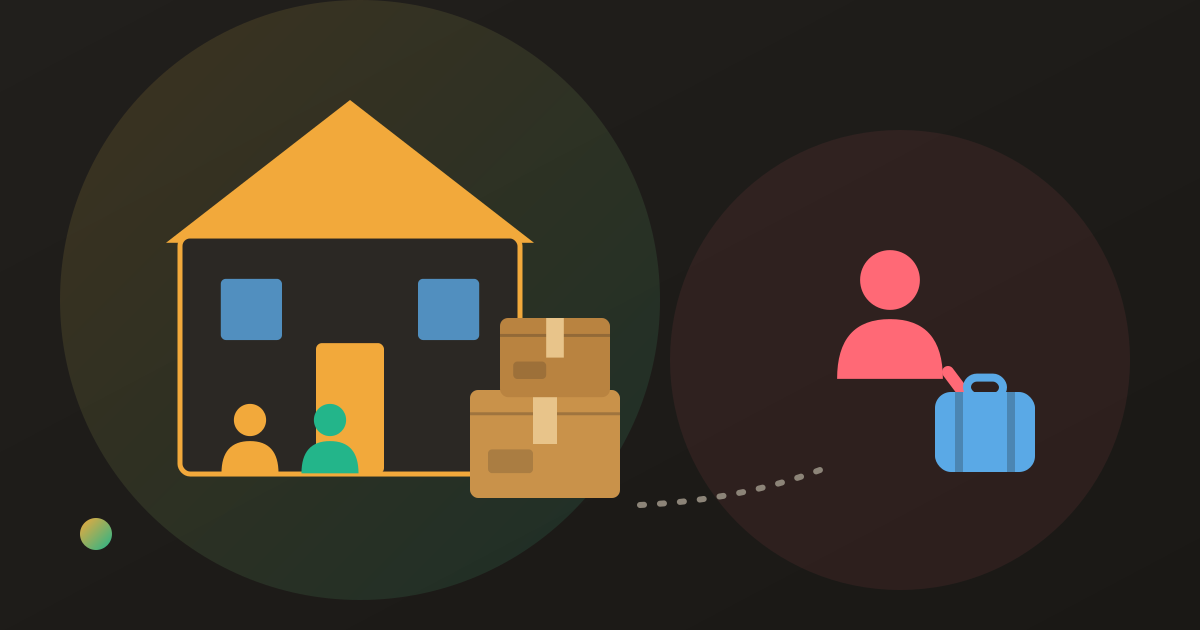
Flat fees are the same whatever was ordered: a delivery fee, a cover charge per table, a small-order fee. One courier carried everyone’s bag; the fee did not change because someone added a dessert.
Most arguments about extras come from treating one kind as the other.
Three ways to split the extras
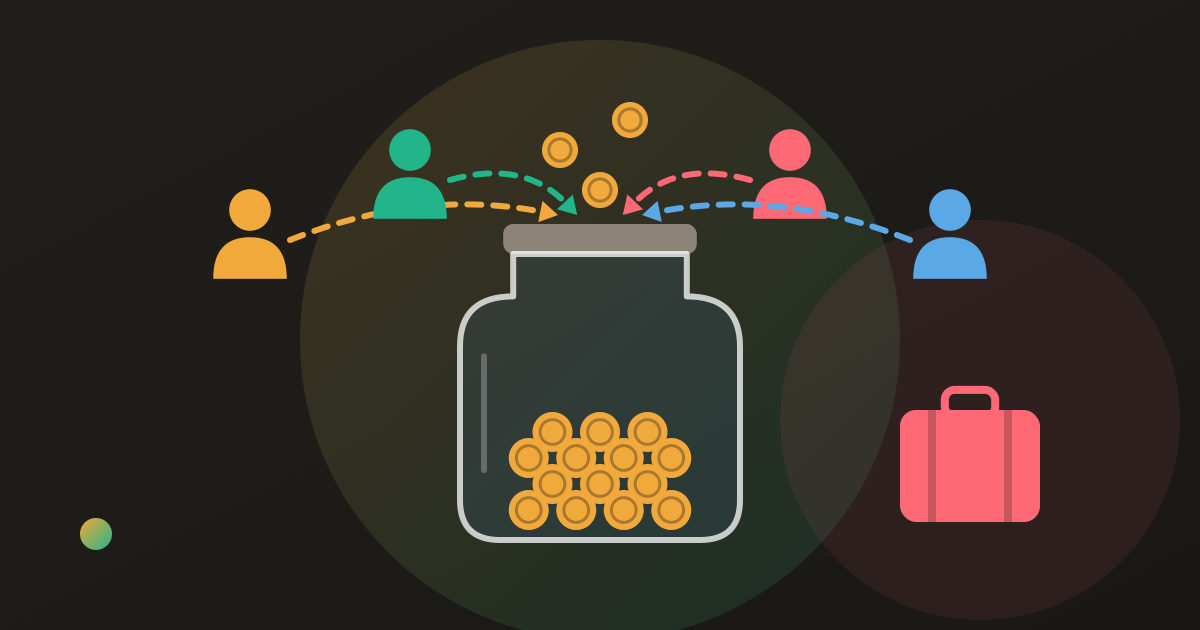
- Equal share of everything extra. Add up tax, service, delivery and discount, divide by the number of people, and add that to each person’s food. Fast, and fine when the orders were similar.
- Proportional to what each person ordered. Every extra follows the food, including the delivery fee. Accurate for the percentages, slightly off for the flat fees.
- The hybrid. Percentage extras and discounts split proportionally; flat fees split per head. This matches how each charge was actually created, and it is the default worth using.
For the methods behind the food itself (equal, by item, the shared-starter case), how to split a restaurant bill covers them, and the 5 ways to split an expense puts them in a wider frame.
The formula for splitting tax and tip proportionally
This is how to split the tip proportionally, and the tax and service charge with it:
Person’s share of the extras = extras × (their subtotal ÷ bill subtotal).
Add the percentage extras together first (tax plus service charge plus tip) and subtract any discount that applies to the food. That net amount is what you divide. Because every person gets the same fraction of their own subtotal, a shortcut works too: divide the net extras by the bill subtotal to get one factor, and multiply each subtotal by one plus that factor. Then add each person’s equal slice of the flat fees.
The proportional shares always add up to the full extras, because the fractions (each subtotal ÷ the bill subtotal) add up to one.
A worked example: four friends, one delivery order
Nadia, Ben, Chloe and Omar order dinner to Chloe’s flat on her account. What each person ordered:
- Nadia: €36.50
- Ben: €19.40
- Chloe: €47.10
- Omar: €17.00
The food comes to €120.00. The receipt adds tax at 8% (€9.60) and a service charge at 12.5% (€15.00), takes off a €12.00 voucher, and adds a €4.99 delivery fee. Total: €120.00 + €9.60 + €15.00 − €12.00 + €4.99 = €137.59, paid by Chloe.
The percentage extras net of the voucher are €9.60 + €15.00 − €12.00 = €12.60, which is 10.5% of the food. So each subtotal is multiplied by 1.105, and each person adds €4.99 ÷ 4 = €1.2475 for delivery:
| Ordered | × 1.105 | + delivery | Exact | Pays | |
|---|---|---|---|---|---|
| Nadia | €36.50 | €40.3325 | €1.2475 | €41.5800 | €41.58 |
| Ben | €19.40 | €21.4370 | €1.2475 | €22.6845 | €22.68 |
| Chloe | €47.10 | €52.0455 | €1.2475 | €53.2930 | €53.30 |
| Omar | €17.00 | €18.7850 | €1.2475 | €20.0325 | €20.03 |
| Total | €120.00 | €132.60 | €4.99 | €137.59 | €137.59 |
Rounded to the cent, the four shares come to €137.58, one cent short of the bill. Chloe paid, so Chloe absorbs the cent: her share goes from €53.29 to €53.30, and the shares add up to €137.59 exactly. Nadia owes Chloe €41.58, Ben €22.68 and Omar €20.03, which is €84.29 in total, the bill minus Chloe’s own €53.30.
Now the same bill with every extra split equally: €12.60 + €4.99 = €17.59, or €4.3975 each on top of their own food. Compared with the hybrid, Ben overpays by €1.11 and Omar by €1.37, while Nadia underpays by €0.68 and Chloe by €1.80. The two smallest orders are subsidising the two largest, and the four differences net to zero.
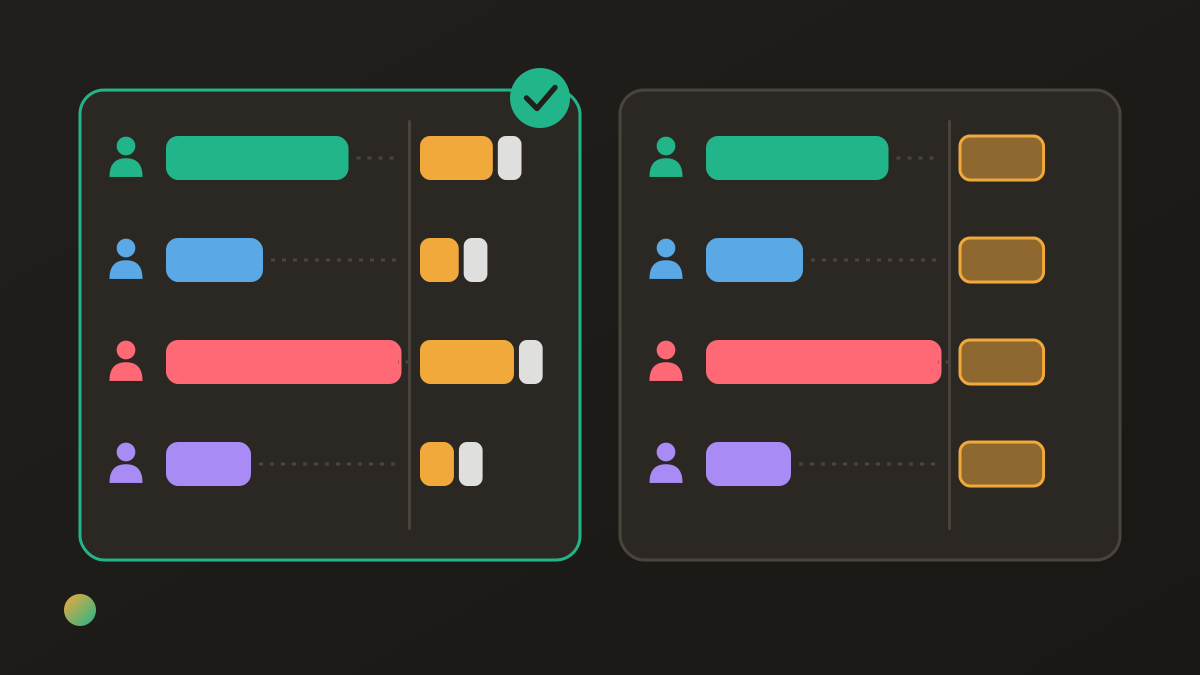
A euro or so per person is small on one dinner. Across a year of shared takeaways it is the person who always orders the soup quietly paying for someone else’s service charge.
Rounding: the payer absorbs the cent
Proportional shares rarely land on whole cents. Round each one to the nearest cent, compare the sum with the bill, and put the difference (one or two cents, either way) on the payer’s own share. It keeps the arithmetic exact without anyone sending a one-cent transfer. Decide this once and the question never comes up again.
When splitting the extras equally is fine
When everyone ordered within a few euros of each other, the equal and proportional methods give nearly the same result, and equal is quicker. It is also fine when the group has simply agreed to go Dutch on the total, or when one person is being treated: on a birthday, the guests usually cover the birthday person’s food and their share of the extras, which who pays on a birthday dinner works through.
Where Donget comes in
In Donget, tax, discount and delivery are separate amounts on an expense rather than lines you fold in by hand. Choose Scan receipt with AI and the scan reads the items, plus three amounts below them: Tax & VAT, Discount and Delivery fee. A service charge or tip printed on the receipt is read into Tax & VAT; tap any of the three to correct it. Each person then taps Claim a share on what they ordered, and items nobody claims stay split equally among those who claimed nothing — or among everyone, once everyone has claimed something.
The app then spreads tax, delivery and discount in proportion to each person’s share of the items, and the shares always add up to the receipt total. That matches the proportional method above for tax, tip, service charge and discount. One difference: the delivery fee is spread in proportion too, not per head. On this order that moves each person’s share by under a euro; if your group wants delivery strictly per head, work out the figures as above and enter them on a manual expense with the Amount split. Scanning needs an internet connection, and how AI receipt scanning saves you time shows the scan in more detail.
Frequently asked questions
How do you split tax and tip on a group bill?
In proportion to what each person ordered: each person’s share is the extras multiplied by their subtotal divided by the bill’s subtotal. A flat fee, such as delivery, is split equally per person instead.
Should the tip be split equally or proportionally?
Proportionally, when the tip is a percentage of the bill: the person who ordered twice as much generated twice the tip. An equal tip is only fair when the orders were about the same size.
How do you split a service charge?
The same way as tax: multiply each person’s food subtotal by the same factor. A 12.5% service charge means every subtotal is multiplied by 1.125.
How do you split a delivery fee between friends?
Equally per person, because it does not grow with the size of the order. Divide it by the number of people who ate and add that to each share.
How do discounts work when splitting a bill?
In reverse, by the same rule: a voucher on the food comes off in proportion to each person’s subtotal, so the person who ordered most gets the largest part of it.
What do you do with the leftover cent after rounding?
Let the person who paid absorb it. Add the one- or two-cent difference to the payer’s own share so everything adds up to the bill.
The bottom line
Extras come in two kinds. Tax, tip, service charges and discounts are percentages of the food, so they follow the food: multiply each subtotal by the same factor. Delivery and cover charges are flat, so they go per head. Round to the cent, let the payer absorb the leftover, and the split adds up to the bill exactly.
Download Donget free and scan the next shared receipt, so tax, discount and delivery are spread across everyone’s share without anyone doing it on a napkin.