How to split a bill with a large group (10+ people)
To split a bill with a large group, let one person pay, split the food equally, split the drinks among the drinkers, spread the service charge in proportion, and have everyone pay that one person. A worked 12-person example.
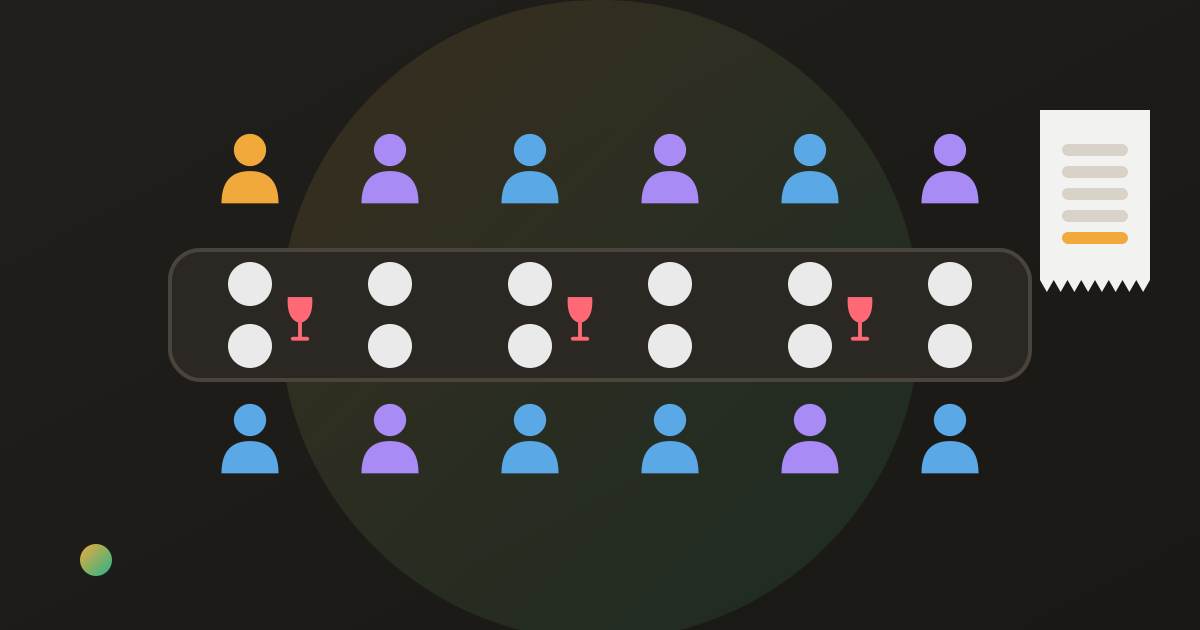
Twelve of you at a long table, and the bill comes as one printout with a service charge already on it. The waiter will not split it twelve ways. Someone who barely drank is doing quiet arithmetic, and two people left before dessert. Splitting a bill with a large group goes wrong in ways a table of four never does.
One person pays the whole bill. Shared food is split equally among everyone, drinks only among the people who drank, and the service charge is spread in proportion to each share. Everyone then pays that one person their single number, which means one transfer per guest and nothing else.
What goes wrong at ten or more
The service charge is already on. Many restaurants add a fixed service charge or automatic gratuity to tables above a certain size. It is a percentage of the whole bill, so it needs to follow what each person had, not the headcount.
Separate checks are refused. Large tables often get one bill, or a limit on how many cards the restaurant will take. Planning on twelve separate payments at the till is planning on a queue.
One card pays. Somebody puts the whole bill on their card to get everyone out of the door, and is now owed money by ten or eleven people.
People leave early. The friend with the early train goes before the bill arrives and promises to “send something”. Without a number, they usually send a guess.
Drinkers and non-drinkers. At a big table this is the biggest gap. Two bottles of wine and a round of cocktails can be a third of the bill, and the people who drank water are asked to pay for them.
The fastest fair way to split a large group dinner bill
Itemising twelve people’s orders line by line is fair but slow, and nobody wants to do it at the table. Splitting everything equally is fast but unfair to anyone who had less. The method that works at scale sits between the two.
- One person pays the bill. Pick them before the bill arrives, not after.
- Split shared food equally among everyone. Large tables usually share starters, sides and often mains; differences in food are rarely worth an argument.
- Split drinks only among the people who drank them. This is the one sub-group that matters. If there is a clear split, such as wine drinkers and soft-drink drinkers, it takes two numbers, not twelve.
- Spread the service charge in proportion. Add the same percentage to every share rather than dividing it equally. How to split tax, tip and service charge fairly explains why.
- Everyone pays the payer. With one payer, there is nothing to simplify: each guest makes one transfer, to that person.
If orders really were wildly different, someone with a lobster or a tasting menu, take that person’s dish out and split the rest; the item-by-item method in how to split a restaurant bill handles it.
A worked example: split a bill with a large group of 12
Hannah books a table for twelve and pays the whole bill. Seven people drank wine and cocktails: Hannah, Omar, Jack, Sofia, Ben, Lucy and Marcus. Five did not: Priya, Tom, Aisha, Daniel and Grace. The restaurant adds a 12.5% service charge for groups.
| Line on the bill | Amount |
|---|---|
| Food, shared by all 12 | £576 |
| Wine and cocktails, the 7 drinkers | £224 |
| Subtotal | £800 |
| Service charge, 12.5% | £100 |
| Total | £900 |
Before the service charge, everyone’s food share is £576 ÷ 12 = £48, and each drinker’s share of the drinks is £224 ÷ 7 = £32. So a drinker’s share is £80 and a non-drinker’s £48.
Add the service charge in proportion, multiplying each share by 1.125:
| Before service | With 12.5% service | Each pays | People | |
|---|---|---|---|---|
| Drinker | £80 | £90 | £90 | 7 |
| Non-drinker | £48 | £54 | £54 | 5 |
| Total | £900 | 12 |
Check: 7 × £90 + 5 × £54 = £630 + £270 = £900, the printed total. Split equally, everyone would have paid £75; each non-drinker would have paid £21 more than their share and each drinker £15 less.
Omar had a train to catch, so he paid Hannah his £90 before he left and is already square. Hannah’s own £90 is her share. That leaves ten transfers, all to Hannah:
- Jack, Sofia, Ben, Lucy and Marcus each pay Hannah £90.
- Priya, Tom, Aisha, Daniel and Grace each pay Hannah £54.
That is £450 + £270 = £720, which is exactly what Hannah is still owed: £900 paid, minus her £90 share, minus Omar’s £90. Ten is also the minimum here: with only one person owed money, every one of the ten people who still owe has to make at least one transfer, and none of them needs more than one.
The person who leaves early
Give them a number before they stand up. Their share is worked out exactly like everyone else’s: food, their drinks if they had any, and the service charge on both. If the bill has not arrived yet, use the menu prices for what they ordered and add the service percentage. They pay the person who will pay the bill, and that payment gets written down, so the rest of the table is not later asked to cover a gap or to refund an overpayment.
Who pays for the guest of honour
At a birthday or a leaving dinner, the group often covers one person. Their share is simply split among the other eleven, drinkers and non-drinkers alike, unless you agreed otherwise. Say it when you invite people, not when the bill arrives; who pays on a birthday dinner covers the conventions.
How to collect without chasing
Ten people owing one person is where a good split goes to die. A few habits keep it short.
Send numbers the same evening. Everyone is still thinking about the dinner, and a payment takes a minute. A week later it is a favour you are asking.
One name and one number each. “£54 to Hannah” gets paid; a table of who owes whom gets skimmed.
Let them pay their usual way. Bank transfer, a payment app, cash next time you meet. The payer only needs the money and a note that it arrived.
Nudge once, kindly, the next day. Most people who have not paid have simply forgotten. Asking friends for money without making it awkward has wording that works.
Where Donget comes in
The payer, or whoever is organising, makes a group for the dinner. People can join by invite link or QR code at the table, and anyone who does not want the app can be added by name, so not everyone needs to install anything for the split to be complete.
The example takes two entries. Add expense “Food”, £648 (the £576 plus its 12.5%), Paid by Hannah, split Equally among all twelve: £54 each. Then Add expense “Drinks”, £252 (the £224 plus its 12.5%), Paid by Hannah, split Equally among the seven drinkers: £36 each. Omar’s £90 goes in with Record a transfer. If you would rather work from the receipt, Scan receipt reads the lines so you can assign items to people.
Settle up then lists the ten transfers to Hannah. On each row, Remind lets Hannah pick a short message and send it herself, through her phone’s share sheet or, to guests who use Donget, as a nudge inside the app; Paid records the money once it arrives. Donget does not move money; it keeps the record so nobody has to keep it in their head. It is free, with no ads and no daily cap on entries.
Frequently asked questions
How do you split a bill with a large group?
One person pays, shared food is split equally, drinks only among the drinkers, and the service charge in proportion to each share. Everyone then pays the one payer, one transfer each.
Should a large group dinner bill be split equally?
Only if everyone ordered and drank about the same. At ten or more people the spread is usually wide, mostly because of alcohol.
Will a restaurant split the check for a big group?
Many won’t split a large table’s bill, or limit the number of cards. Ask when you book; if not, one person pays and everyone pays them back.
How do you split the service charge or automatic gratuity on a large group bill?
In proportion: multiply each person’s share by the same factor, 1.125 for 12.5%, so whoever ordered less carries less of the charge.
What should someone do if they leave a group dinner early?
Work out their share, service charge included, and have them pay the person settling the bill. Record it, so they are square.
How do you collect money from ten people after a group dinner?
Send each person one name and one number the same evening, and a single friendly nudge the next day to anyone who forgot.
The bottom line
A big table needs a simpler method than a small one, not a more complicated one. One payer, food split equally, drinks among the drinkers, the service charge in proportion, and one number per person sent the same night. Twelve people, ten transfers, nobody paying for someone else’s wine.
Download Donget free and turn the next big dinner into two entries and one list of who pays whom.