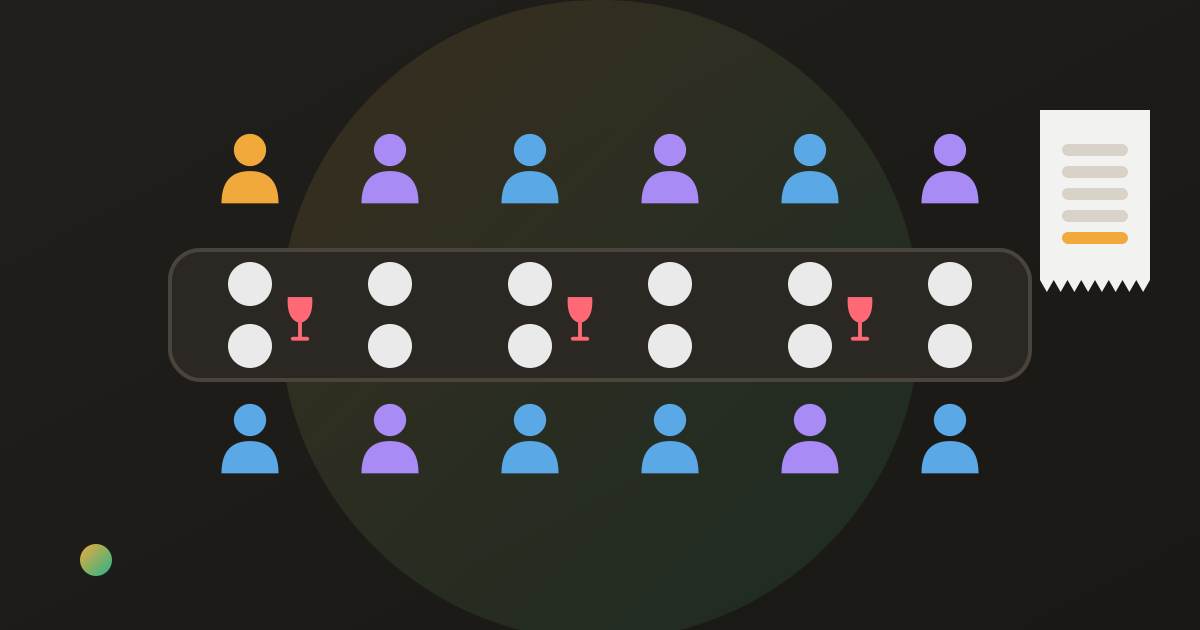
Holiday dinner with friends: who brings what and how to split the cost
Agree which holiday dishes are contributions and which shopping will be shared, then give food and kitchen jobs named owners before anyone buys.

The Friendsgiving list has three pies, no vegetables and a message from the host saying, “I’ll sort the rest.” A week later, the host has bought the roast and half the sides, while guests arrive assuming their homemade dishes are their entire contribution.
Both arrangements can work. The trouble starts when people arrive with different ones in mind. Decide which food is a contribution and which shopping will be reimbursed, then put a name and a portion count beside every dish and job. Only agreed shared purchases enter the final bill, with drinks shared by their own named participants.
The example below is an American Friendsgiving dinner, with amounts in US dollars. The same agreement also works for Christmas dinner with friends: the menu can change while the distinction between a gift and a shared purchase stays clear.
Choose the dinner’s arrangement before the menu
There are three straightforward choices. At a potluck, each person provides an agreed dish as their contribution. With shared shopping, one or more people buy the meal and everyone shares the agreed cost. A mixture might mean guests bring sides while the roast and drinks come from a common budget.
Put that choice in the invitation. “Bring a side for six; we’ll split the roast and soft drinks, with wine separate” gives people enough information to decide. “Bring something and we’ll work it out” leaves both the menu and the price unsettled.
Keep the budget specific enough to be useful. If the roast will be a shared purchase, agree a spending limit and who will buy it before someone chooses a larger one.
Build the sign-up sheet around the meal
Start with the gaps the menu needs filled, then let people choose. A usable Friendsgiving sign-up sheet can be as simple as:
| Line | Person | Detail to agree | Cost treatment |
|---|---|---|---|
| Roast and agreed sides | Nora | Enough for six | Shared shopping |
| Vegetable side | Maya | Six portions, arrives ready to serve | Contribution |
| Bread | Owen | Enough for six | Contribution |
| Dessert | Sam | Six portions | Contribution |
| Soft drinks and ice | Eli | For all six | Shared shopping |
| Wine | Priya | For four named drinkers | Shared shopping for four |
Nora and Priya can also contribute dishes; the table simply records the essential gaps. Ask about food preferences while choosing the menu so the shared purchases reflect what the group actually wants. Use the who brings what list for a broader party checklist.
Assign the kitchen and the room as well
A side dish that needs the oven for an hour brings a different job from a salad ready to put on the table. Ask what needs oven or hob space, which serving dishes it needs and when it will arrive. One person can coordinate that schedule in the shared note or calendar.
Give setting the table, finding extra chairs, serving drinks, washing up and packing leftovers names too. Guests bringing food can take jobs as well; someone whose budget is tight can agree a smaller contribution without having to explain it at the table.
Choose who handles any unclaimed line before the shopping starts. Keep the assignment visible when a dish changes hands, so two people do not both buy the same missing ingredient.
Separate contributions from reimbursable shopping
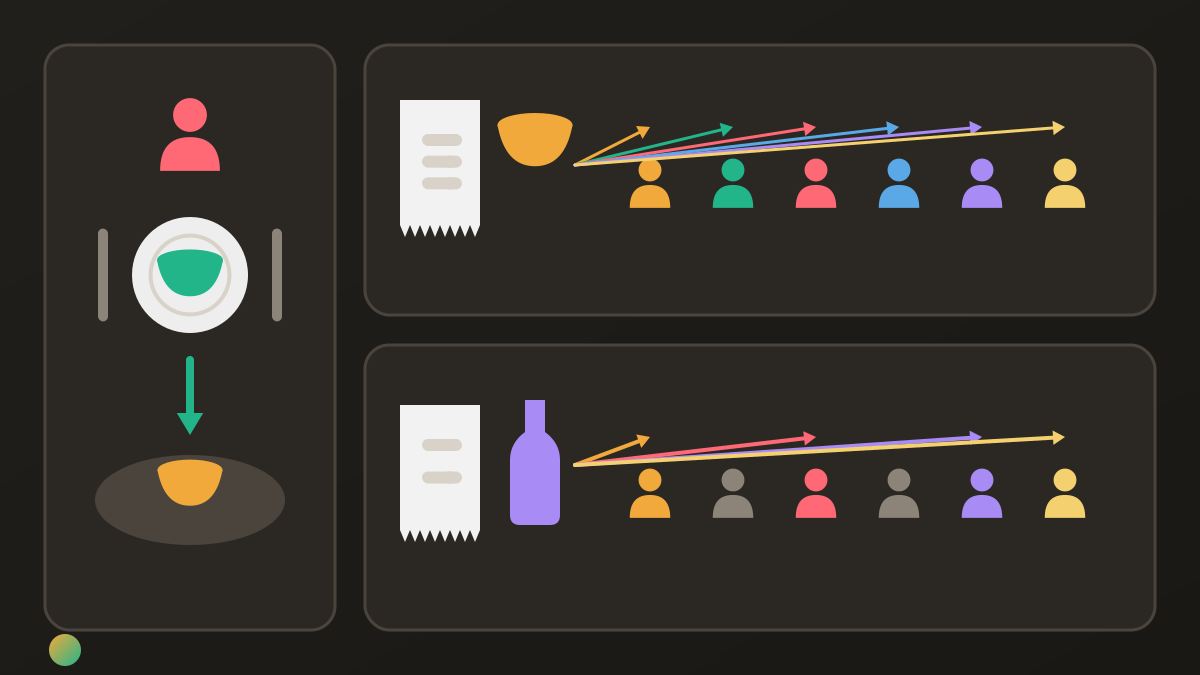
A volunteered pie is a contribution. Its ingredients still cost its maker money, but that does not make the receipt a shared expense. In this example, the friends have agreed to pay for their own contributed dishes and share only the purchases listed as shared shopping.
If someone offers a much more expensive dish, settle its treatment first. They can choose something simpler, offer it as a gift or ask the group to make it part of the common budget. Adding a reimbursement after the dinner changes everyone else’s agreement.
A present for the host is separate too. If several friends want to buy one together, use a group gift agreement so it does not disappear into the food bill.
A worked example: six friends at Friendsgiving
Nora hosts Eli, Maya, Owen, Priya and Sam. All six agree to share the roast, agreed sides, soft drinks and ice. Nora, Maya, Priya and Sam also share wine. Everyone’s volunteered dishes stay outside the shared ledger.
| Shared purchase | Buyer | Participants | Per person |
|---|---|---|---|
| Roast and agreed sides, $120 | Nora | All six | $20 |
| Soft drinks and ice, $30 | Eli | All six | $5 |
| Wine, $48 | Priya | Nora, Maya, Priya, Sam | $12 |
Each wine drinker’s share is $20 + $5 + $12 = $37. Eli and Owen each have a $25 share. The $198 of shared purchases produces these balances:
| Person | Paid | Share | Paid minus share |
|---|---|---|---|
| Nora | $120 | $37 | +$83 |
| Eli | $30 | $25 | +$5 |
| Maya | $0 | $37 | −$37 |
| Owen | $0 | $25 | −$25 |
| Priya | $48 | $37 | +$11 |
| Sam | $0 | $37 | −$37 |
| Total | $198 | $198 | $0 |
One way to settle is Maya pays Nora $37; Sam pays Nora $37; Owen pays Nora $9, Eli $5 and Priya $11. Nora receives $83, Eli $5 and Priya $11. Owen’s three payments total his $25 share. Everyone’s balance reaches zero, and no contributed dish has been counted twice.
Change the agreement while people can still choose
If a guest cannot bring their dish, reopen that line and agree who replaces it. If the replacement will be bought from the common budget, say so before buying. An extra guest changes the meal count; confirm their contribution and shared purchases too.
This is also why a final surprise “cost per head” feels different from an agreed shopping budget. For a whole evening rather than a holiday meal, potluck versus shared party shopping explores that choice. If you eat out instead, splitting a large group dinner bill deals with one restaurant payer and service charges.
Where Donget comes in
Under Tasks, use Add task for dishes and jobs, with quantities in the titles. Who takes it? → Open leaves an unclaimed line Up for grabs, or assign the named person. Completing “Soft drinks and ice” with Mark as done can offer Spent money on Soft drinks and ice? → Add expense. Eli enters $30 and reviews all six participants; only the title arrives prefilled.
Enter the wine separately for its four participants, and leave contributed dishes out of the money list. Settle up suggests repayments; Paid records them after people pay in their usual way. Donget has no oven schedule, task dates or sign-up slots, so coordinate kitchen timing separately and put portions in task titles.
Frequently asked questions
What should go on a Friendsgiving sign-up sheet?
List mains, sides, dessert, drinks, serving equipment and the setup and clearing jobs. Give each line a portion count, an owner and any kitchen space it needs, and say whether it is a contribution or an agreed shared purchase.
Should guests pay for Friendsgiving dinner?
There is no automatic rule. Guests can each contribute a dish, share an agreed shopping budget or use a clearly stated mixture; tell everyone which arrangement you mean before they buy anything.
How do you split Christmas dinner costs with friends?
Agree what the host is offering and what will be shared before shopping. Divide shared purchases among the people they were for, keep volunteered dishes outside the bill unless you agreed otherwise, and record each purchase once.
Should the host pay a share of the food?
Include the host if everyone agreed to share the food equally. Guests can offer to cover the host, but hosting does not silently remove a share or turn the whole dinner into a gift.
Do people who do not drink have to split the wine?
Wine can be a separate shared purchase for the people who agreed to drink it. Keep the common meal and soft drinks as separate expenses if they have different participants.
Does an expensive homemade dish reduce what I owe?
Only if the group agreed to count its cost towards the shared budget. In a potluck, a volunteered dish is usually the contribution itself; it does not automatically create a cash credit against other purchases.
The bottom line
Decide what guests are giving and what the group is buying. Put names beside dishes, kitchen handoffs and clearing jobs, then share only the agreed purchases among the people they were for. The dinner can be generous without leaving the bill open to interpretation.
Download Donget free and keep the holiday meal’s contributions and agreed shared purchases together.