How to split costs on a work trip or team offsite
A work trip has two ledgers: the company's and yours. Here is how to keep the team dinner, the taxis and the leaving gift out of each other's way, and settle a five-person offsite in four transfers.
Work trips generate the most confusing money of any trip, because two completely different systems are running at once. The hotel is on a company booking. The flights went through someone in operations. And then, on the first evening, five people go to dinner and somebody’s personal card comes out.
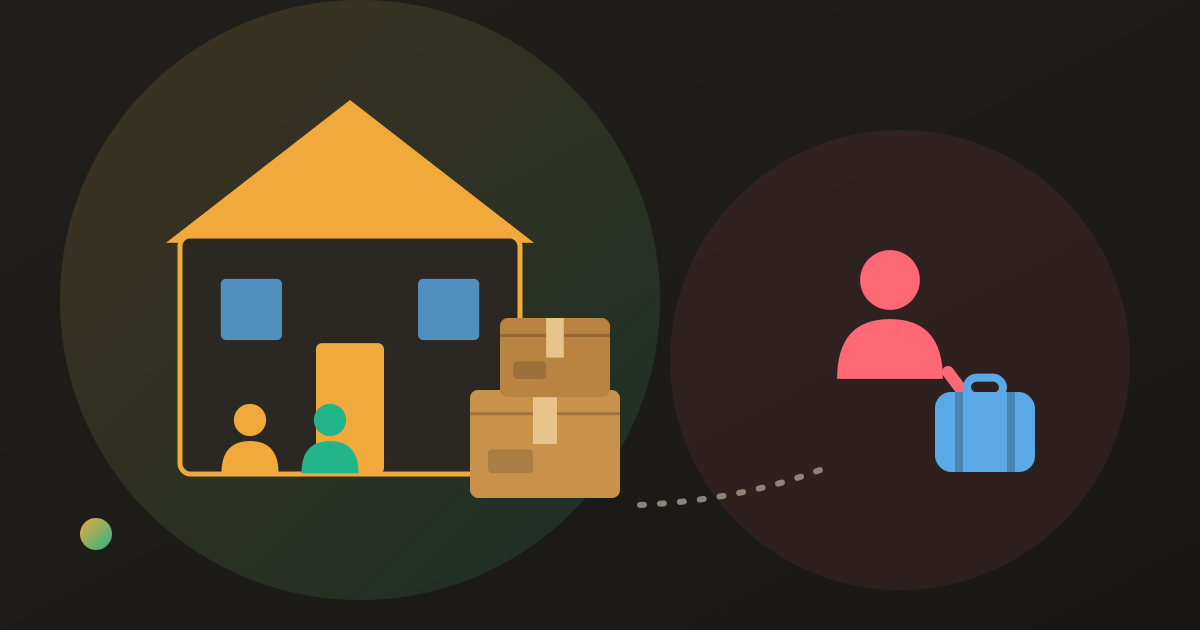
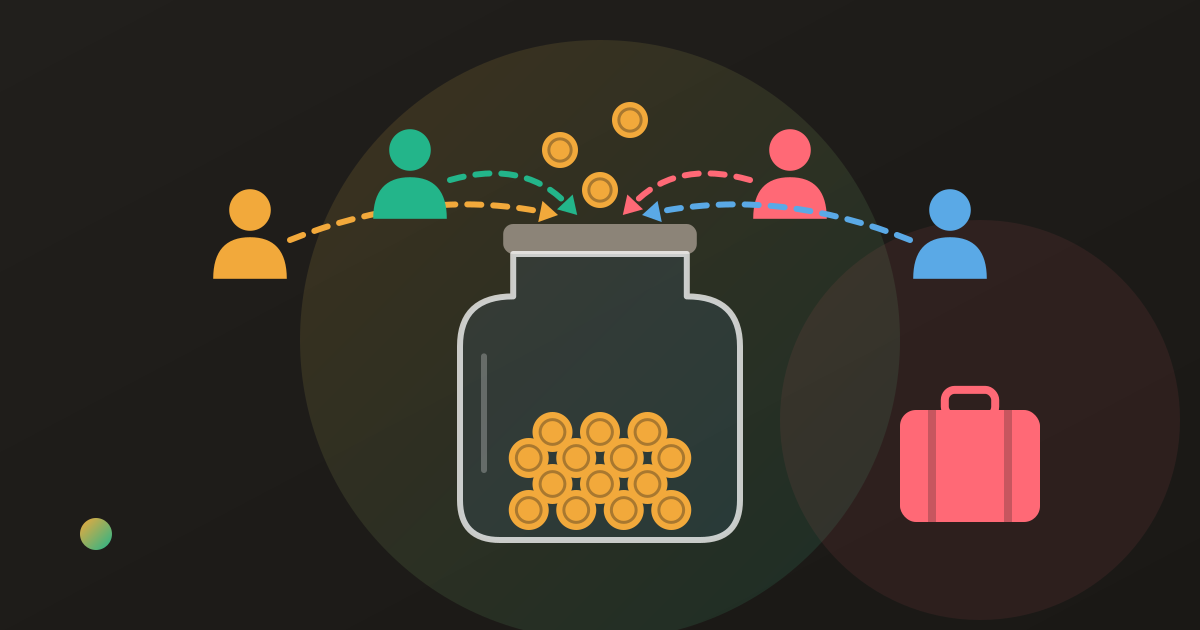
That card is the moment the confusion starts. From here on there are two ledgers — one that belongs to your employer and one that belongs to the five of you — and almost every work-trip money problem is a line ending up on the wrong one. The rule is a boundary, not a formula: if the company is paying for it, it never enters the personal split.
To be clear about scope: what your employer will and will not reimburse, and how you claim it, is between you and your employer. This is about the other ledger — the shared costs the five of you are covering yourselves.
Draw the line before the first evening
The split is easy. Sorting the pile afterwards is not. Five minutes on the way from the airport saves the whole thing:
What the company covers. Hotel, flights, whatever the policy says about meals. These go through whatever process your employer uses and are never mentioned again in the group.
What the group covers. The dinner nobody is claiming, the taxis between venues, the drinks after, the gift for a colleague, the snacks somebody bought for the room. One group, one balance.
What is personal. The souvenir, the extra night at the end, the room service. Nobody else’s problem.
The line between the first two is the one that moves, and it moves by country, by team and by month, so agree it out loud rather than assuming everyone read the same policy.
Two rules that prevent most of it
One payer per line, named at the time. Not “we’ll work it out” — the person who taps the card says so, and it goes in the record while the receipt is still in their hand. A work trip is exactly the environment where a €60 taxi is forgotten: everyone is tired, it is not their money either way, and there are three more days of it.
Say the awkward things before the bill, not after. Whether the drinks are split evenly or by who drank them. Whether the senior person is covering the table this time. Whether the guest at the end of the table is on the company card or on all of you. Every one of these is fine when it is stated in advance and corrosive when it is discovered at the till. Splitting a restaurant bill fairly covers the mechanics; on a work trip the timing matters more than the method.
A worked example
Five colleagues, two-day offsite. Hotel and flights are on the company. Everything below is the group’s own:
| Expense | Amount | Paid by | Split |
|---|---|---|---|
| Team dinner | €245 | Ana | equally, 5 ways |
| Taxis between venues | €60 | Ben | equally, 5 ways |
| Leaving gift for a colleague | €75 | Carla | equally, 5 ways |
| Late snacks and drinks | €30 | Dan | equally, 5 ways |
That is €410, so each share is €82. Ana is €163 ahead; Ben is €22 behind; Carla €7; Dan €52; Ela, who never got her card out, €82.
Everyone pays Ana: €82 from Ela, €52 from Dan, €22 from Ben, €7 from Carla. Four transfers for five people, which is the fewest possible when one person fronted most of it — and it takes about a minute in the taxi to the airport.
Notice that Carla owes €7 despite having spent €75 on the gift. That is the arithmetic working correctly, and it is worth saying so in the group, because on a work trip a €7 request can read as pettiness if nobody can see where it came from.
When the group is not the whole team
Two variations that come up constantly.
Some people leave early. Charge the ones who were there for the dinner they were at. An offsite is not a package: an expense is split between the people who were part of it, which is a per-expense decision rather than a per-trip one.
Somebody is claiming and somebody is not. A common and genuinely awkward case — one person’s team covers dinner, another’s does not. Split the bill as normal and let the person who can claim recover their own share through their own process. Do not let them “get” the whole table on their card and then work out what everyone owes them: that mixes the ledgers back together, which is the thing the boundary exists to prevent.
Where Donget comes in
One group for the trip, created before you land, with the five of you in it. Every shared cost goes in under Add expense as it happens — Scan receipt with AI turns the restaurant receipt into an expense without anyone typing it, which matters when the alternative is doing data entry at midnight.
Split Equal by default, or use Items to put the drinks on the people who drank them without making it a discussion. Because everyone is in the group, everyone can see the same Balances as the trip runs; nobody is waiting to find out at the end whether they are up or down, and nobody has to trust one person’s spreadsheet.
On the last morning, Settle up produces the four transfers above rather than a chain of small debts, and Record a transfer closes each one as it is paid. There is no daily cap on expenses, so a heavy second day does not stop the record, and the whole thing is free — which is the correct price for something you are using because your employer’s system does not cover it. If this is a recurring part of the job, splitting team expenses covers the standing version of the same problem.
Frequently asked questions
How do you split shared costs on a work trip?
Keep one group for the costs the company is not covering, log each one against whoever paid, and settle once at the end. Anything the company reimburses stays out of that group entirely.
Should a manager pay more on a team dinner?
That is a decision for the team, not a rule. What matters is that it is said before the bill arrives, so nobody is quietly assuming a different answer than the person holding the card.
What about a colleague who does not drink?
Split the drinks as their own line rather than folding them into an even share. It costs one extra expense and removes the most common source of quiet resentment at a work dinner.
Who pays when a client or guest joins the table?
Decide before ordering whether the guest’s share is absorbed by the group or by one person’s company card, and log it that way. Discovering it at the till is what turns a nice evening awkward.
Can I keep personal and company expenses in the same app?
You can, and it is a bad idea. One shared record for the personal split and whatever your employer requires for the rest keeps the two from contaminating each other.
Should we settle before or after we get home?
Before. Settling in the taxi to the airport takes two minutes while everyone still remembers the week; a fortnight later it is a message somebody has to send.
The bottom line
Two ledgers, one boundary, and one group for the half that is yours. Say who is paying as each card comes out, keep the company’s costs entirely out of it, and settle before the flight home. The fair way to split a group trip is the same discipline without the expense policy.
Download Donget free and land home with the personal ledger already at zero.